How to Earn with NFTs in 2026: A Complete Guide

In 2026, NFT (Non-Fungible Tokens) technology has not only survived but is developing dynamically. Although the boom in digital art from 2021-2022 has cooled slightly, the NFT market has matured and evolved toward real-world utility – from digital identity to virtual real estate and blockchain games.
If you are wondering whether NFTs or cryptocurrencies are a better investment choice, read our analysis: NFT vs. cryptocurrencies: what to invest in? Why are NFTs still doing well? Primarily due to the expansion of their applications, new technologies (such as AI and dynamic NFTs), and the growing popularity of alternative blockchains like Cardano or Solana.
In this guide, you will learn concrete strategies for earning with NFTs, the best platforms, security tips, and current tax information in Poland and the European Union.
Trends in the NFT market in 2026 – what has changed?
NFTs with real-world utility – event tickets, memberships, VIP access – NFTs are entering daily life as digital identifiers.
Development of alternative blockchains – more and more projects are moving from Ethereum to Cardano, Polygon, Solana, or Tezos – due to lower fees and greater scalability.
Dynamic NFTs and artificial intelligence – NFTs that evolve over time or are created by AI are gaining importance in both art and gaming.
Most popular types of NFTs in 2026
Utility NFTs – used to provide access to exclusive services and products, such as event tickets (e.g., concerts, festivals, sporting events), memberships in premium communities, and access to special content, courses, or tools.
Gaming NFTs – skins, weapons, avatars, plots of land in the metaverse. Gaming NFTs allow players to have real ownership of virtual items and earn by playing. Examples: plots in Cornucopias or characters in Illuvium.
Digital identity NFTs – digital certificates for identity verification in Web3. Examples: MIT (Massachusetts Institute of Technology) has been experimenting with digital diplomas using blockchain technology for several years and issues them as NFTs via the Blockcerts platform. Universidad Europea de Madrid issues digital NFT diplomas on the Ethereum blockchain as part of a pilot project in collaboration with the company SmartDegrees.
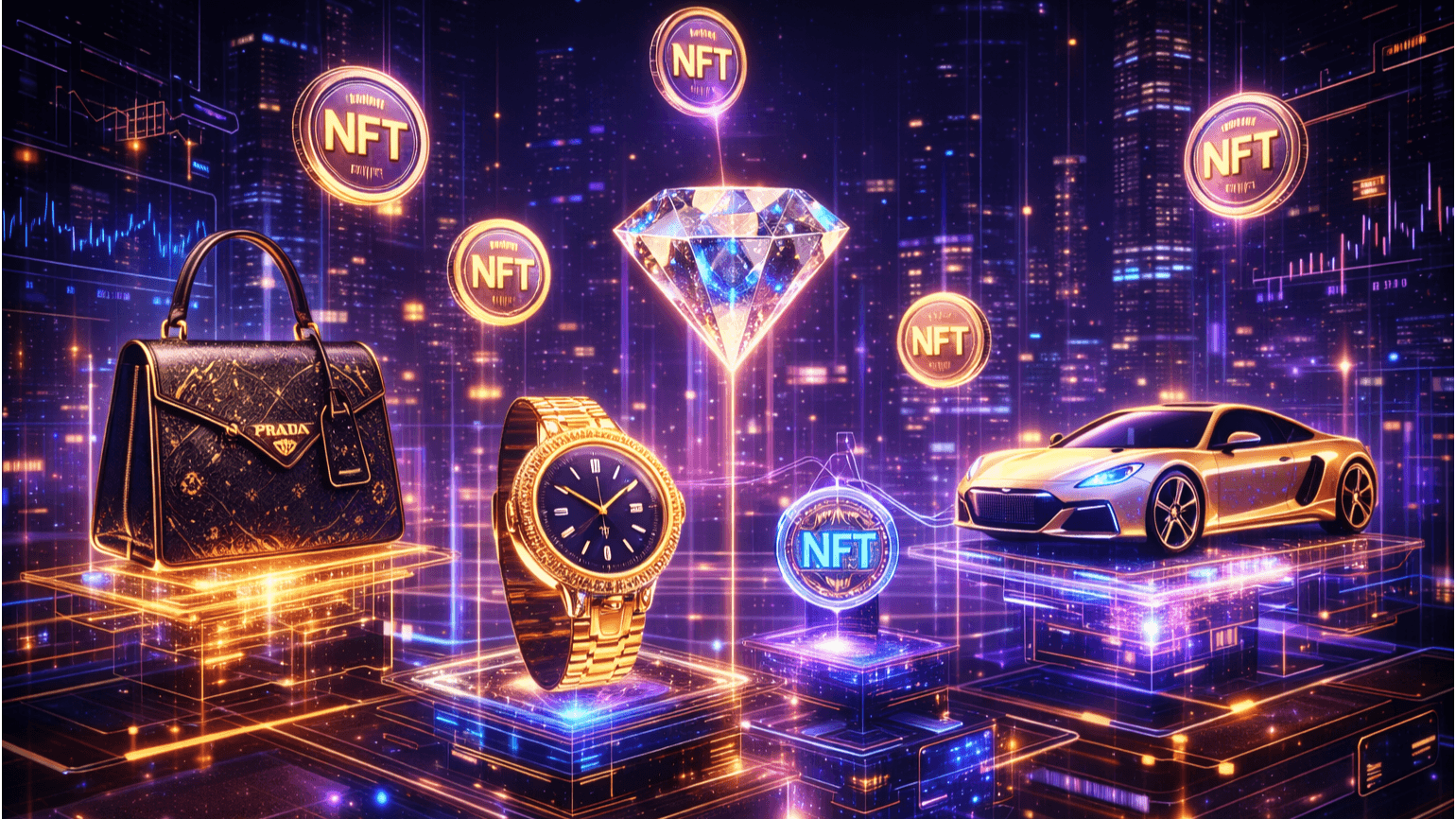
NFT authenticity certificates – used to confirm the authenticity of physical products. Examples: Prada, Cartier, Louis Vuitton – as part of the Aura Blockchain Consortium, they use NFTs for digital verification of the authenticity of handbags, watches, or clothing.
How to create and sell an NFT in 2026 – step by step
Want to create your own NFT? Here is a detailed guide:
Step 1: Choose a blockchain
First, decide which blockchain you want to create your NFT on. Consider:
Transaction costs (so-called gas fees),
Popularity and reach of the ecosystem,
Community and target market (e.g., creators, gamers, collectors),
Compatibility with your strategy (e.g., whether you want staking or royalties)
Popular options include low-cost and environmentally friendly blockchains, as well as those with wide reach and high liquidity.
Step 2: Choose an NFT minting platform
Once you have chosen a blockchain, it is time for an NFT minting platform. These are services that allow for easy token creation without the need for coding knowledge. Choose a platform that:
Supports your chosen blockchain, e.g., NMKR (Cardano, Bitcoin, Solana, Midnight, and Aptos), OpenSea (Ethereum, Polygon),
Has a simple interface and tools for creators,
Offers support for royalty fees and integration with secondary markets.
Many platforms offer both simple browser-based minting and more advanced options using smart contracts.
Step 3: Prepare the content and NFT metadata
Before you start, prepare:
Digital file – image, audio, animation, video, or other asset,
Title and description – tell a story, give the NFT context and value,
Attributes and traits – metadata useful for collectors (e.g., rarity level),
Number of copies – decide whether the NFT will be unique (1/1) or part of a larger series.
Step 4: Mint your NFT
Choose a minting method:
Self-minting – you create the NFT yourself, you control the entire process,
Lazy minting – the NFT is only minted at the moment of purchase (cost savings).
This process usually involves connecting a cryptocurrency wallet, uploading the file, and approving the blockchain transaction. During minting, you will need to pay a small transaction fee.
Step 5: List the NFT for sale
After creating the NFT, you can list it for sale immediately:
Set sales parameters – fixed price or auction,
Decide whether you want to collect royalties from future resales.
Step 6: Build a community and promote the NFT
The success of an NFT depends on the community. Use Discord, Twitter, and other social media actively. Tell the story of your NFT, collaborate with other creators and influencers. Organize online events, promote your NFT on industry forums, and use paid advertising to increase the visibility of your collection.
Ready to create your first NFT? Check out OpenSea or NMKR and start minting step by step!
How to earn passively through NFT royalties?
NFT royalties allow creators to earn a percentage of every resale of their token. In 2026, thanks to standards such as EIP-2981 (Ethereum) and CIP-27 (Cardano), this mechanism works automatically – information about royalties can be saved in the metadata/standard, and their calculation depends on the rules and support of a given platform.
To earn effectively, it is worth using markets that respect these rules. On Ethereum, for example, Foundation works well, and on Cardano, jpg.store.
It is crucial to avoid selling outside of official markets, which may ignore royalties. With a well-thought-out strategy and community support, a well-designed NFT can generate a steady, passive income from every subsequent sale.
Want to earn passively as a creator? Choose platforms that support royalties – check out Foundation or jpg.store.
NFT flipping – how to trade NFTs effectively?
NFT flipping involves buying tokens at a lower price and selling them higher – often in a short time. In 2026, this strategy still works, but the market has become more demanding and competitive, so success requires careful analysis and caution.
To find valuable projects, it is worth using tools such as NFTGo or Blur, which show, among other things, trends, sales volume, and collection activity. It is equally important to follow project roadmaps and the level of community engagement.
For safety, you should set realistic profit and loss thresholds, use separate wallets for trading, and always verify project sources. Flipping can still be profitable, but it requires knowledge, consistency, and a responsible approach. Avoid FOMO – analyze projects before you buy.
Interested in NFT trading? Monitor trends and analyze data from NFTGo or Blur before you buy your next NFT!
NFT gaming – how to earn from games?
In 2026, the "play-to-earn" model has transformed into a more sustainable "play-and-own" form, in which players not only earn but also truly own their digital assets – characters, items, or plots of land in the metaverse.
Interesting titles include Cornucopias and Pavia on the Cardano blockchain, Illuvium on Ethereum, and Star Atlas on Solana. These games offer various earning opportunities – both passive, e.g., by renting assets to other players, and active, through participation in tournaments and winning rewards in tokens.
However, it is worth remembering that not every game guarantees stable income. Earnings depend on the project's health, the number of users, and game mechanics, so it is crucial to diversify your involvement and not rely on a single title.
NFT virtual real estate – how to earn in the metaverse
Digital plots are gaining value in 2026 because the demand for spaces for events, advertising, and online business is growing. Projects such as The Sandbox, Decentraland, Otherside, or Pavia allow for the purchase and development of virtual land. You can earn, among other ways, through:
renting,
organizing VR events,
placing advertisements in 3D space.
Virtual real estate is thus becoming a real investment asset.
NFT staking – how to earn without selling?
NFT staking involves locking tokens in exchange for rewards, such as utility tokens, new NFTs, or voting rights in a DAO. NFT staking most often takes place directly on the website of the project that issued the collection or manages the staking platform. In 2026, NFT staking can be found in selected ecosystems and platforms (e.g., MOBOX and NFTX – depending on current availability and support). This is a good way to earn passive income without having to sell your favorite NFTs – just "freeze" them and enjoy the rewards offered by the ecosystem.
Looking for other ways to earn passive income in Web3? See also: How to earn passively on cryptocurrencies – a complete guide.
NFTs and taxes in Poland and the EU – what you need to know in 2026?
The legal status of NFTs in Poland and the EU is still evolving but is gaining increasing attention from regulators. Profits from NFTs are usually settled similarly to cryptocurrencies – in Poland, most often in the PIT-38 form as income from capital. Income from flipping or royalties may, however, be classified as revenue from business activity or from other sources – depending on the frequency and scale of actions.
The MiCA (Markets in Crypto-Assets) regulation is already in force in the EU, implemented in stages since 2024, which introduces a legal framework for the cryptocurrency market, including indirectly for NFTs as well. Although details may vary depending on the member state, the general goal of MiCA is to increase transparency, security, and compliance in the world of digital assets. In 2026, the market operates under conditions of increasingly full adjustment of exchanges and service providers to new requirements.
To avoid tax problems, it is worth keeping a full history of transactions from your wallet and using reporting tools such as CoinTracking, which help in preparing tax returns consistent with local regulations. It is also worth following announcements from the Ministry of Finance and the KNF.
Don't know how to settle NFTs? Instead of interpreting the regulations yourself, it is best to consult a professional tax advisor who will help choose the appropriate form of settlement and ensure compliance with local and EU regulations.
Biggest mistakes and risks when investing in NFTs – how to avoid them?
Investing in NFTs carries the potential for profit but also significant risk – especially for beginners.
Most common mistakes:
Lack of research: Many beginners buy NFTs under the influence of emotions or trends without analyzing the project, team, or roadmap.
Unrealistic expectations: Assuming quick profits without understanding the market often ends in loss.
Poor platform choice: Creating or buying NFTs on uncertain platforms can result in the loss of funds or lack of royalty support.
How to avoid scams, fake collections, and phishing
Always verify the project: Use official links on Twitter, Discord, or project websites.
Avoid suspicious messages and links: Scammers often impersonate well-known brands or admins on Discord.
Check the NFT contract: Fake collections often have a different address than the original – compare it with official sources.
Watch out for "minting scams": Do not click on links to "mint" NFTs outside of official announcements.
Want to learn more about threats in the Web3 world? Check out our guide: Cryptocurrency scams: how to recognize and avoid the most common traps.
Key security rules for NFT holders
Use a hardware wallet: Storing NFTs in a wallet like Ledger or Trezor significantly increases security.
Use separate wallets: Keep valuable NFTs in a different wallet than the one used for daily transactions.
Secure your seed phrase: Never share your recovery phrase – not even with "admins" or friends.
Enable two-factor authentication (2FA): Especially on NFT platforms and exchanges.
By following these rules, you significantly reduce the risk of losing funds and can navigate the dynamic NFT market more safely.
Frequently asked questions about NFTs
How much can you earn from NFTs? From a few dozen to several thousand PLN per month – depending on the strategy.
Can you create NFTs without high costs? Yes – Cardano and Tezos offer minting for just a few cents.
Are NFTs safe in 2026? In most cases, yes – if you follow security rules and stick to trusted platforms, but the risk (e.g., phishing/scams) never disappears completely.
How to avoid scams? Always check links, project authors, and activity on Discord/Twitter.
Do I have to pay taxes on NFTs? Yes, Polish law requires the settlement of income from NFTs – especially with larger profits.
Summary – how to start earning with NFTs in 2026?
NFTs in 2026 are more than just speculation. You can act as a creator, investor, or gamer – by selling your own collections, flipping tokens, staking, or playing Web3 games.
Key rules:
Choose a strategy that fits your skills and interests.
Diversify income – combine different forms of earning (royalties, games, staking).
Take care of security – use proven wallets and avoid suspicious projects.
Educate yourself regularly – the NFT market changes quickly, it is worth staying up to date.
To start, choose a cheap and friendly blockchain (e.g., Cardano), start cautiously, and grow with the market. NFTs still offer real earning opportunities for those who approach the topic consciously.
Start today! Choose a strategy (creator, gamer, investor), set up a secure wallet, join a community, and build your presence in the world of NFTs.
Disclaimer
WEEX and related entities provide services related to the exchange of digital assets, including trading derivatives and using financial leverage, only where it is legal and for authorized users. All content is for general information purposes and does not constitute financial advice – before starting to trade, it is recommended to seek independent advice. Cryptocurrency trading involves high risk and may result in the total loss of funds. By using WEEX services, you accept the associated risks and terms. Never invest more than you can afford to lose. Details can be found in the Terms of Use and Risk Disclosure.