
Dropee Question of the Day Sept 29 Update: What is the Term for Early-stage Token sales in Web3?
Highlights:
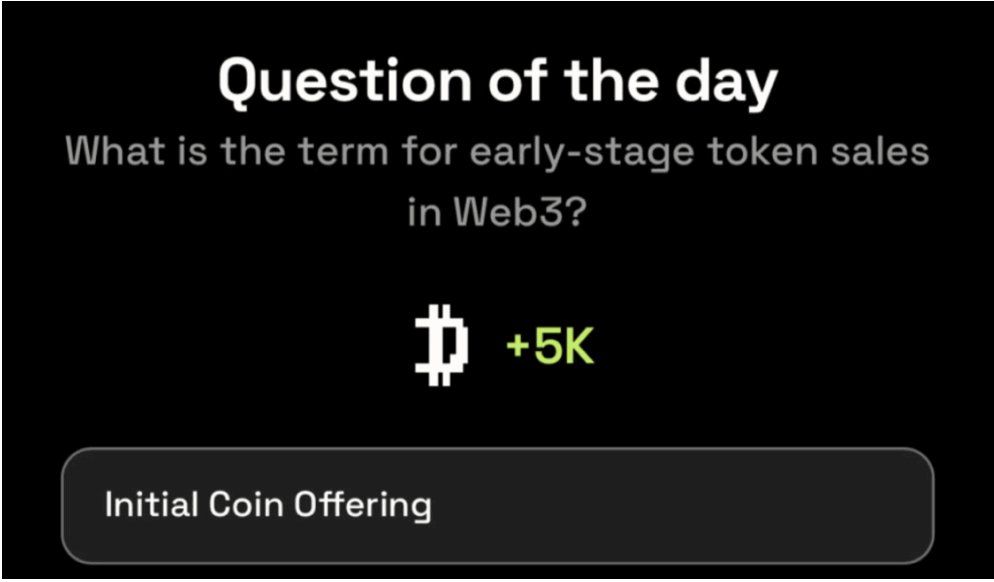
- Dropee Question of the Day 29 September, 2025: What is the Term for Early-stage Token sales in Web3? Answer: Initial Coin Offering
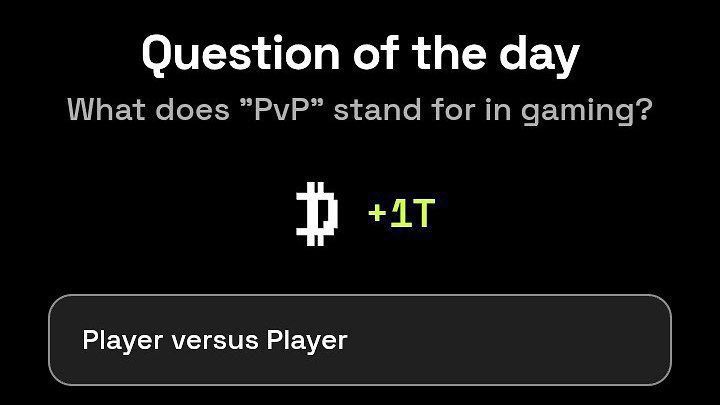
- Dropee Question of the Day 28 September, 2025: What does “PVP” Stand for in Gaming? Answer: Player versus Player
Want to climb the Dropee tap-to-earn leaderboard and unlock hidden airdrops before everyone else? We’ve got your back. Here are the official answers to Dropee’s “Question of the Day,” including the latest from September 29: "What is the Term for Early-stage Token sales in Web3?"—a rallying cry in Web3 culture symbolizing unity and optimism. For more verified answers, rare Daily Combo tips, and expert Web3 farming insights, stay locked in with WEEX — your ultimate resource for Dropee game domination.
Dropee Question of the Day 29 September, 2025 Update
Question of the Day: What is the Term for Early-stage Token sales in Web3?
Answer: Initial Coin Offering
Dropee Question of the Day 28 September, 2025 Update
Question of the Day: What does “PVP” Stand for in Gaming?
Answer: Player versus Player
What Are Early-Stage Token Sales? Key Terms Explained
So, What is the Term for Early-Stage Token Sales in Web3? In Web3, early-stage token sales are the initial funding rounds where blockchain projects sell tokens to raise capital, often at discounted rates. These differ from public sales like ICOs, which Dropee’s answer references. Here’s a breakdown of the key terms:
- Seed Sale: The earliest phase of early-stage token sales, seed sales offer tokens at the lowest prices to angel investors, early backers, and sometimes community members. These rounds fund initial development, such as building prototypes or hiring teams. Discounts can reach 50-70%, but tokens often come with vesting periods (e.g., 12-24 months) to prevent immediate selling.
- Private Sale: Following seed sales, private sales target venture capitalists (VCs), institutional investors, and accredited individuals. These are still considered early-stage token sales but involve higher token prices than seed rounds, often with bonuses like extra tokens. Access is restricted, typically requiring KYC (Know Your Customer) and AML (Anti-Money Laundering) compliance.
- Simple Agreement for Future Tokens (SAFT): A legal framework used in early-stage token sales, SAFTs allow investors to purchase the right to receive tokens once the project launches. This helps projects navigate regulatory hurdles by treating the investment as a security until tokens are issued.
Unlike ICOs, which are public and retail-focused, early-stage token sales prioritize exclusive access and long-term commitment. Understanding this distinction is key to answering What is the Term for Early-Stage Token Sales in Web3? correctly, whether for the Dropee Question of the Day or real-world investing.
Why Early-Stage Token Sales Matter in Web3?
Early-stage token sales are the backbone of Web3 project funding. They enable startups to secure capital without diluting equity, attract influential backers, and validate their vision. For investors, these rounds offer tokens at steep discounts, promising significant returns if the project succeeds. For example, early investors in Ethereum’s 2014 presale bought ETH at $0.30, reaping massive profits as the price soared.
However, early-stage token sales come with risks. Regulatory scrutiny, market volatility, and potential scams (like rug pulls) demand thorough due diligence. Projects must ensure secure smart contracts and transparent tokenomics, while investors should review whitepapers and consult legal experts. The Dropee Question of the Day highlights the importance of understanding these terms to navigate Web3 safely.
The Stages of Token Sales in Web3
To fully grasp What is the Term for Early-Stage Token Sales in Web3?, let’s explore the broader token sale process, which includes several phases:
- Preparation Phase: Projects define their vision, roadmap, and tokenomics. Market research and legal compliance (e.g., KYC/AML) are established to ensure a smooth rollout.
- Smart Contract Development: Secure smart contracts are coded for token minting, vesting, and allocation. Tools like whitelists and vesting modules ensure fair distribution during early-stage token sales.
- Early-Stage Rounds (Seed and Private Sales): These exclusive rounds, the focus of the Dropee Question of the Day, attract high-net-worth investors with discounted tokens and long-term vesting.
- Public Sale Phase: Open to retail investors via ICOs, Initial DEX Offerings (IDOs), or launchpads. This phase prioritizes broad distribution and exchange liquidity.
- Post-Sale Management: Projects list tokens on exchanges, manage governance, and engage communities to sustain value.
Each stage builds toward project success, with early-stage token sales laying the foundation.
Real-World Examples of Early-Stage Token Sales in Web3
To illustrate What is the Term for Early-Stage Token Sales in Web3?, here are notable examples:
- MovitOn Platform: Raised $506K through seed and private sales, using staged pricing and vesting to balance institutional and community support. This showcases the strategic use of early-stage token sales.
- Ethereum (2014): Its presale, a form of seed sale, sold ETH at $0.30, funding the blockchain’s development and delivering astronomical returns for early backers.
- Solana: Secured VC funding through private sales before its public launch, scaling into a leading Layer-1 blockchain.
Conclusion
Early-stage token sales are more than just a fundraising mechanism—they’re the launchpad for innovation in Web3. From seed rounds and private sales to ICOs and IDOs, each stage shapes how projects grow, attract communities, and build long-term value. For players of Dropee’s tap-to-earn game, knowing that the answer is “Initial Coin Offering” isn’t just about scoring points—it’s about understanding the foundations of the crypto economy itself. Stay sharp, keep learning, and with platforms like WEEX backing your journey, you’ll always be one step closer to dominating the Web3 frontier.
Latest Updates on WEEX
WEEX Exchange’s WXT Token Surges 101%
If you want to buy WXT now, you can sign up for a WEEX account
WEEX Owen: Michael Owen Joins as Global Brand Ambassador
Championing a revolutionary crypto trading experience
You may also like

What Is SAOS? Strategic American Oil Supply Token Explained
SAOS is a meme token on Solana with a 75,000 USD market cap and 22,000 USD locked liquidity, positioned around oil supply themes but lacking real asset backing
It thrives on pure narrative speculation, with no utility, website, or doxxed team, making it highly volatile and attention-dependent
Traders should distinguish SAOS from legitimate real-world asset projects, as its branding is speculative rather than substantive
Positive aspects include locked liquidity reducing rug pull risks, but low trading activity signals high uncertainty

How to Buy Public Asset Control (PAC) Token in 2026: Latest Solana Buying Guide
How to buy Public Asset Control (PAC) token in 2026, PAC contract address, Solana wallet setup, Jupiter swap guide, latest price, liquidity, and risks.

What Is Public Asset Control (PAC) Token and How Does It Work? Latest Solana PAC Token Guide
Public Asset Control (PAC) token explained. Learn what PAC is, how it works on Solana, current price snapshot, risks, and buying basics.

Can PAC Coin Reach $1 Soon? Analyzing Public Asset Control
PAC is a Solana-based meme token with a government-themed narrative, but it is highly speculative.
At its current price (~$0.0009) and 1B supply, reaching $1 would require a $1B market cap, which is very unlikely.
Short-term moves to $0.001 or $0.01 are more realistic, but the token is highly volatile due to low liquidity and hype-driven trading.
Overall, $1 is not a realistic target, and PAC is better suited for short-term speculation than long-term investment.

United Nations Oil Reserve (UNOS) Crypto: Solana Token, UN Links, and Risks
United Nations Oil Reserve (UNOS) Crypto explained: Solana token basics, UN links, oil-backing claims, market risks, contract checks, and buying cautions.

What Is Public Asset Control (PAC) Coin? Explained for Beginners
Public Asset Control (PAC) is a Solana-based token that uses a “government asset control” narrative involving oil and gold themes, but it has no verified ties to any real institutions or governments. It is mainly an entertainment-focused, speculative meme coin.
The project’s claims about links to entities like BlackRock or Palantir are unverified, and its own disclaimer states it is not a real financial or institutional asset. Like many new Solana tokens, PAC is highly volatile, with low liquidity and limited transparency, including no fully verified audit.
Overall, PAC is a high-risk speculative token driven by hype and storytelling rather than real utility. Beginners are advised to be cautious, verify contract details, and prioritize risk control before considering any trading.
What Is Official Saudi Oil Reserve (OSOR) Coin?
Learn what OSOR coin is, why its Saudi oil narrative matters, how to verify the contract, and what risks to check before trading.

Global Digital Oil Reserve (GDOR): What It Is, Risks, and How to Check It
Global Digital Oil Reserve (GDOR) is an oil-themed Solana token with unclear backing. Learn its risks, market data, and verification checklist.

Is OBC Crypto a Good Investment?
Is OBC crypto a good investment? We analyze the latest market data, holder concentration, liquidity risks, and short-term momentum. Read this before you invest in OBC token.

Can OSOR Reach $1? Full Price Analysis 2026
OSOR crypto price prediction 2026: Can Saudi Oil Reserve token reach 1? Read before buying.

What is International Oil Supply (IOS) Coin?
Wondering what is IOS crypto? Here’s a straight look at International Oil Supply (IOS) coin—the Solana token tied to oil reserve data. Contract address, risks, and what’s still unverified.

What Is the Unified International Token (UNIT)? Is UNIT Crypto Legit or Scam?
what is UNIT crypto? Here’s a breakdown of the Unified International Token ($UNIT), how it ties to BRICS+ data, where to buy it, and why it’s a conceptual project—not an official currency.

What Is Stablecoin Business OS (SBOS) Coin?
What is SBOS crypto? We break down Stablecoin Business OS, its USDC invoicing tools, AI finance assistant, token contract address, and real utility for online businesses.

World Collective Oil Reserve ($WCOR) Price Prediction: May 2026 Rally Analysis and Future Outlook
Is $WCOR a good investment? Read our comprehensive World Collective Oil Reserve price prediction and market analysis for 2026-2030. Learn about the energy narrative on Solana and start your trading journey with WEEX rewards.

Is $PAC Token a Good Investment in 2026? Price, Risks, and Market Analysis
A data-driven analysis of Public Asset Control (PAC) token: current price, market cap, liquidity, $1 target feasibility, and risk factors. Is it a legitimate investment or a high-risk meme coin?
NEAR Airdrop: Join WEEX to Share 50,000 USDT in Crypto Rewards
Join the NEAR airdrop on WEEX from May 7 to May 14 to share a 50,000 USDT prize pool. New users can earn rewards through deposits and spot trades with zero-fee trading advantages.

How to Buy $WCOR Coin: Should I Invest or Is It Just Hype?
Learn how to buy $WCOR coin on Solana and explore its latest 57% price surge. This expert guide analyzes whether WCOR is a solid investment or speculative hype.

What Is $PAC Token? Legitimate Crypto or Just A High-Risk Meme Coin?
Is Public Asset Control ($PAC) a real asset-backed token or just another meme coin narrative? We analyze its official website, market data, and risks.
What Is SAOS? Strategic American Oil Supply Token Explained
SAOS is a meme token on Solana with a 75,000 USD market cap and 22,000 USD locked liquidity, positioned around oil supply themes but lacking real asset backing
It thrives on pure narrative speculation, with no utility, website, or doxxed team, making it highly volatile and attention-dependent
Traders should distinguish SAOS from legitimate real-world asset projects, as its branding is speculative rather than substantive
Positive aspects include locked liquidity reducing rug pull risks, but low trading activity signals high uncertainty
How to Buy Public Asset Control (PAC) Token in 2026: Latest Solana Buying Guide
How to buy Public Asset Control (PAC) token in 2026, PAC contract address, Solana wallet setup, Jupiter swap guide, latest price, liquidity, and risks.
What Is Public Asset Control (PAC) Token and How Does It Work? Latest Solana PAC Token Guide
Public Asset Control (PAC) token explained. Learn what PAC is, how it works on Solana, current price snapshot, risks, and buying basics.
Can PAC Coin Reach $1 Soon? Analyzing Public Asset Control
PAC is a Solana-based meme token with a government-themed narrative, but it is highly speculative.
At its current price (~$0.0009) and 1B supply, reaching $1 would require a $1B market cap, which is very unlikely.
Short-term moves to $0.001 or $0.01 are more realistic, but the token is highly volatile due to low liquidity and hype-driven trading.
Overall, $1 is not a realistic target, and PAC is better suited for short-term speculation than long-term investment.
United Nations Oil Reserve (UNOS) Crypto: Solana Token, UN Links, and Risks
United Nations Oil Reserve (UNOS) Crypto explained: Solana token basics, UN links, oil-backing claims, market risks, contract checks, and buying cautions.
What Is Public Asset Control (PAC) Coin? Explained for Beginners
Public Asset Control (PAC) is a Solana-based token that uses a “government asset control” narrative involving oil and gold themes, but it has no verified ties to any real institutions or governments. It is mainly an entertainment-focused, speculative meme coin.
The project’s claims about links to entities like BlackRock or Palantir are unverified, and its own disclaimer states it is not a real financial or institutional asset. Like many new Solana tokens, PAC is highly volatile, with low liquidity and limited transparency, including no fully verified audit.
Overall, PAC is a high-risk speculative token driven by hype and storytelling rather than real utility. Beginners are advised to be cautious, verify contract details, and prioritize risk control before considering any trading.


