

Live Dotcoin price
Dotcoin price chart
Dotcoin (DOT) price details
Dotcoin price history
 Download dataDownload data
Dotcoin technical analysis
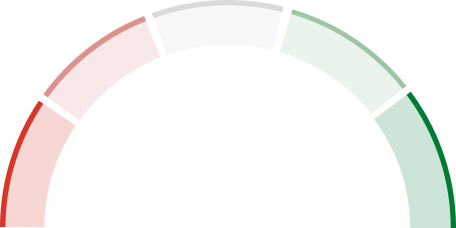
Dotcoin (DOT) sentiment
About Dotcoin
What Is Polkadot
Definition of Polkadot
Polkadot is a heterogeneous multi-chain protocol that enables interoperability between different blockchains, allowing them to share information and transact securely. Polkadot originated in 2016, founded by Dr. Gavin Wood, a co-founder of Ethereum, through the Web3 Foundation. The project launched its mainnet in 2020. Its core concept revolves around creating a scalable, interconnected ecosystem for blockchains, often called Web3's foundation. The DOT token powers governance, staking, and parachain bonding. The ecosystem includes parachains like Acala for DeFi and Moonbeam for Ethereum-compatible smart contracts, fostering innovation in decentralized apps.Origin and Background
Born from frustrations with Ethereum's scalability, Polkadot aims to connect isolated blockchains. Backed by the Web3 Foundation and Parity Technologies, it emphasizes user control and decentralization.How Does Polkadot Work
Operational Mechanisms
Polkadot operates on a relay chain that coordinates parachains, using a sharded architecture for parallel processing. It employs Nominated Proof-of-Stake (NPoS) for consensus, where nominators select validators to secure the network.Technical Principles
Transactions use public-private key pairs for security. Smart contracts run on parachains via frameworks like Substrate. The system allows cross-chain messaging (XCM) for seamless data transfer, ensuring trustless interactions without forks.How Is New Polkadot Created
Issuance and Mining Mechanisms
New DOT tokens are created through staking rewards in the NPoS system. Validators and nominators earn tokens for securing the network, with rewards distributed based on staked amounts.Supply and Inflation Model
Polkadot has no fixed total supply cap; it's inflationary with a target 10% annual rate to incentivize staking. Initial supply was 1 billion DOT, now expanded via rewards. Total circulating supply as of 2025-09-04 is approximately 1.61 billion DOT, calculated from market data.The Use Cases of Polkadot
Payments and Transfers
DOT enables cross-border transfers via interconnected chains, reducing fees and times compared to traditional systems.DeFi and Governance
It supports DeFi apps on parachains, NFTs, and on-chain governance where holders vote on upgrades. Use cases include decentralized identities and oracle integrations for real-world data.Buy, Send, or Store Polkadot
Purchasing Channels
Buy DOT on exchanges like WEEX, which offers a trusted platform for trading. Register on WEEX to earn a free 20 USDT bonus and start trading securely. https://www.weex.com/how-to-buyStorage and Security
Use hot wallets like mobile apps for quick access or cold wallets like hardware devices for better security. To send, generate a recipient address, confirm via private key, and monitor on explorers. Always enable two-factor authentication to protect holdings.Pros & Cons / Risks
Advantages
- High interoperability connects diverse blockchains efficiently. - Strong security via NPoS makes attacks costly. - Scalable design handles high throughput without congestion. - Community-driven governance allows flexible updates.Risks and Disadvantages
- Price volatility can lead to significant losses. - Regulatory uncertainties may affect adoption. - Technical complexities could introduce bugs or failures. - Dependence on parachain auctions might limit accessibility for smaller projects.Comparison
Polkadot vs. Alternatives
Unlike Bitcoin's focus on value storage with Proof-of-Work, Polkadot emphasizes interoperability and uses NPoS for efficiency. Compared to Ethereum, it offers better scalability through sharding, positioning it as a "layer-0" for multi-chain ecosystems rather than a single smart contract platform.Conclusion / Next Steps
Future Potential
Polkadot's potential lies in expanding Web3 with more parachains and upgrades like JAM (Join-Accumulate Machine). It could drive mainstream blockchain adoption amid growing DeFi and NFT sectors.Practical Suggestions
Review the Polkadot whitepaper or roadmap on their official site. Join communities for updates. Check it out on WEEX for trading insights—sign up to explore more.Market & Ecosystem
Market Cap & Trading Volume
As of 2025-09-04, Polkadot's market cap is $6,079,943,132 USD, with a 24-hour trading volume of $192,858,037 USD. It ranks #24 in the crypto market.Exchanges Where It’s Listed
DOT is available on major platforms, including WEEX for secure trading.Community Size & Activity
Polkadot boasts active communities: over 1 million Twitter followers, vibrant Reddit discussions on r/Polkadot, and large Telegram groups for real-time updates.Ecosystem Growth
Growth includes partnerships with projects like Chainlink for oracles and high developer activity on Substrate. Recent expansions feature more parachains, boosting adoption.Official links
 Website
Social media and community
 X(Twitter)
FAQ
1. What is the current price of Dotcoin (DOT) in USD?
2. What is the market capitalization of Dotcoin (DOT)?
3. What is the circulating supply of Dotcoin (DOT)?
4. What factors influence the price of Dotcoin (DOT)?
5. Is Dotcoin (DOT) a good investment?
6. Where can I buy Dotcoin (DOT)?
7. What are the typical fees when buying Dotcoin (DOT)?
8. What are some technical indicators used for analyzing Dotcoin (DOT)?
Currency price converter
Popular








How to buy


Dotcoin news
Ready for a Walk on the Wilder Side of Proof of Talk 2026? Join WEEX Labs in Paris
Two side events, one mission: to turn passive conference-going into active Web3 experience. From a live AI trading competition with Pudgy Penguins Europe to an exclusive VIP dinner at Le Cafe Marly—here's how WEEX Labs is bringing AI and crypto innovation to life during Proof of Talk 2026.
Is it hackers and regulation that ruined DeFi?
The future of DeFi will either move towards a stricter industry self-discipline and compliance framework, forced to compromise on the principles of decentralization; or it will gradually lose market confidence in the ongoing imbalance of offense and defense, leading to long-term marginalization.
Gold vs Bitcoin in 2026: Which Market Is Giving Traders Better Opportunities?
Gold or Bitcoin? Discover which market is offering better trading opportunities in 2026, what drives each asset, and how traders can access both gold and Bitcoin from a single USDT account.
"Hu Run Baifu" Dialogue with Sun Yuchen: A New Paradigm of Value Circulation in the Web3 Transformation Cycle
In an exclusive interview with Hurun Report, Sun Yuchen succinctly summarized his long-term core goal: "To enable anyone in the world, regardless of their location or whether they have a bank account, to transfer and use their funds at low cost and high efficiency."
Bit Digital CEO: Why I Bought More ETH
Valuation re-evaluation will never come from retail investors' enthusiasm for narratives; for an asset with such a vast underlying infrastructure, that has always been a fragile foundation. The real catalyst is institutional demand, and institutional demand does not operate according to the timeline...
A Decade of Three Waves of Stock Tokenization from Bitget's Reality: An Unfinished Financial Exploration
Reality represents the latest step in this revolution. What the next step is, is not in Bitget's release materials, but in the next 12 to 24 months, on the first day Nasdaq goes live, on the day the SEC's new regulations take effect, and on the day Bitget can obtain a formal financial license in a m...
View more

View more


