
Solana, Ethereum L2s (and XRP?) Just Received a Massive Buy Signal from Citrini Research

 Prefer us on Google


Key Takeaways
- The Citrini Research report highlights a fictional future scenario where AI disrupts the global economy, particularly affecting white-collar jobs.
- Solana and Ethereum Layer 2 solutions like Base, Arbitrum, Optimism, and Polygon are seen as crucial players due to their role in enabling low-fee transactions and facilitating disintermediated payments efficiently.
- The report emphasizes how AI-driven agents could eliminate the need for traditional intermediaries, pushing stablecoins and blockchain protocols like Solana and Ethereum to the forefront in commerce.
- Concerns are raised over AI’s impact on unemployment and the overall economy, suggesting that significant economic reforms may be needed to accommodate these changes.
WEEX Crypto News, 2026-02-26 08:33:14
In recent discussions within the crypto community, a particular report by Citrini Research titled “The 2028 Global Intelligence Crisis” has generated substantial attention. This report, penned as a fictional account, delves into a scenario where artificial intelligence (AI) massively transforms the global economy, leading to unforeseen disruptions and the significant displacement of white-collar jobs. Amidst this landscape, cryptocurrencies like Solana and Ethereum Layer 2 solutions are posited to play pivotal roles due to their capability to handle widespread transaction needs efficiently.
The essence of the report lies in its exploration of how AI could outstrip expectations, resulting in a global upheaval. By 2028, economies might grapple with unprecedented challenges, where the acceleration of AI developments pushes them into a “negative feedback loop.” The document outlines a dramatic reduction in traditional employment opportunities as AI achieves levels of productivity that significantly reduce the need for white-collar human labor.
The AI Conundrum and Economic Implications
The report paints a picture where AI contributes to a substantial downturn in global markets, with the S&P plunging dramatically and unemployment figures soaring. This scenario suggests a transformation of AI from an asset into an overwhelming disruption, akin to an “economic pandemic” rather than a “panacea.” The velocity of money halts, and the traditional consumer economy, making up a significant portion of GDP, falters as displaced workers cut back on spending.
Citrini’s narrative suggests that the displacement of human intelligence by AI will fundamentally alter job markets and economic structures. Unlike past technological advancements where new industries arose to replace obsolete ones, this scenario predicts a relentless cycle wherein AI only continues to enhance itself. The economic system, therefore, lacks the traditional corrective mechanisms present in cyclical downturns.
Notably, the report emphasizes that the U.S. economy, deeply rooted in white-collar services, is particularly vulnerable. With AI encroaching upon sectors that, in the past, depended on human judgment and creativity, the foundational elements supporting consumer spending could erode, leading to systemic challenges across global markets.
The Role of Cryptocurrencies in a New Tech Landscape
Against this backdrop of economic uncertainty, the Citrini report casts cryptocurrencies, and particularly Solana and Ethereum Layer 2 solutions, as key players. With AI leading to significant disintermediation in transactional processes, these blockchain technologies are poised to facilitate low-cost, highly efficient transactions, crucial for sustaining economic activities amid the purported collapse of traditional banking intermediaries.
Citrini identifies that as AI agents autonomously conduct transactions, there is a natural movement towards stablecoins operating on blockchains like Solana or Ethereum, due to their negligible transaction costs and near-instant settlement capabilities. This scenario paints a picture of reduced dependency on traditional payment systems dominated by banks and credit card companies, presenting a new age of financial interactions driven by blockchain technology.
The narrative introduces the concept of “agentic AI,” where AI entities transact on behalf of human users, significantly reducing transaction fees through the use of stablecoins instead of conventional financial instruments. This progression is anticipated to upend traditional financial models, shifting value towards blockchain-based solutions.
Cryptocurrencies as a Bulwark Against Market Bears
In the current crypto landscape marred by bearish sentiment, the potential for blockchain technologies to circumvent economic pressures through innovative financial mechanics provides a glimmer of optimism. The narrative of tokenization, disintermediation, and AI-driven commerce is posited as the key to lifting bear market blues. By aligning with these evolving technologies, cryptocurrencies could find a renewed narrative of utility and growth.
The report suggests, albeit subtly, that there is time available to address the potential societal detours. Although challenges are anticipated within labor markets, policymakers and industry leaders might consider proactive measures, such as proposing regulatory frameworks that address AI’s economic impact. Suggestions include taxing data center ‘robber barons’ to mitigate corporate dominance, encouraging balanced growth.
In contemplating the mechanical transformations in payments and commerce, the need becomes pressing for stakeholders across industries to reevaluate operational norms. The report indirectly highlights the pressing need for companies, consumers, and investors to reconsider the economic implications brought forth by such technological advancement.
Impacts on Consumer Behavior and the Future of Commerce
On a macroeconomic scale, consumer behavior is also set to evolve as AI simplifies token-driven transactions. Firms like Chargebacks911 note how commerce facilitated by AI alters traditional merchant-customer interactions, highlighting a potential increase in disputes over AI-made decisions that diverge from conventional customer expectations. Customers’ diminishing direct involvement in purchasing decisions foundationally shifts how intent and authorization are handled in commerce.
Ultimately, this transformation extends well beyond commerce into fiscal policy, regulatory conditions, and broader global economic practices, implying a divergence from consumer-centric traditions to data-centric interactions.
As the narrative of AI-induced transformations continues to unfold, the financial ecosystems involved in token-based operations look set to transform entirely. With financial realities on the brink of reinvention, brands like WEEX stand to benefit by aligning inherently with these seismic shifts in the economic status quo. Presenting the potential for innovative service offerings within this developing landscape could not only solidify the brand’s position in the market but also ensure resilience amidst digital economic disruptions.
Conclusion
The Citrini report projects a rather vivid picture of an impending economic era, largely influenced by AI’s growing integration into the mainstream economy. As AI agents disrupt traditional market structures, blockchain solutions like Solana and Ethereum Layer 2 stand to not only benefit but spearhead the formation of new financial paradigms. This narrative underscores a broader need to assess how AI’s advancement and the resulting ripple effects across global markets, prompt a fundamental reevaluation of existing financial protocols. Companies and governments alike must ponder such scenarios and align their strategies to ensure sustainability in this unfolding technological era. The road ahead, though fraught with challenges, is also paved with significant opportunities for innovation, driven by the agility and adaptability of emerging technologies like cryptocurrencies.
FAQs
What is the Citrini Research report about?
The Citrini Research report titled “The 2028 Global Intelligence Crisis” is a fictional scenario exploring how advanced artificial intelligence (AI) could disrupt the global economy, particularly impacting white-collar jobs and possibly leading to economic instability.
How do Solana and Ethereum Layer 2 solutions fit into this scenario?
Solana and Ethereum Layer 2 solutions are highlighted for their potential in facilitating low-cost, immediate transactions, becoming crucial as AI agents reduce the need for traditional financial intermediaries. This positions them as key elements in adapting to disrupted economic conditions.
What is agentic AI, and how does it impact commerce?
Agentic AI refers to autonomous AI agents that transact on behalf of humans, leading to significant disintermediation in commerce. Such AI agents could choose blockchain-based stablecoins over traditional financial channels, significantly reducing transaction fees.
Why is there concern about AI causing an economic recession?
The report raises concerns that if AI continuously improves and displaces human labor without a compensatory creation of new industries or jobs, it could lead to reduced consumer spending, thereby weakening the economy and potentially leading to a recession.
What role could cryptocurrencies play in mitigating this economic disruption?
Cryptocurrencies, particularly those facilitating efficient, low-fee transactions, could play a vital role in maintaining commerce when traditional intermediaries face obsolescence. This not only applies to domestic transactions but could also be pivotal in cross-border payment solutions.
Disclaimer: This content is provided for general branding and informational purposes only and doesn't constitute financial, investment, legal, or tax advice. Any events, rewards, online events, or related information mentioned herein should not be considered a recommendation, solicitation, or invitation to purchase, sell, trade, or otherwise deal in any crypto assets or to use any services. Crypto assets are highly volatile and may result in loss. WEEX services and online events may not be available in all regions and are subject to applicable laws, regulations, and eligibility requirements. You are responsible for ensuring that your use of WEEX services complies with local laws and for carefully assessing the risks before participating in any crypto-related activities.
You may also like

Major Update for ChatGPT: Cross-Platform Functionality, One-Click Website Creation, and Lower Costs

BTC Challenges 64,000 After Breaking 63,000, Market Trading 'Manageable Risks'

As the Bubble Bursts, Who Dominates Attention in the AI Era? A 2026 Guide to Influential AI KOLs in China and the UK

Old Money in Crypto Shifts: Paradigm Raises $1.2 Billion, Half Bet on AI and Robotics

Bitdeer unveils $36M Nevada factory to shake up Bitcoin mining

Perplexity Fine-Tuned a Chinese AI Model to Match Claude Opus 4.8 at One-Third the Cost

Bank of Korea defends bank-first stablecoin plan amid bill deadlock
JPMorgan says bitcoin's main risk isn't Strategy, but blockchain adoption that doesn't benefit public chains and tokens

Fear & Greed Index Today: What Extreme Fear Means for Crypto, Stocks and Gold
Labour MPs Push to Make UK Crypto Donation Ban Permanent

Supreme Court ruling expanding Trump's authority over federal agencies raises questions for SEC, CFTC as crypto rulemaking advances

'Bottom building in progress': Analysts say bitcoin holder capitulation signals late-stage bear market

A Comprehensive Analysis: Starting from 1996, Who is Laying the Foundation for the Next Generation of Capital Markets
Luke Dashjr, the Biggest Anti-Spammer of Bitcoin, Inscribed Phrases on the Network in 2011

Whales bought 270,000 BTC while ETFs bled $7 billion. One side is wrong

The crypto IPO class of 2025-26 is down as much as 89%. Autopsy of a listing boom
Robinhood Chain Mining Guide: A Comprehensive Tutorial from Cross-Chain to Memecoin
BitGo CEO says single-digit percentages of bitcoin's supply are 'probably right' for large holders amid Strategy's sale

Beyond Private Keys: How to Safeguard the Security Boundaries of Web3 from Wallets, L2 to Supply Chains?

Vanguard Enters the Market, Opening a New Crypto Gateway for 50 Million Traditional Investors

Why the OUSD Alliance of 150 Companies Still Cannot Shake USDT and USDC?
Citigroup Analysis: Is There Still 47% Upside for Nvidia? Can Rubin and CPO Deliver?
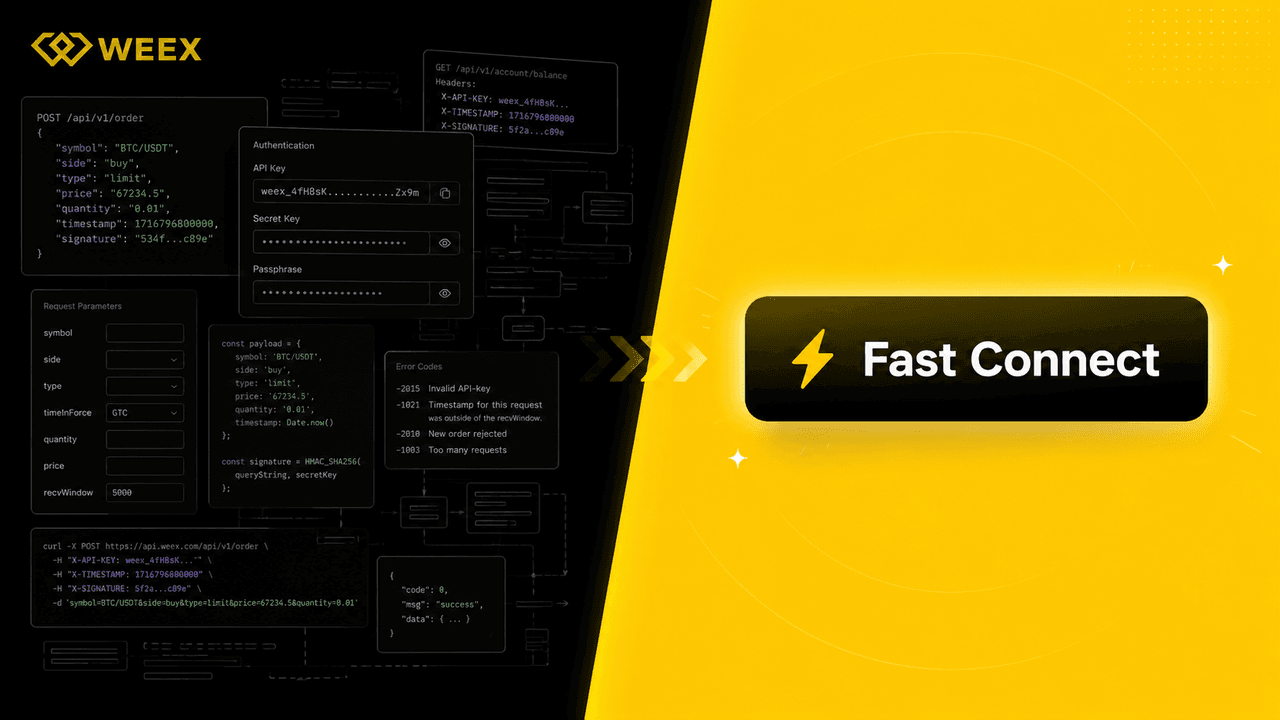
WEEX API Fast Connect: Turn Every Sign-In Into a Live Trader in Under 10 Seconds
WEEX API Fast Connect is a one-click OAuth authorization system that lets your users link their WEEX account without ever touching an API key. Frictionless onboarding, faster conversions, higher retention — built for WEEX Broker partners.
Bitcoin's dwindling exchange reserves don't pack the same bullish punch anymore

From Le Mans to the Rollercoaster: Carl Moon Takes On Portimão
Crypto world renowned KOL and racing driver Carl Moon, backed by WEEX, heads to the Ferrari Challenge Portugal round at the Algarve International Circuit, July 16–19, fresh off a podium finish at Le Mans. Here's why this race is one to watch.
Fast execution. Split-second accuracy. Security that never blinks. That's WEEX — and that's exactly how Carl races.

The Downfall of a Public Company: A $1.46 Billion Bet on WLFI, $540 Million Went to the Trump Family
Dragonfly Partner: BTC is Intergenerational Wealth, Optimistic About ETH and SOL
Goldman Sachs Calls to Go Long on Chinese AI: $4 Trillion Market Value Behind, Global Funds Only Allocated 1.2%
The New Landscape of Cryptocurrency in Europe: Why Germany Takes Center Stage?
Robinhood vs xStocks: Stock Tokenization Shouldn't Just Focus on Ticker On-Chain
Major Update for ChatGPT: Cross-Platform Functionality, One-Click Website Creation, and Lower Costs
BTC Challenges 64,000 After Breaking 63,000, Market Trading 'Manageable Risks'
As the Bubble Bursts, Who Dominates Attention in the AI Era? A 2026 Guide to Influential AI KOLs in China and the UK
Old Money in Crypto Shifts: Paradigm Raises $1.2 Billion, Half Bet on AI and Robotics
Bitdeer unveils $36M Nevada factory to shake up Bitcoin mining
Perplexity Fine-Tuned a Chinese AI Model to Match Claude Opus 4.8 at One-Third the Cost

Contents
Latest articles



Latest coin listings on WEEX


