
$SHELL Oversubscribed by 40x: A Deep Dive into MyShell's Product and Tokenomics


Original Article Title: "$SHELL Oversubscribed by 40 Times, It's Time to Understand MyShell's Product and Tokenomics"
Original Source: Deep Tide TechFlow
Today's focus is on MyShell's token, $SHELL.
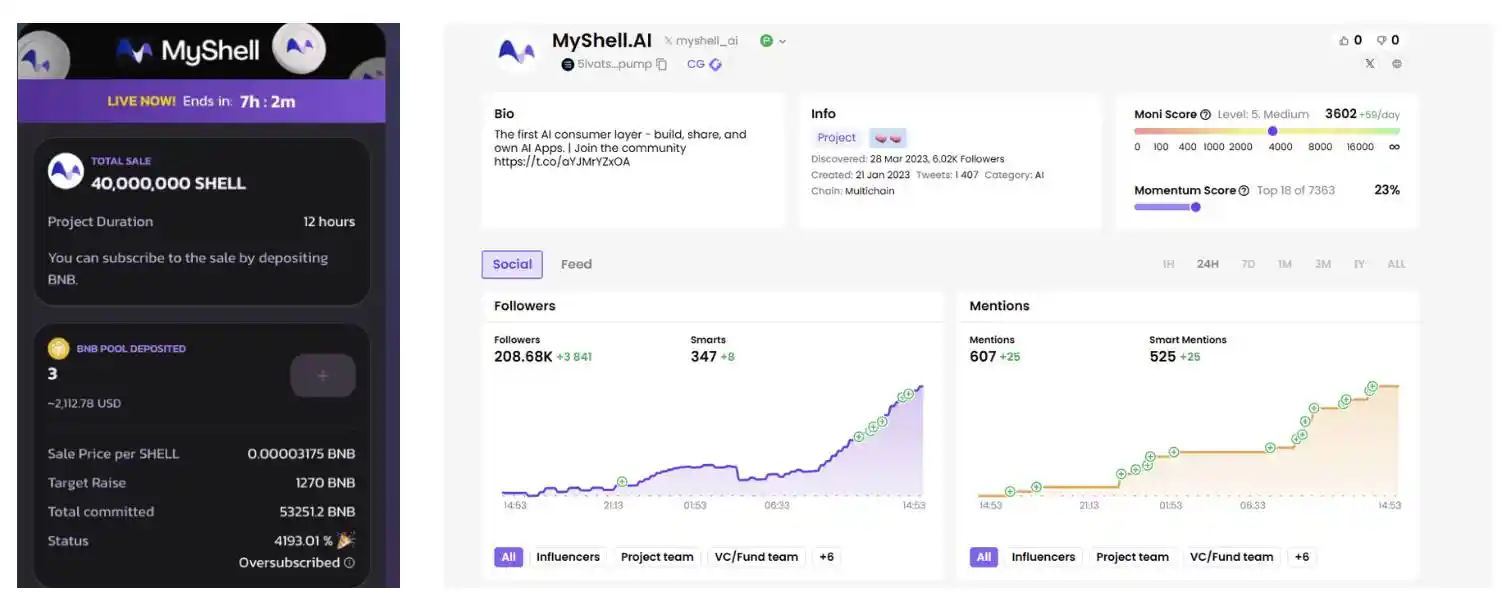
Prior to CZ's return and the rise of memes on the BSC chain, today's $SHELL token IDO on Binance Wallet and Pancakeswap has also attracted significant attention and substantial investment.
Following the sale rule of "planned to raise $800,000 worth of BNB, issue 40 million $SHELL tokens, accounting for 4% of the total supply," by the time of writing, the IDO has been oversubscribed by nearly 42 times, demonstrating strong market participation willingness.
Simultaneously, visible discussions on social media have increased rapidly.
However, the real reason why everyone is willing to participate is the anticipated money-making effect.
Based on the conversion of raising $800,000 for 4% of $SHELL tokens, the total market value assigned to $SHELL tokens in this IDO is only $20 million; according to KOL @EnHeng456's calculation, data shows that the total amount of MyShell's three rounds of public financing has already reached $16 million, indicating the market value of the final round of SHELL should be between $150-300 million.
In other words, theoretically, hitting the jackpot is a sure thing.
More importantly, MyShell is not just an empty AI Meme; its available product platform also has the ability to create a new AI Agent and tokenize it.
The rapid rise of Virtuals in the past is clear for all to see. With the AI Agent track facing reshuffling and Binance seemingly intending to support the BSC chain's ecosystem, the emergence of MyShell will reignite the AI Agent on BSC. Will it?
With these expectations, if you are blindly rushing in without knowing what MyShell is really up to, here is a detailed introduction to MyShell's product and features to help you plan and assess in advance.
Your AI Toolset and Marketplace
There is already a lot of ready-made information about MyShell, but most of it is introduced from the perspective of AI technology and high-level narratives, which may not feel very intuitive.
If you have recently been intensely bombarded with DeepSeek-related messages and have tried interacting with it, why not start directly from the perspective of an ordinary user and see what MyShell's final interface looks like.
1. Chat Page Integrated with Mainstream AI Models
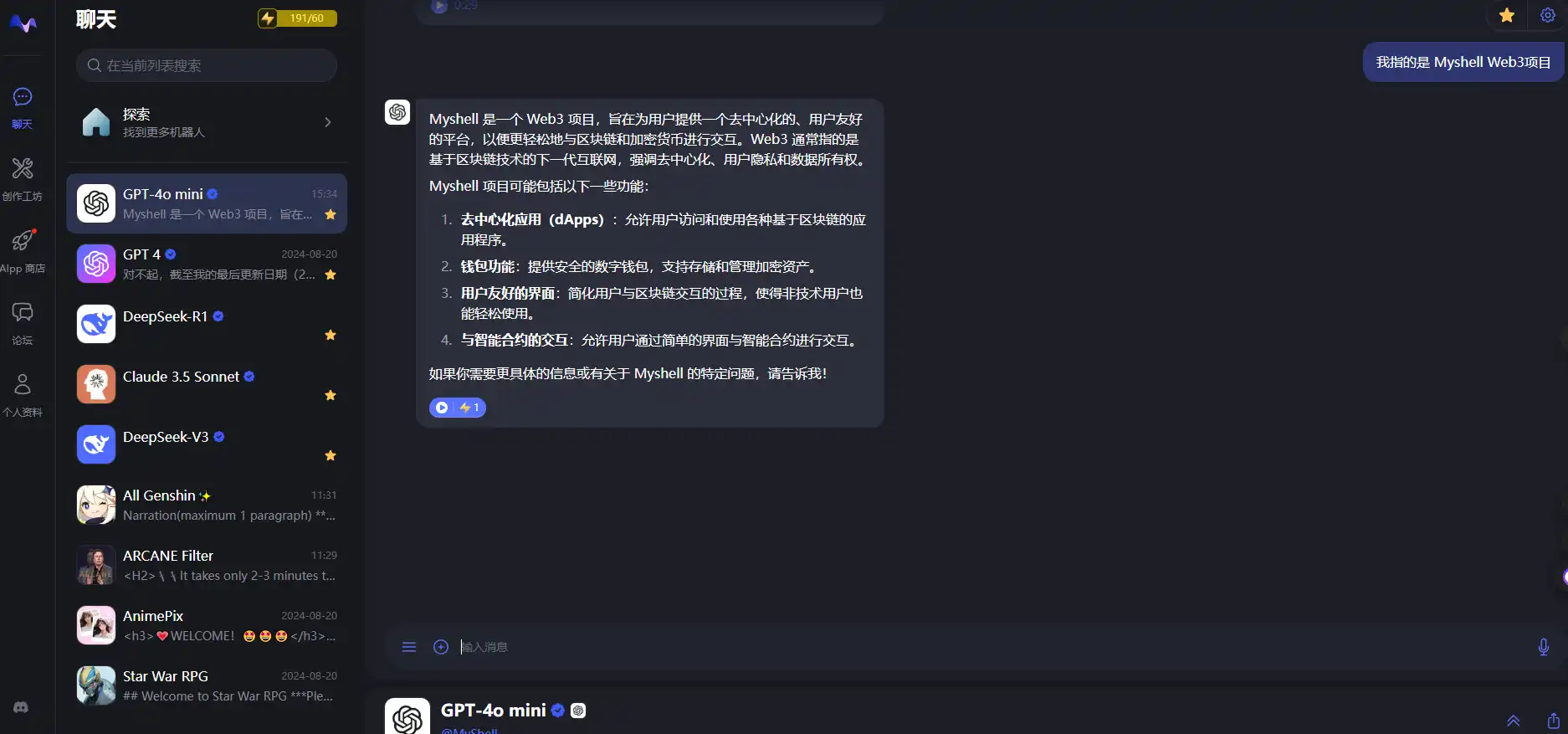
When you open MyShell's product page, you can clearly feel one of its main features, which is the AI chat conversation that you are very familiar with.
A good point to note is that MyShell has already integrated multiple mainstream AI models, such as GPT, Claude, and the recently popular Deepseek.
You can start a conversation by directly entering text in the chat window. Like other AI pages you have used, there is almost no learning curve, and you won't feel like this is a Web3 project. However, it is worth noting that each conversation requires a certain amount of points.
2. AI Tool Marketplace
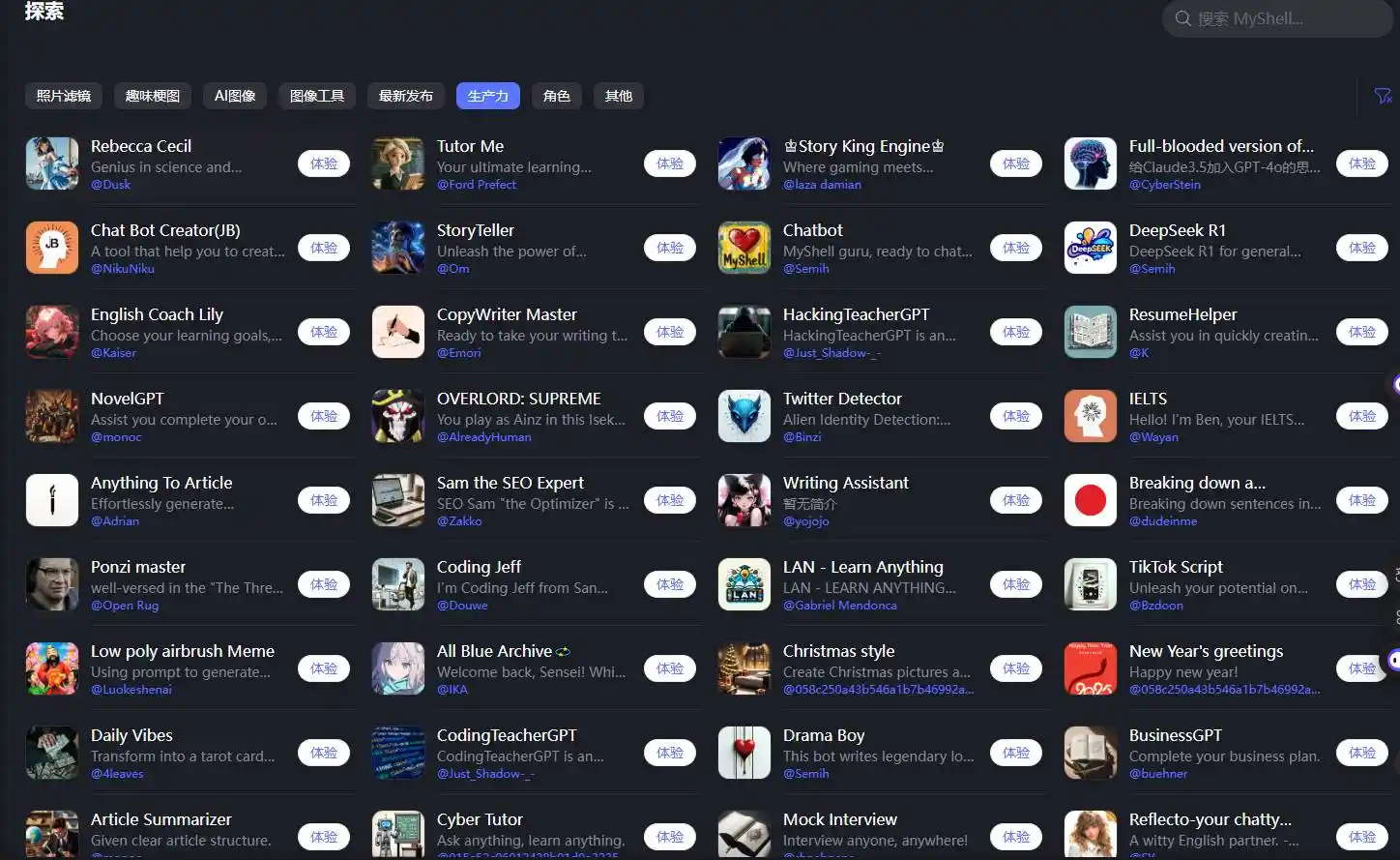
You can not only chat with the aforementioned mainstream large models, but also converse with AI Agents created by other people in MyShell, each of which has its own unique functions and use cases.
For example, if you want to transform a photo into the art style of a GTA game, you can choose one of the GTA Filter filter tools, upload a picture in the chat window, and the tool will instantly replace your photo with a GTA style.
There are many similar tools, including more practical tools in various fields to enhance productivity, such as SEO optimization, IELTS preparation, article writing, and code editing. You can think of it as the store built into GPT.
Official data shows that there are currently over 200,000 AI agents deployed on the platform, and the ecosystem is rapidly growing.
3. Creation Workshop: Modular Building of Your Own AI Agent
If you want to create your own AI Agent, you can also use MyShell's Creation Workshop feature.
Unlike creating a playful AI Agent, the component library in MyShell is relatively more powerful.
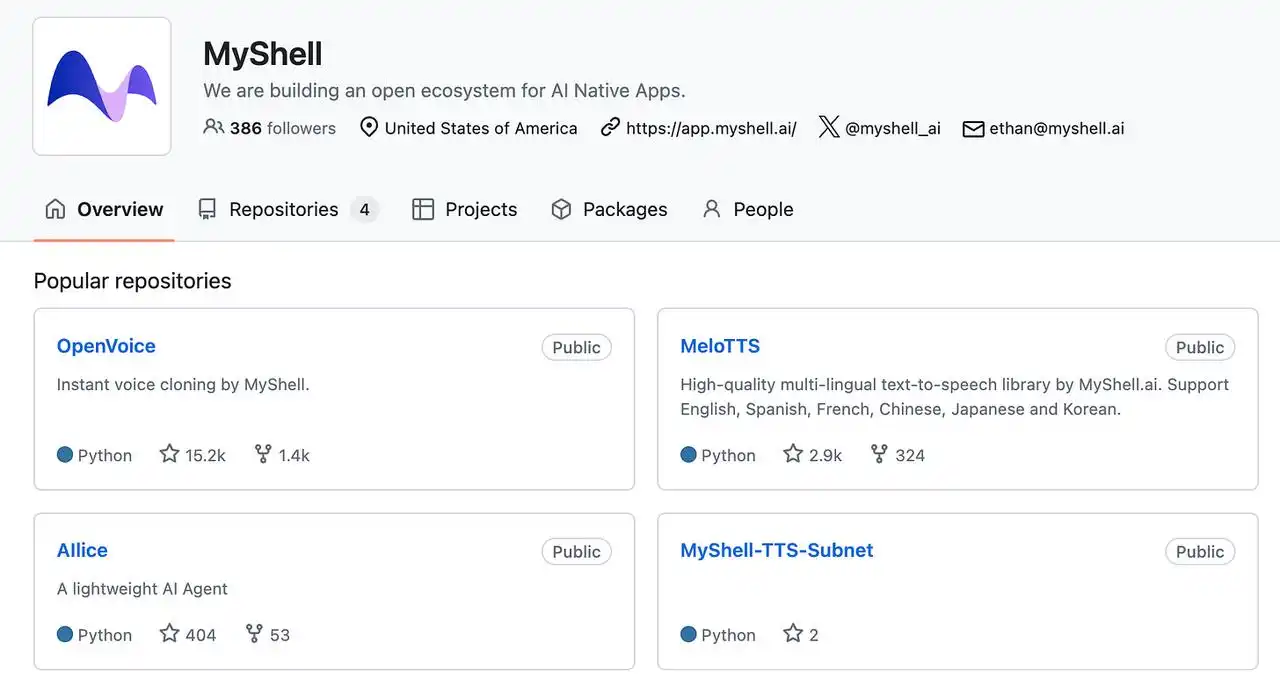
Generally speaking, creating an AI Agent inevitably requires calling various existing large models and functions, and MyShell has integrated over 100 mainstream open-source and closed-source models. In addition, there are also multiple self-developed open-source AI models. Three models have been open-sourced on the project's GitHub, with nearly 20K stars.
In other words, if you want to build a house, then this block library is obviously more powerful. You can modularize the construction of your AI Agent by leveraging the strengths of many parties, without reinventing the wheel.
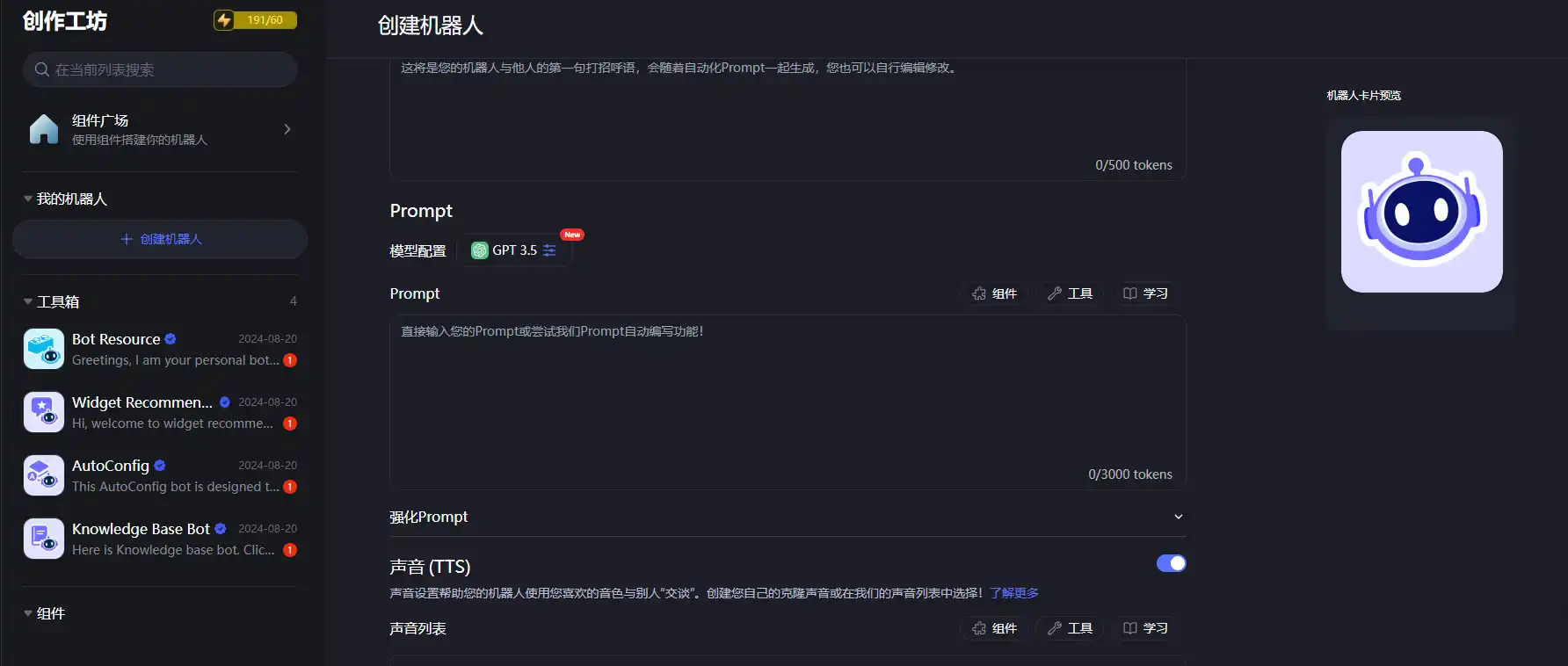
The benefits of this feature may not be so intuitive to ordinary players. With light usage, you can directly enter prompt words on this creative workshop page and specify tasks, while also utilizing MyShell's ready-to-use tool library.
For example, if you want to create an AI Agent that can chat with you, you can simply call its voice library and GPT model.
4. AIPP Store: The Grand Battle of AI Application Tokenization
It is only when you experience this part that you can feel the gameplay of Crypto.
The AIpp Store is a core part of the MyShell ecosystem. You can participate in the issuance and trading of AIPP tokens similar to trading tokens, somewhat resembling the previous Virtuals gameplay with AI Agents.
The AIpp Store also adopts the Bonding Curve mechanism to automatically adjust the price of AIPP based on supply and demand.
When users buy AIPP, its supply increases, causing the price to rise along the bonding curve; conversely, when users sell AIPP, the supply decreases, causing the price to drop.
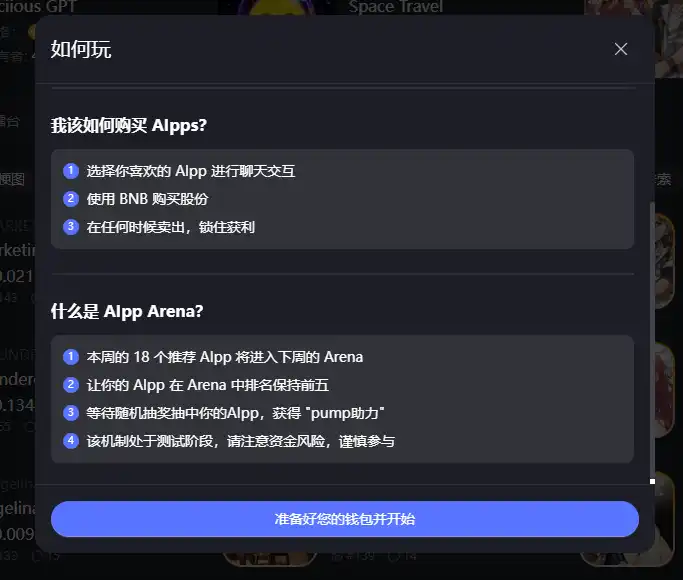
For example, if you fancy a particular AI Agent, you can purchase its token using BNB; and the creator of this AI Agent can earn a portion of the transaction fees.
In fact, the purpose of this model is still price discovery, that is, to encourage users to discover valuable applications early and spread them to others. Early investors can profit from the price increase, becoming nodes for application dissemination and expanding market influence.
So, What's the Use of the $SHELL Token?
The total supply of $SHELL tokens is 1,000,000,000, and the tokenomics can be summarized as follows:
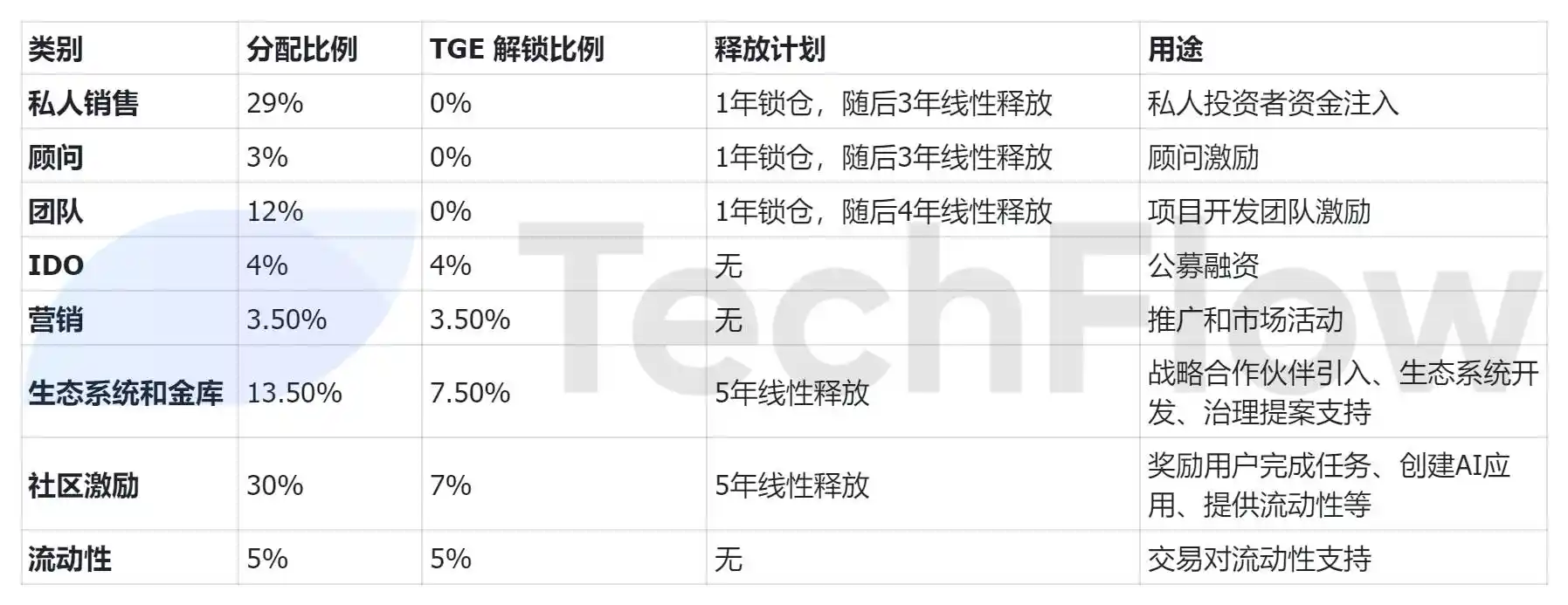
In terms of utility, the $SHELL token is closely related to the behaviors of various participants in the entire MyShell platform.
· Token Holder
Users holding $SHELL tokens can participate in governance through token investment/acquisition. Token holders can also receive rewards.
· Creator
Creators earn $SHELL rewards by developing and releasing AI applications (AI Apps). Creators can use $SHELL to purchase data and drive AI model development.
· User
Users pay $SHELL tokens by subscribing to or using MyShell's AI app services. Users can also receive $SHELL as rewards when authorizing data use.
· AI Model Contributor
AI model contributors earn $SHELL rewards by contributing models. Contributors can also earn additional tokens through data transactions.
· API Developer
API developers receive $SHELL rewards by contributing tools or services.
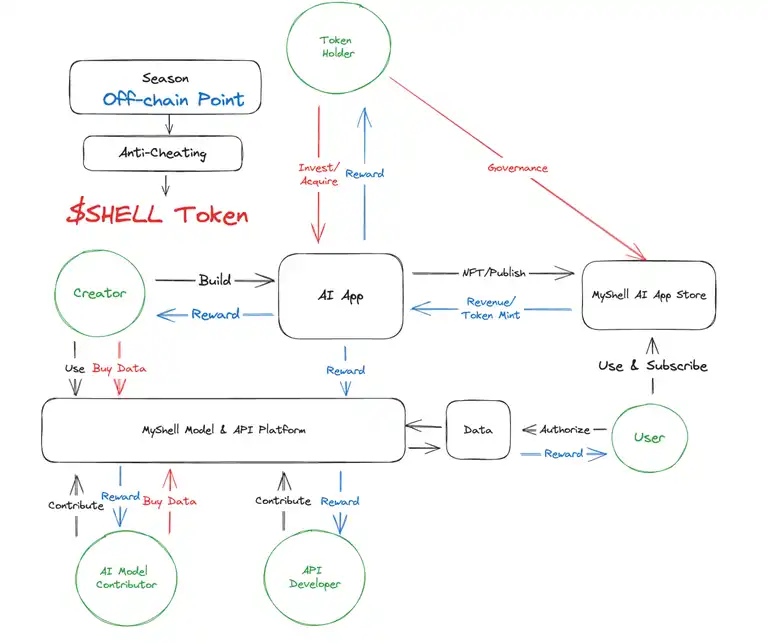
Looking at it from a more business-oriented perspective, MyShell can be seen as an AI service platform, and the token's commercial role within it is reflected in:
1. Subscription and Membership Fees
Users can pay $SHELL tokens to subscribe to high-quality AI tools or receive direct support. This membership model provides users with higher service value, while creating a stable token demand.
2. Advertising and Promotion
Creators or supporters can spend $SHELL on the MyShell platform to advertise their AI applications, increasing the visibility and exposure of the application. This provides creators with a market-driven tool while incentivizing the emergence of more high-quality content.
3. App Collection and Incentives
Users can pay $SHELL to collect other creators' AI applications. During the collection period, users can also receive incentives through $SHELL or other reward mechanisms. This mechanism encourages users to explore and support innovative applications.
4. Products/Services Compensation
· Creator Revenue: Creators can charge consumers $SHELL tokens for access to or use of services through their developed AI applications.
· Data Transactions: The MyShell platform may directly purchase data from users, paying $SHELL as compensation to further enrich the platform's data resources.
5. Platform Fees
The MyShell platform will charge a certain percentage of $SHELL as a service fee for all the activities mentioned above. These fees will be used for platform maintenance and further development.
Currently, there haven't been any particularly outstanding projects on the AI Agent on MyShell. After the token generation event (TGE), whether there will be more practical or attention-grabbing AI Agents or Memes in the ecosystem could become a significant factor driving the token's price change.
You may also like

CFTC Reportedly Plans New Prediction Market Rules Focused on Manipulation Risk and Public Interest Review
The CFTC is reportedly preparing new prediction market rules focused on manipulation risk, public interest review, and retail trader protections.

Meet the new WEEX trial fund—your gateway to greater profits

WEEX Labs Lands at Dutch Blockchain Week: A Disruptive Crypto × AI Conversation Sets Sail in Amsterdam

SK Hynix Reportedly Plans U.S. ADR Listing as Early as August, With SEC Approval Possible in Late June
SK Hynix may pursue a U.S. ADR listing as early as August, with SEC approval reportedly possible in late June amid strong AI chip supply chain demand.

SpaceX vs Tesla vs xAI: Which Elon Musk Trade Has the Biggest Upside in 2026?
OpenAI Reveals It Has Confidentially Submitted an S-1 to the SEC, Keeping the Door Open for a Future IPO
On June 9, according to an OpenAI announcement, the company recently confidentially submitted a draft S-1 registration statement to the U.S. Securities and Exchange Commission (SEC), beginning the preliminary compliance process for a potential initial public offering. OpenAI said it chose to disclose this proactively because it expected the news might leak; however, the company has not yet set a specific listing timeline, and related arrangements may still take some time.

Latest research from 13 top universities including Cornell University: The current state, challenges, and misconceptions of the fusion of Crypto and AI
Deconstructing Anthropic: The Best AI Company, Possibly Also a Type of Organizational Invention
Apollo and Blackstone Reportedly Back $35 Billion Anthropic Chip Financing as Deal Details Remain Unclear
On June 9, according to currently available news alerts, Apollo and Blackstone Group participated in a $35 billion financing for an Anthropic “chip project.” Based on the original wording of the report, the funding has already been raised, but public information remains limited. The financing structure, use of proceeds, project entity, and whether Apollo and Blackstone participated through equity, debt, or project financing have not yet been disclosed.

Humanity Protocol Security Incident Escalates: More Than $31 Million Stolen From Related Addresses as Attacker Continues Selling H for ETH
On June 9, according to monitoring by Onchain Lens, more than $31 million has been stolen from addresses linked to Humanity Protocol, and the attack is still ongoing, with the hacker continuously swapping H tokens for ETH. Project founder Terence Kwok later confirmed the security incident on X, saying the issue involved a private key leak.

Bloomberg: As Bitcoin Weakens, Stablecoins and RWA Continue to Drive Expansion in Crypto Businesses
In June, Bloomberg reported that despite Bitcoin falling below $60,000 last week, wiping out about $235 billion in market value within seven days, and dropping close to 50% from last year’s peak, some core businesses in the crypto industry are still expanding, mainly in stablecoins, real-world asset tokenization (RWA), payments, and infrastructure. The report also noted that overall altcoin activity has contracted significantly: altcoin market capitalization has fallen from a peak of about $431 billion in November 2021 to around $170 billion, and among the tens of millions of tokens issued in recent years, fewer than 1,700 still maintain meaningful trading activity.

Galaxy Deep Research Report: How Hyperliquid's HIP-4 Upgrade Changes the Landscape of Prediction Markets?
Binance Research: RWA Market Expected to Expand Nearly 6x from Early 2025, with Public Equities and Onchain Payments Heating Up Together
In June, Binance Research said in its monthly market report that the real-world asset (RWA) market is expected to grow by about 589% from the beginning of 2025. Bond- and money market fund-related RWA expanded by about $6.5 billion, up 83% year over year, while publicly traded equity RWAs grew by about 422%. The report also noted that monthly crypto debit card transaction volume exceeded $747 million in May, up 48.6% year to date.

Japan to Assess a Framework for Yen Stablecoins and Crypto ETFs as Asia’s Compliant Payments Narrative Heats Up
Recently, according to the original report, Japan is considering the launch of yen stablecoins and cryptocurrency ETFs. Public information remains limited at this stage, and there is still no complete policy text, regulatory draft, or clear implementation timeline, so this is better characterized as a “policy discussion” rather than formal implementation. The original wording also noted that advancing stablecoin regulation in Asia is driving XRP usage and supporting growth in the XRPL ecosystem. However, based on currently available public information, there is not enough evidence to directly establish a clear causal relationship between this round of discussion in Japan and XRP or XRPL.

ZachXBT: Humanity private key leak and abnormal surge in H token should be viewed separately
On June 9, according to related disclosures, on-chain investigator ZachXBT posted an update on Humanity’s roughly $31 million security incident, saying that after further analyzing fund flows, he currently tends to believe the project team was not involved in an “inside job” or a self-staged attack. According to him, the official explanation about the private key leak was broadly accurate, but before the token unlock, the price of H had been artificially pushed higher, and the hacker later took advantage of that market environment; therefore, the private key leak and the earlier abnormal price pumping should be regarded as two separate and independent events. This reframing has shifted the market’s understanding of the nature of the incident. Earlier discussion around Humanity had focused on whether the team directly participated in the attack or used the security incident to cover up internal operations. ZachXBT’s latest remarks shift the focus from “whether it was self-theft” to “whether there were pre-unlock market structure issues.” He also questioned whether the team may have.

Morning Report | OpenAI has submitted an S-1 registration statement draft to the U.S. SEC; Morpho completes $175 million financing

Morning Report | BitMine increased its holdings by 126,971 ETH last week; trader Eugene announced his exit from the crypto market

Wang Chuan: How can one not feel anxious after the neighbor Old Wang made thirty times profit by investing in storage stocks? (Seven) - A quarter-century cycle
CFTC Reportedly Plans New Prediction Market Rules Focused on Manipulation Risk and Public Interest Review
The CFTC is reportedly preparing new prediction market rules focused on manipulation risk, public interest review, and retail trader protections.
Meet the new WEEX trial fund—your gateway to greater profits
WEEX Labs Lands at Dutch Blockchain Week: A Disruptive Crypto × AI Conversation Sets Sail in Amsterdam
SK Hynix Reportedly Plans U.S. ADR Listing as Early as August, With SEC Approval Possible in Late June
SK Hynix may pursue a U.S. ADR listing as early as August, with SEC approval reportedly possible in late June amid strong AI chip supply chain demand.
SpaceX vs Tesla vs xAI: Which Elon Musk Trade Has the Biggest Upside in 2026?
OpenAI Reveals It Has Confidentially Submitted an S-1 to the SEC, Keeping the Door Open for a Future IPO
On June 9, according to an OpenAI announcement, the company recently confidentially submitted a draft S-1 registration statement to the U.S. Securities and Exchange Commission (SEC), beginning the preliminary compliance process for a potential initial public offering. OpenAI said it chose to disclose this proactively because it expected the news might leak; however, the company has not yet set a specific listing timeline, and related arrangements may still take some time.


