
New Listing on Pump.Science Soon, Can the New Compound Project Compare to Rif/Uro?



Original Article Title: "New Launch on Pump.Science Platform, Can the New Compound Project Compete with Rif/Uro?"
Original Source: Biteye
Past successes like Pump.fun, which saw daily volumes in the millions, and current events like CZ's shill for Four.Meme, demonstrate that the on-chain launch platform's casino effect is still in full swing. On February 8th, the long-dormant DeSci (Decentralized Science) track also saw the news of the well-established project Pump.Science preparing to launch a new launch platform next week. With this announcement, $Rif and $Uro both surged by 20%. Previously, Pump.Science co-founder Benjels had stated in an interview that they would launch 20 new compound tokens by Christmas 2024.
However, this action has been delayed until now. Over the past three months, external factors such as interest rate cuts have led to a more than 95% decline from the peak market values of Pump.Science's official tokens $Rif and $Uro, while during the same period, the DeSci financial layer project BIO, which went live on Binance, also dropped by around 90% from its peak market value. The DeSci track, once hyped by endorsements from CZ and Vitalik and seen as a promising narrative to drive mass adoption further, is now facing a bleak situation. It seems that this much-anticipated new narrative is now under widespread criticism.
Will the New Launch Platform Trigger a Renaissance for DeSci?
According to Pump.Science's official community documentation, the process of the new launch platform is as follows:
① Users will list a compound along with a token on the Pump.Science platform.
② Users can buy and sell tokens on a Bonding Curve, similar to Pump.fun's parameters, to support research on this compound. 79% of the tokens are issued along the Bonding Curve. When the token's market value reaches 303 Sol (with 85 Sol in circulation), the Bonding Curve will close. Liquidity of 82 Sol will be moved to Meteora for trading. 3 Sol will be used to pay for the relevant worm experiments.
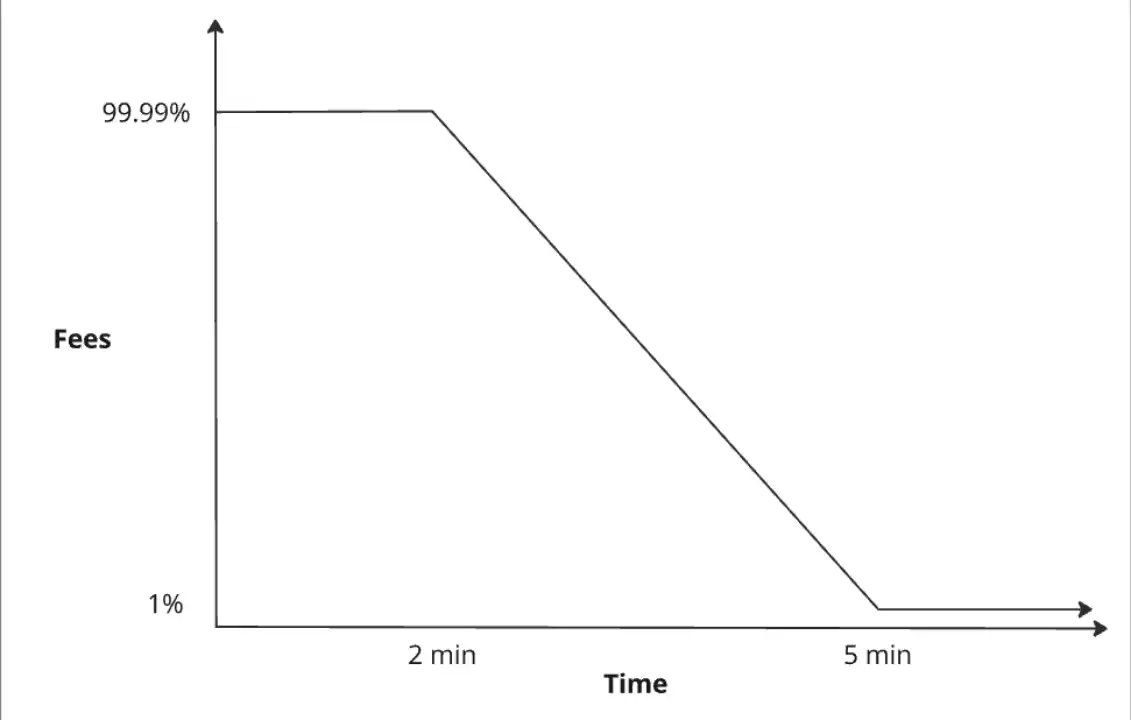
Of particular note, the new Pump.Science launch platform will implement a dynamic fee structure to prevent sniper bots and automatic exploits during the initial token sale. Specific measures include:
① Bot Deterrence: The dynamic fee structure is specifically designed to reduce sniper bot front-running.
② Early-Risk: The fee for the first 150 slots (about 2 minutes) is very high (99.99%), significantly reducing the number of tokens purchasers receive.
③ Monitoring Activity: Between slots 150 and 250 (2-4 minutes), the fee will rapidly decrease.
Dynamic Fee Structure Curve:
The whitepaper also stated that all new compounds need to airdrop a certain share to the builders and holders of $Rif and $Uro. Undoubtedly, Pump.Science's launch of a new token issuance platform is a grandiose "self-rescue" mission. The languishing DeSci track is in desperate need of a new focal point of attention and the emergence of a wealth-building effect. Nowadays, hunters on the Solana chain have been lost in a myriad of AI Agents and celebrity coins for too long, while the BSC chain sees a CZ-led overt promotion diversion. In a crisis-ridden blockchain environment, can the DeSci fervor akin to Rif and Uro be rekindled to turn the tide? With new compounds, a new Dev, and the joining of new attention-increasing players, can more DeSci gameplay be activated to attract liquidity? Three months after the grand launch of the DeSci project, it has undoubtedly come to a critical juncture to determine whether DeSci will rise to new heights or fade into obscurity.
Oversubscription Refund 90%, $Pain-style Presale of New Compound EGS Generates Intense Discussion
At 3:19 AM on February 9, Pump.Science's official Twitter commented on its upcoming compound project $EGS @EGCGxSFN, stating, "Earning trust is the most appreciated thing." A look at Twitter reveals that Pump.Science's new compound project $EGS unexpectedly kicked off a 24-hour presale window on February 7. According to on-chain data, the presale wallet address for $EGS finally raised 1223 Sol at block height 319172095. More notably, the project team announced through a tweet that they would refund 91.87% of the funds raised, retaining only 100 Sol for token issuance and liquidity support. This presale's "high oversubscription refund" strategy, reminiscent of the popular $Pain project, sets a pioneering precedent in DeSci projects with its refund behavior and ratio. The original tweet from the EGS team announced, "24 hours, no marketing, no whales, we have proven trust in science," and declared that EGS would debut with a $100k market cap gift to DeSci diamond hands; those who participated in the presale had already received around three times the profit.
EGS stands for the compounds Epigallocatechin Gallate and Sulforaphane. EGCG is the core active ingredient in green tea, known as the "king of antioxidants," which activates the AMPK pathway to inhibit cell aging, eliminate free radicals to reduce oxidative damage. Studies show that EGCG can extend the lifespan of model organisms such as nematodes and fruit flies by up to 20%, with mechanisms that include inhibiting pro-inflammatory factors, enhancing mitochondrial function, and possibly delaying telomere shortening through epigenetic regulation. Sulforaphane, derived from cruciferous vegetables such as broccoli, acts as a "cellular defender," significantly boosting cellular antioxidant capacity by activating the Nrf2 pathway. Experimental evidence shows that Sulforaphane can extend the lifespan of mice by about 15%, with key actions including promoting autophagy to clear senescent cells, repairing DNA damage, and inhibiting age-related chronic inflammation (such as the NF-κB pathway). Both compounds work through multiple targets to synergistically delay aging, representing a few natural compounds with clinical translational potential as longevity candidate molecules.
Clearly, the new compound has taken over the IP monetization logic of Rif and Uro in the past, and has reduced risk through a presale with a high refund rate. This is the "low threshold, high odds" story that DeSci urgently needs. However, whether such a high-profile presale gameplay, combined with DeSci's "trust in science" narrative, can align with Rif and Uro after the launch of the new platform is not a foregone conclusion. Pump.Science co-founder Benjels frankly admits, "DeSci's problem lies in its grand narrative, but implementation is challenging." "Users want to support science while also hoping to gain speculative returns, and how to balance the two is key." In today's market where pumping is seen as justice, the singular grand narrative of decentralized science has been proven unable to gain market acceptance. The road to revival in the DeSci track is still long and arduous, requiring more eye-catching gameplay to capture the sensitive attention within the community. Let's hope that this time, the new compounds from Pump.Science can bring new increments to the devastated DeSci track and, as promised in the tweet, provide both wealth and spiritual comfort to those diamond-handed DeSci believers who are still holding on.
Appendix: Pump.Science New Compound Overview
- Punicalagin & Berberine: Pomegranate polyphenols, with strong antioxidant and anti-inflammatory effects; Berberine: AMPK activator, can regulate blood sugar and improve metabolic health. Together, pomegranate polyphenols support cardiovascular health and the anti-inflammatory pathway, complementing the metabolic action of Berberine.
- Resveratrol & Berberine: Resveratrol, a polyphenol, can activate sirtuins, improve mitochondrial efficiency, and mimic the effects of calorie restriction; Berberine: AMPK activator, can regulate blood sugar and improve metabolic health. Together, Resveratrol and Berberine can both activate AMPK and sirtuins, potentially leading to longevity, metabolic control, and enhanced cellular repair capacity.
- Ginsenoside Rh2: Ginsenoside Rh2, a bioactive compound in ginseng, has anticancer, neuroprotective, and anti-inflammatory effects.
- Aspalathin & Caffeine: Aspalathin, a bioactive flavonoid compound in rooibos tea, has antioxidant and blood sugar-lowering effects; Caffeine, a stimulant, can enhance cognitive and physical performance. Together, Aspalathin can counteract the potential negative effects of caffeine on blood sugar and stress hormones, providing a more balanced stimulant response.
- Gossypol & Catechin Hydrate: Gossypol, a polyphenol with potential anticancer and metabolic effects; Catechin hydrate, a catechin similar to EGCG, has strong antioxidant properties. Together, these compounds can jointly regulate cell stress responses, improving metabolic efficiency.
-Biotin & Berberine: Biotin, a substance necessary for fatty acid metabolism, glucose regulation, and skin health; Berberine, a metabolism regulator that can improve insulin sensitivity. Together, Biotin can complement Berberine's effects by enhancing lipid metabolism and mitochondrial function.
-Urolithin A & EGCG: Urolithin A, a metabolite extracted from pomegranate that promotes mitophagy (recycling of damaged mitochondria); EGCG, epigallocatechin gallate, a potent antioxidant and anti-inflammatory compound found in green tea. Together, EGCG and Urolithin A support mitochondrial function and longevity pathways, potentially enhancing cellular energy efficiency.
-Berberine & Quercetin: Berberine, a metabolism regulator that improves insulin sensitivity, lowers blood sugar, and supports cardiovascular health; Quercetin, a flavonoid with anti-inflammatory, antioxidant, and antiviral properties that enhances nutrient absorption. Together, Quercetin can improve Berberine's bioavailability and complement its metabolic effects, thereby improving glucose regulation and mitochondrial function.
-Hesperidin & DHM (Dihydromyricetin): Hesperidin, a flavonoid compound found in citrus fruits that improves blood circulation, reduces oxidative stress, and supports vascular health; DHM (Dihydromyricetin), used to protect the liver, support alcohol metabolism, and protect neurons. Both compounds can regulate liver enzymes and inflammatory pathways, enhancing detoxification and metabolic resilience.
-EGCG: Epigallocatechin Gallate, a potent antioxidant and anti-inflammatory compound found in green tea.
-Caffeine: a stimulant that enhances energy, cognitive function, and endurance. Supports liver detoxification and reduces premature death.
-Artemisinin: Artemisinin, extracted from sweet wormwood, known for its antimalarial, anticancer, and anti-inflammatory effects.
Recently, as Binance Research once again affirmed the DeFi track, BIO, Rif, and Uro all saw a 20% surge. It seems that the DeFi craze is picking up again. Meanwhile, these compounds are also about to be listed on the Pump.Science platform. The wide array of token listings necessitates continued attention to high-quality tokens, choosing projects that are committed and have solid fundamentals. Do Your Own Research (DYOR)!
You may also like

SpaceX vs Tesla vs xAI: Which Elon Musk Trade Has the Biggest Upside in 2026?

OpenAI Reveals It Has Confidentially Submitted an S-1 to the SEC, Keeping the Door Open for a Future IPO
On June 9, according to an OpenAI announcement, the company recently confidentially submitted a draft S-1 registration statement to the U.S. Securities and Exchange Commission (SEC), beginning the preliminary compliance process for a potential initial public offering. OpenAI said it chose to disclose this proactively because it expected the news might leak; however, the company has not yet set a specific listing timeline, and related arrangements may still take some time.

Latest research from 13 top universities including Cornell University: The current state, challenges, and misconceptions of the fusion of Crypto and AI
Deconstructing Anthropic: The Best AI Company, Possibly Also a Type of Organizational Invention
Apollo and Blackstone Reportedly Back $35 Billion Anthropic Chip Financing as Deal Details Remain Unclear
On June 9, according to currently available news alerts, Apollo and Blackstone Group participated in a $35 billion financing for an Anthropic “chip project.” Based on the original wording of the report, the funding has already been raised, but public information remains limited. The financing structure, use of proceeds, project entity, and whether Apollo and Blackstone participated through equity, debt, or project financing have not yet been disclosed.

Humanity Protocol Security Incident Escalates: More Than $31 Million Stolen From Related Addresses as Attacker Continues Selling H for ETH
On June 9, according to monitoring by Onchain Lens, more than $31 million has been stolen from addresses linked to Humanity Protocol, and the attack is still ongoing, with the hacker continuously swapping H tokens for ETH. Project founder Terence Kwok later confirmed the security incident on X, saying the issue involved a private key leak.

Bloomberg: As Bitcoin Weakens, Stablecoins and RWA Continue to Drive Expansion in Crypto Businesses
In June, Bloomberg reported that despite Bitcoin falling below $60,000 last week, wiping out about $235 billion in market value within seven days, and dropping close to 50% from last year’s peak, some core businesses in the crypto industry are still expanding, mainly in stablecoins, real-world asset tokenization (RWA), payments, and infrastructure. The report also noted that overall altcoin activity has contracted significantly: altcoin market capitalization has fallen from a peak of about $431 billion in November 2021 to around $170 billion, and among the tens of millions of tokens issued in recent years, fewer than 1,700 still maintain meaningful trading activity.

Galaxy Deep Research Report: How Hyperliquid's HIP-4 Upgrade Changes the Landscape of Prediction Markets?
Binance Research: RWA Market Expected to Expand Nearly 6x from Early 2025, with Public Equities and Onchain Payments Heating Up Together
In June, Binance Research said in its monthly market report that the real-world asset (RWA) market is expected to grow by about 589% from the beginning of 2025. Bond- and money market fund-related RWA expanded by about $6.5 billion, up 83% year over year, while publicly traded equity RWAs grew by about 422%. The report also noted that monthly crypto debit card transaction volume exceeded $747 million in May, up 48.6% year to date.

Japan to Assess a Framework for Yen Stablecoins and Crypto ETFs as Asia’s Compliant Payments Narrative Heats Up
Recently, according to the original report, Japan is considering the launch of yen stablecoins and cryptocurrency ETFs. Public information remains limited at this stage, and there is still no complete policy text, regulatory draft, or clear implementation timeline, so this is better characterized as a “policy discussion” rather than formal implementation. The original wording also noted that advancing stablecoin regulation in Asia is driving XRP usage and supporting growth in the XRPL ecosystem. However, based on currently available public information, there is not enough evidence to directly establish a clear causal relationship between this round of discussion in Japan and XRP or XRPL.

ZachXBT: Humanity private key leak and abnormal surge in H token should be viewed separately
On June 9, according to related disclosures, on-chain investigator ZachXBT posted an update on Humanity’s roughly $31 million security incident, saying that after further analyzing fund flows, he currently tends to believe the project team was not involved in an “inside job” or a self-staged attack. According to him, the official explanation about the private key leak was broadly accurate, but before the token unlock, the price of H had been artificially pushed higher, and the hacker later took advantage of that market environment; therefore, the private key leak and the earlier abnormal price pumping should be regarded as two separate and independent events. This reframing has shifted the market’s understanding of the nature of the incident. Earlier discussion around Humanity had focused on whether the team directly participated in the attack or used the security incident to cover up internal operations. ZachXBT’s latest remarks shift the focus from “whether it was self-theft” to “whether there were pre-unlock market structure issues.” He also questioned whether the team may have.

Morning Report | OpenAI has submitted an S-1 registration statement draft to the U.S. SEC; Morpho completes $175 million financing

Morning Report | BitMine increased its holdings by 126,971 ETH last week; trader Eugene announced his exit from the crypto market

Wang Chuan: How can one not feel anxious after the neighbor Old Wang made thirty times profit by investing in storage stocks? (Seven) - A quarter-century cycle
Cryptocurrency CEXs are flocking to sell US stocks, and traditional brokerages are facing an "uninvited guest."
$75 billion in foreign capital has fled, and South Korean retail investors have absorbed it all using leverage

Japan’s Three Megabanks Plan Joint Stablecoin Issuance in Fiscal 2026
MUFG, SMBC, and Mizuho reportedly plan to jointly issue fiat-pegged stablecoins in fiscal 2026, signaling Japan’s growing push into bank-led digital payment infrastructure.

Humanity Discloses H Token Dual-Chain Attack Details, With Losses on Ethereum and BSC Exceeding $36 Million
Humanity said the H token attack across Ethereum and BSC caused more than $36 million in losses after leaked ProxyAdmin keys enabled malicious contract upgrades and token minting.
SpaceX vs Tesla vs xAI: Which Elon Musk Trade Has the Biggest Upside in 2026?
OpenAI Reveals It Has Confidentially Submitted an S-1 to the SEC, Keeping the Door Open for a Future IPO
On June 9, according to an OpenAI announcement, the company recently confidentially submitted a draft S-1 registration statement to the U.S. Securities and Exchange Commission (SEC), beginning the preliminary compliance process for a potential initial public offering. OpenAI said it chose to disclose this proactively because it expected the news might leak; however, the company has not yet set a specific listing timeline, and related arrangements may still take some time.
Latest research from 13 top universities including Cornell University: The current state, challenges, and misconceptions of the fusion of Crypto and AI
Deconstructing Anthropic: The Best AI Company, Possibly Also a Type of Organizational Invention
Apollo and Blackstone Reportedly Back $35 Billion Anthropic Chip Financing as Deal Details Remain Unclear
On June 9, according to currently available news alerts, Apollo and Blackstone Group participated in a $35 billion financing for an Anthropic “chip project.” Based on the original wording of the report, the funding has already been raised, but public information remains limited. The financing structure, use of proceeds, project entity, and whether Apollo and Blackstone participated through equity, debt, or project financing have not yet been disclosed.
Humanity Protocol Security Incident Escalates: More Than $31 Million Stolen From Related Addresses as Attacker Continues Selling H for ETH
On June 9, according to monitoring by Onchain Lens, more than $31 million has been stolen from addresses linked to Humanity Protocol, and the attack is still ongoing, with the hacker continuously swapping H tokens for ETH. Project founder Terence Kwok later confirmed the security incident on X, saying the issue involved a private key leak.


