
- Buy Crypto
- Markets
 Futures
- Spot
- Copy Trade
- Earn
- More
Metis is launching the integrated development of its ecosystem, optimizing the tokenomics model to drive the collaborative development of projects within the ecosystem.

BlockBeats News: On October 29, Metis announced the launch of an ecosystem-wide integration strategy, incorporating the settlement layer Andromeda, the high-performance computing layer Hyperion, the AI application layer LazAI, the zero-knowledge proof layer ZKM, and the Bitcoin L2 exploration layer GOAT into a unified architecture. This move aims to drive synergies within the ecosystem, marking its transition from the layered construction phase to a new era of ecosystem collaboration.
According to the official governance proposal, Metis will optimize the tokenomics through three key mechanisms:
1. Establish METIS as the native Gas token for the LazAI network, where all AI inferences and on-chain computations will consume METIS;
2. Reduce the decentralized sequence miner (DSeq) mining reward rate to 15% to enhance economic sustainability;
3. Establish a 20% ecosystem growth reserve (EAGR) of the total supply for validator incentives, liquidity support, and cross-layer collaborative development.
The proposal does not change the token's total supply cap, and the EAGR will be released in stages as needed, with the overall implementation expected to take about four weeks after community approval. This adjustment aims to strengthen METIS's long-term value proposition by enhancing utility and optimizing the distribution mechanism without increasing token issuance. The community vote will open on October 30 at 1:00 (Beijing time) on the Snapshot platform and will conclude on November 3. Metis cordially invites global community members to participate in this ecosystem evolution, and specific participation details will be announced soon.
You may also like

Particle Founder: The entrepreneurial insights I have gained the most from in the past year

Huang Renxun's latest podcast transcript: The future of Nvidia, the development of embodied intelligence and agents, the explosion of inference demand, and the public relations crisis of artificial intelligence

OKX Ventures Research Report: AI Agent Economic Infrastructure Research Report (Part 1)

The migration of settlement rights: B18 and the institutional starting point of on-chain banks

From Tencent and Circle: Looking at the Simple and Difficult Questions of Investment

The second half of stablecoins no longer belongs to the crypto circle

Cursor "Shell" Kimi Controversy Reversed: From Copyright Infringement Allegations to Authorized Collaboration, China's Open Source Model Once Again Becomes a Global AI Foundation

The Real Reason Tokens Don't Sell: 90% of Crypto Projects Overlook Investor Relations

Is the income of pump.fun real, earning a million dollars a day despite the market downturn?

The real reason why tokens are not selling: 90% of crypto projects neglect investor relations

Who is the true winner of the "Tokenization" narrative?

Moss: The Era of AI-Traded by Anyone | Project Introduction

Chip Smuggling Case Exposes Regulatory Loophole | Rewire News Evening Update

How a Structured AI Crypto Trading Bot Won at the WEEX Hackathon
Ritmex demonstrates how disciplined risk control and structured signals can make an AI crypto trading bot more stable and reliable on WEEX, highlighting the importance of combining execution discipline with scalable AI trading systems.

Old Indicator Fails, Three Major New Signals Emerge: BTC True Bottom May Still Be Below $60K

Meeting OpenClaw Founder at a Hackathon: What Else Can Lobsters Do?
Huang Renxun's Latest Podcast Transcript: NVIDIA's Future, Embodied Intelligence and Agent Development, Soaring Demand for Inferencing, and AI's PR Crisis
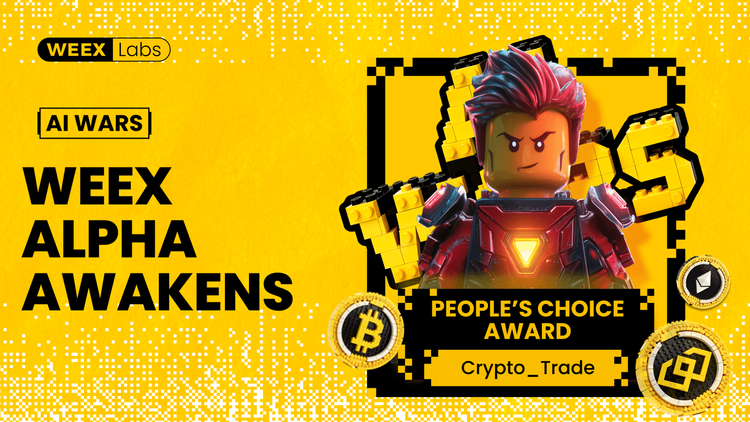
How a Structured AI Crypto Trading Bot Won at the WEEX Hackathon
Crypto_Trade shows how structured inputs and controlled adaptability can build a more stable and reliable AI crypto trading bot within the WEEX AI Trading Hackathon, highlighting a practical path toward scalable AI trading systems.


 App
App