
How Atlas is Pioneering a New Era of Innovation and Capital Efficiency for Grvt and its Users

We have seen many posts explaining what the ZKsync Atlas upgrade brings.
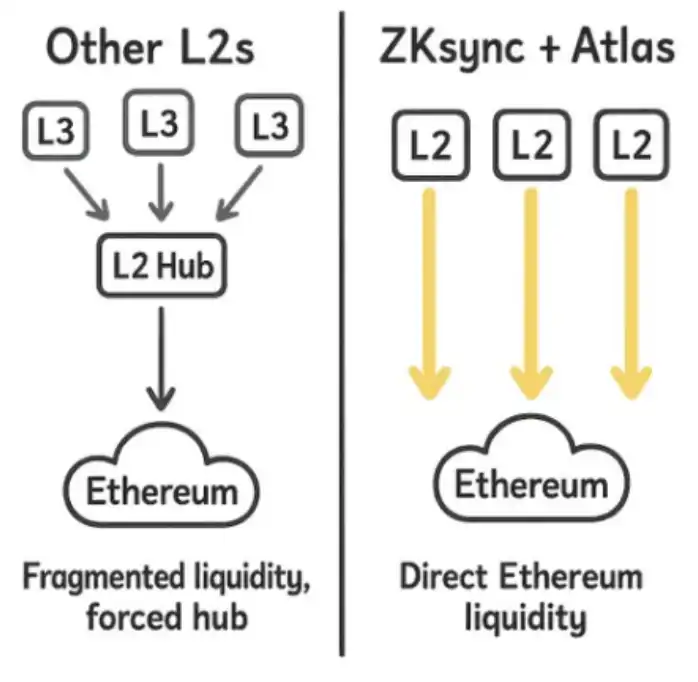
As ZKsync founder Alex put it, the Atlas upgrade "for the first time allows L2 to rely directly on Ethereum as a real-time liquidity hub," which is not only a technical upgrade, but also a reshaping of the ecosystem.
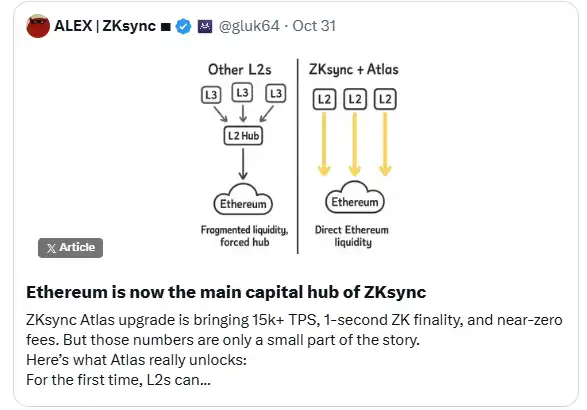
Today, we will focus on the potential new innovations that Grvt may introduce in the future, as well as the new functionalities users can achieve on Grvt through Atlas, as Grvt becomes a core dApp for expanding Ethereum liquidity and market layers in an immutable manner.
As the largest ZKsync-driven dApp, Grvt achieves composability with the Ethereum mainnet through Atlas, coupled with its liquidity and immutability, it is believed that Grvt and its users will benefit most in terms of capital efficiency. The ability to interoperate and be composable with the most popular DeFi dApps on the Ethereum mainnet will open up many possibilities for Grvt and ETH mainnet users to maximize their capital potential. Here are specific ways:
(1) Lending Protocol: Maximize your balance on Grvt through Aave or Euler
With a balance on Grvt, you can directly access borrowing from deep liquidity sources on the Ethereum mainnet through Aave or Euler (TVL of 298.8 billion and 16 billion, respectively), and use the funds for trading and earning yield on Grvt, or invest in Grvt strategies.
(2) Spot DEX: Through Atlas, Grvt users can maximize the utility of their LP position
Users can use LP tokens from Ethereum mainnet's Uniswap or other spot DEXs as collateral for perpetual contract trading, increasing the returns on their LP position. Grvt strategists can also integrate LP positions from spot DEXs into strategies previously limited to perpetual contracts, as a means of diversification. The simplest way is for users to access liquidity from any spot DEX on the Ethereum mainnet through Grvt for token swaps.
(3) LRT and LST Protocols: Enhance the value of your LRT and LST
Through Atlas, traders on Grvt can utilize LRT and LST from protocols such as Eigencloud, Lido, Rocketpool, among others, not only to earn staking rewards but also to use them as margin to open perpetual contract positions, while also enjoying Grvt's native rewards (if still available). This means triple rewards: staking rewards + Grvt native rewards + perpetual trading profits.
Additionally, Grvt strategists can include LRT and LST in their portfolios as a "risk-free" source of income, helping users achieve income diversification while avoiding impermanent loss and high-risk trading.
(4) Yield Protocol: Make Your Pendle Position More Flexible
Similar to LRT and LST, Grvt users can use Pendle's PT (Zero Coupon Bond-like yield-bearing token) as margin to open perpetual positions, achieving triple rewards: (i) Stable yield from PT, (ii) Grvt's native rewards (approximately 10%), (iii) Trading profits.
Grvt strategists can also incorporate Pendle's PT and YT into their strategies to explore more creative sources of income, even achieving high risk-adjusted returns through YT without relying on external infrastructure providers such as Gauntlet or Morpho.
(5) Stablecoin and RWA Protocol: Maple
Taking the example of Maple, an RWA protocol on the Ethereum mainnet, it offers yield-bearing stablecoins based on overcollateralized loans. Users can mint SyrupUSDC on Grvt to: (i) earn passive income on Grvt, (ii) use SyrupUSDC as collateral for perpetual positions while earning returns, (iii) further enhance capital efficiency.
Grvt strategists can also utilize stablecoins from diversified income sources to hedge with stablecoins during "liquidation" while still providing returns to users.
These are just some examples of how ZKsync-powered Grvt becomes an extension of Ethereum's immutability, opening up more product, strategy, and innovation possibilities through increased capital efficiency and liquidity. I am very excited about the breakthrough innovation that Grvt brings, full of anticipation for the potential of Atlas, and I look forward to exploring endless possibilities post-launch!
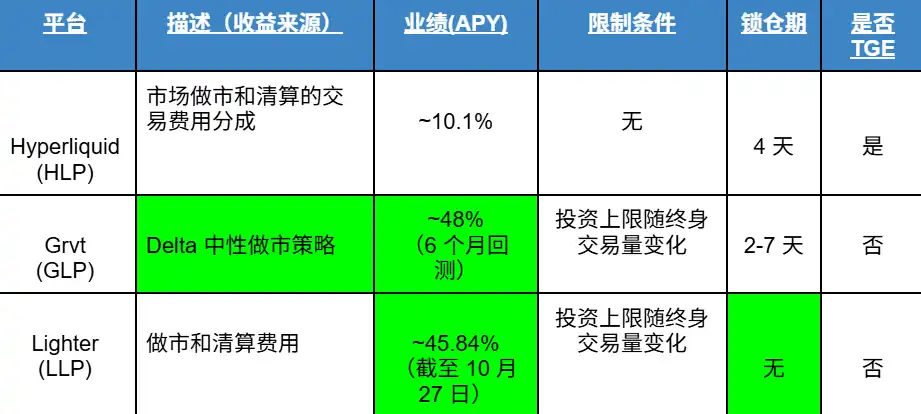
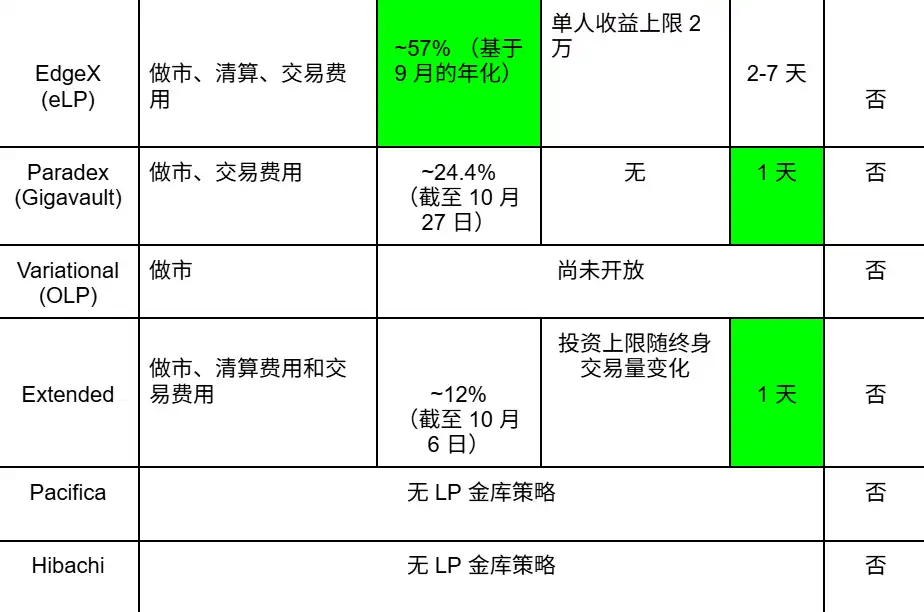
Furthermore, Grvt has just launched its native protocol treasury GLP, which has already surpassed $1.5 million in assets under management in less than 24 hours. Below is a table summarizing key perpetual contract DEXs and their "native" LP treasury strategies.
This article is a contribution and does not represent the views of BlockBeats.
You may also like

Dialogue with OmenX Founder: Why does the prediction market need an evolution from "spot" to "derivatives"?

When the P2P illicit funds from ten years ago turned into 60,000 bitcoins

Morning News | CME Group launches Nasdaq Cryptocurrency Index futures; Asset management giant Janus Henderson strategically invests in Ethena

Why did Oracle deliver the strongest financial report in history, yet its stock price fell?

Bitcoin Layer 2 Network Botanix: Why Did We Choose to Dissolve?

Morning Report | OpenAI has submitted an S-1 registration statement draft to the U.S. SEC; Morpho completes $175 million financing

Galaxy Deep Research Report: How Hyperliquid's HIP-4 Upgrade Changes the Landscape of Prediction Markets?

Latest research from 13 top universities including Cornell University: The current state, challenges, and misconceptions of the fusion of Crypto and AI
Deconstructing Anthropic: The Best AI Company, Possibly Also a Type of Organizational Invention

Every exchange is a "Universal Exchange."

The counterattack of traditional finance: Alliance chains are quietly reviving
Pantera Capital Partner: How Tokenization is Restructuring the Private Equity and Early Investment Ecosystem?

Mastercard Launches Agent Pay for AI, Plans to Record AI Agent Payment Authorizations on Polygon
Mastercard launched Agent Pay for AI, a new payment protocol designed to help AI agents make small payments such as pay-per-use access to data and APIs. The system plans to record human-granted AI agent permissions on Polygon, focusing on verifiable authorization, identity, and payment controls.

Curve Deploys Llamalend v2 on Optimism With 250,000 OP Incentives
Curve launched Llamalend v2 on Optimism with 250,000 OP incentives from the Optimism Foundation. The upgrade expands Llamalend beyond its earlier crvUSD-focused model, adding broader collateral support, LlamaRisk market reviews, and the ability to use Curve LP tokens as collateral.

Raydium Old Liquidity Pool Reportedly Exploited, With $1.34 Million Moved to Ethereum and Tornado Cash
An old Raydium liquidity pool was reportedly exploited for around $1.34 million in USDC, RAY, and wSOL, with the stolen funds bridged to Ethereum and deposited into Tornado Cash. The incident highlights the tail risks of legacy DeFi pools, old contracts, and cross-chain fund laundering paths.
Kalshi Executive Challenges “SBF Backed AI Unicorns” Narrative, Says Leopold Aschenbrenner Was Key Figure
Kalshi executive John Wang questioned the “SBF backed AI unicorns” narrative, saying Leopold Aschenbrenner was the key figure behind major AI investment decisions.

New York Proposes Stricter Stablecoin Issuer Rules Aligned With Federal GENIUS Act
NYDFS proposed stricter stablecoin issuer rules aligned with the GENIUS Act, covering reserves, custody, redemption timelines, audits, and capital buffers.

CryptoQuant Says Bitcoin Profitable Supply Is Near 45% Pressure Zone as On-Chain Data Points to Market Repricing
CryptoQuant said Bitcoin’s profitable supply is nearing the 45% pressure zone, signaling rising market stress, unrealized losses, and a possible on-chain repricing phase.
Dialogue with OmenX Founder: Why does the prediction market need an evolution from "spot" to "derivatives"?
When the P2P illicit funds from ten years ago turned into 60,000 bitcoins
Morning News | CME Group launches Nasdaq Cryptocurrency Index futures; Asset management giant Janus Henderson strategically invests in Ethena
Why did Oracle deliver the strongest financial report in history, yet its stock price fell?
Bitcoin Layer 2 Network Botanix: Why Did We Choose to Dissolve?
Morning Report | OpenAI has submitted an S-1 registration statement draft to the U.S. SEC; Morpho completes $175 million financing

Popular coins
Latest Crypto News


