
From Helium to Jupiter: Why Token Buyback is No Longer Effective?

Original Article Title: "Token Buyback Strategy Faces Test: Helium Announces Abandonment, Project Team Out of Funds?"
Original Article Author: 1912212.eth, Foresight News
When some projects were forced to adopt a token buyback strategy due to a low token price and overwhelming investor demand, now project teams are beginning to rethink this approach.
On January 3, Helium founder Amir Haleem tweeted that they would cease the token buyback, giving a simple and straightforward reason: the market did not "care" about the project team's token buyback. The implication is that the effect of the buyback on the token price is not significant. Therefore, he will "stop wasting funds."
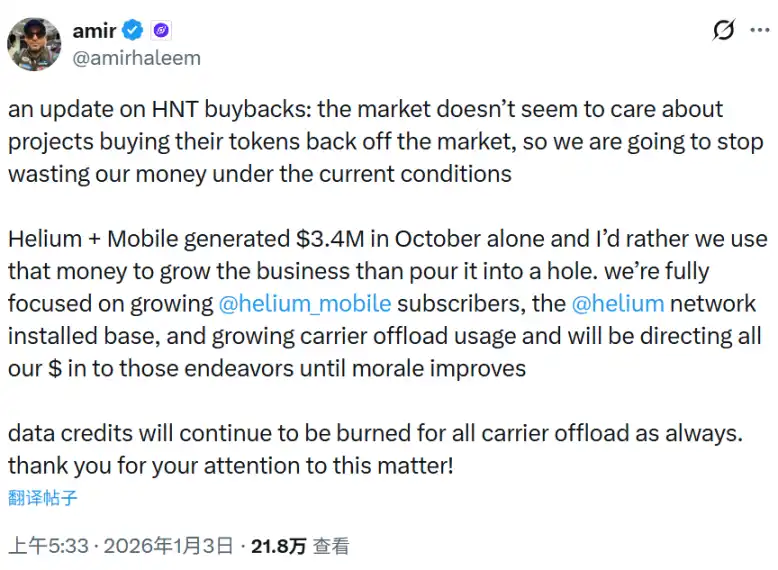
Helium is a decentralized telecommunications infrastructure project that completed a $200 million Series D financing in March 2022, led by a16z and Tiger Global. Its token, HNT, is mainly used for network incentives and governance.
In October of this year, the project planned to implement a buyback mechanism, mainly using a portion of the network-generated revenue (such as mobile service and data transfer fees) to buy HNT from the open market.
The specifics include: allocating a fixed percentage (about 10-20%) monthly from revenues of businesses like Helium Mobile for buyback; the buyback funds come from actual business cash flow rather than newly issued tokens; buyback operations are executed on the secondary market through automated scripts, prioritizing high liquidity trading platforms; the bought HNT is partly burned to reduce circulating supply, and the remaining part is locked in the project treasury for future network incentives or ecosystem development. Haleem emphasized that the original intention of the buyback was to "reward holders and stabilize the price by reducing supply."
The project team originally planned to continue this until the end of 2026. However, the token price still threw cold water on the project team founders.
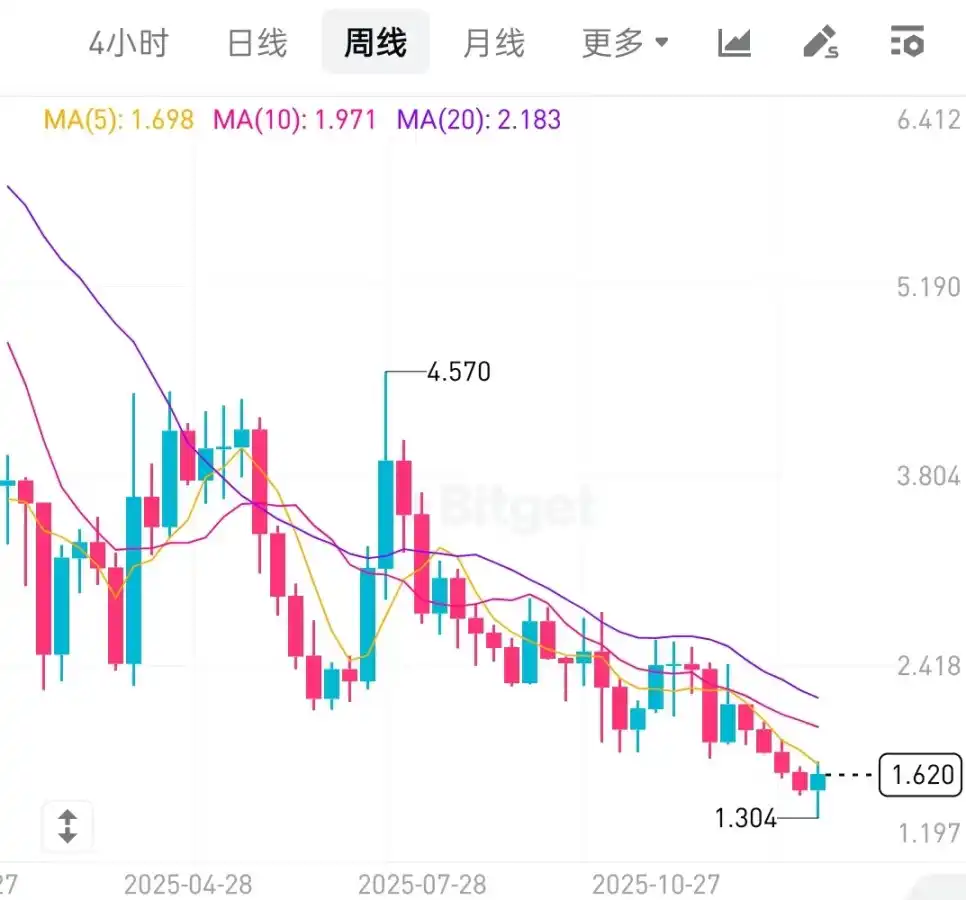
Since hitting a local high of $4.57 in July this year, it has been steadily declining, reaching a low of $1.3. The buyback utility is minimal.
Haleem mentioned that in October 2021, Helium + Mobile business had a monthly revenue of $3.4 million. Currently, its token is almost fully circulated, with no large token unlocks. If a 20% monthly buyback is based on business revenue, the buyback funds amount to approximately $680,000.
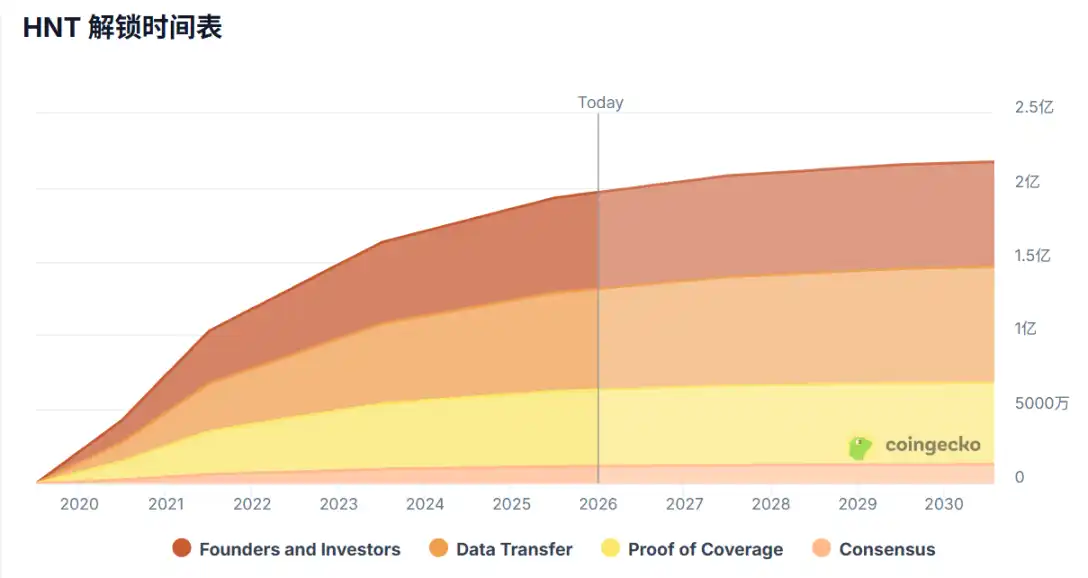
As the crypto market turns bearish, a buyback fund of less than a few million dollars seems like a drop in the bucket.
No wonder Haleem stated, "We need to fully develop the Helium Mobile user base, expand its network deployment, and increase operator offloading. We will invest all funds into these areas until morale improves."
If the buyback of this "ancient" star project didn't spark heated discussions, Jupiter co-founder Siong Ong once again brought the buyback issue to the forefront.
Jupiter's $70 Million Buyback Fails to Reverse Coin Price Decline
Jupiter is the largest DEX aggregator in the Solana ecosystem, with its token JUP used for governance and incentives. On January 3, Jupiter co-founder Siong Ong posted asking the community if the JUP buyback should be paused.
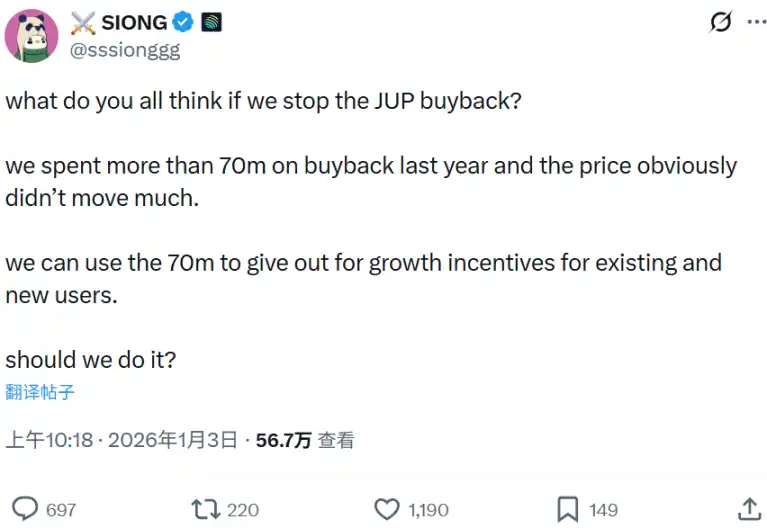
He stated, "Over 70 million dollars was spent last year to buy back JUP, but the coin price has obviously not changed much. We can use this $70 million fund to provide growth incentives for existing and new users." Finally, he left a question: Should we do this then?
In January 2025, Jupiter announced that 50% of its protocol fee revenue would be used to buy back the JUP token and lock it up for 3 years.
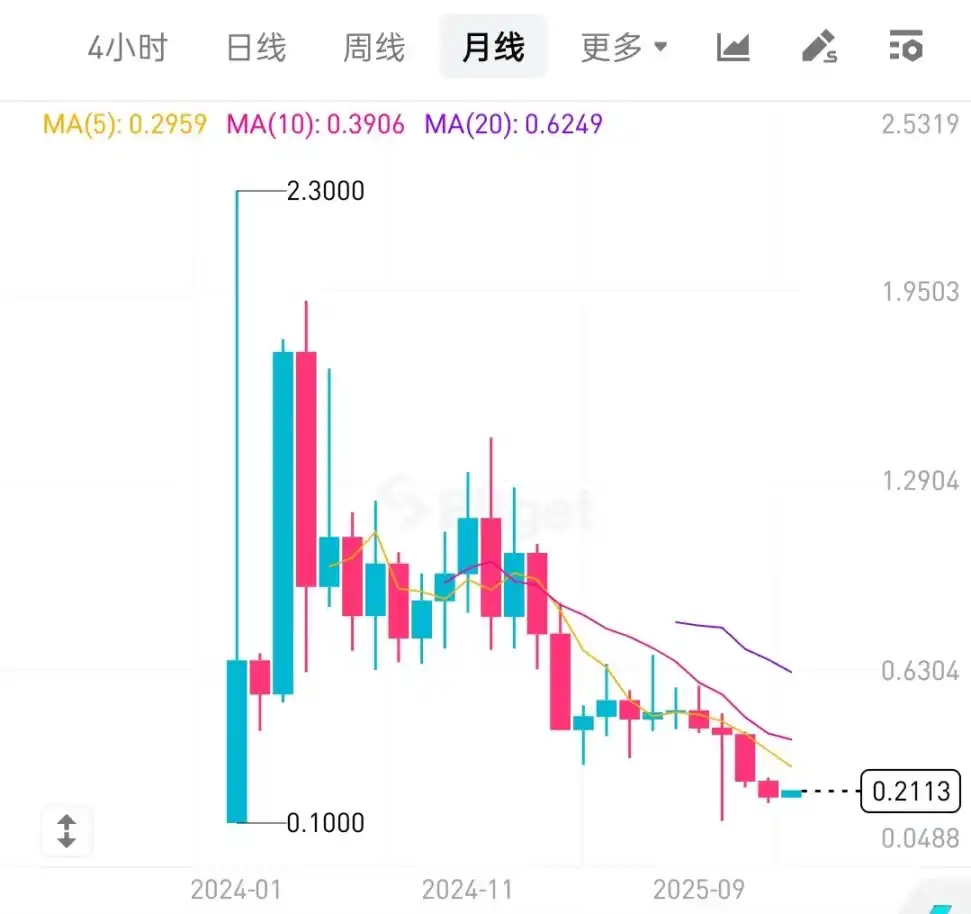
However, after Jupiter's one-year $70 million buyback, its coin price performance has been lackluster, plummeting all the way down to $0.2, a 10x drop from its $2 high in 2024.
Despite Jupiter's meticulous buyback rules, the token price trend shows its utility is almost zero.
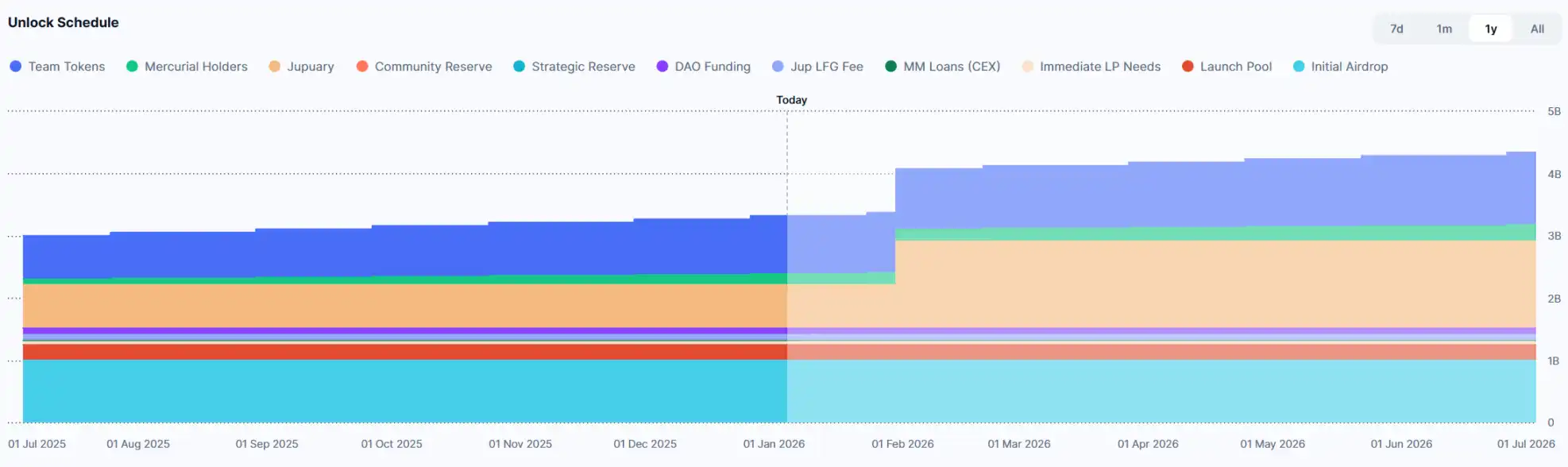
To make matters worse, on January 31 of this year, it will unlock 700 million JUP tokens (10% of the maximum supply), worth $147.88 million. When the buying pressure weakens and the selling pressure is high, the coin price can be easily predicted.
Staking? Continued Buyback? Big Names Debate
The actions of Helium's co-founder and Jupiter's co-founder regarding buybacks have sparked considerable debate. Solana co-founder Anatoly Yakovenko (Toly) is explicitly against traditional buybacks, believing that "long-term capital formation takes years, not quarters." Toly suggests that projects should build a balance sheet, lock profits through a staking mechanism as claimable assets, similar to traditional finance's equity dilution. This can incentivize long-term holders rather than short-term speculators.
The Toly perspective has been echoed by Kyle, a partner at Multicoin Capital, who believes that cryptocurrency teams should prioritize delivering outsized value to long-term holders, although the specific mechanism needs refinement.
However, there are also dissenting views.
Brian Smith, COO of Jito, stated that during market downturns, buybacks significantly enhance shareholder value. He expressed, "Questioning buybacks in favor of growth-oriented investment is reasonable. However, using poor pricing as a reason is untenable. Without buybacks, what does price signify? The key question is, are you underinvesting in ROI-positive growth opportunities due to capital constraints? If so, buybacks should absolutely not occur. Yet, many crypto projects remain well-funded, and the funding allocation within decentralized autonomous organizations (DAOs) is highly chaotic."
Jordi, a partner at Selini Capital, offered his perspective, noting that in this cycle, some of the most successful projects were actually those that disrupted their price charts through automated buybacks, causing user distress. Projects like HYPE, ENA, and JUP, which were early high-flyers, engaged in buybacks at ludicrous prices based on fair multiples, dumping millions at peaks. This led to many retail investors buying at the top due to FOMO (price-driven market narrative) and suffering heavy losses. All the founders of these projects became too entangled in this self-reinforcing mindset, believing that high multiples were justified. After months of decline with no clear path back to previous highs, some started blaming the buyback mechanism, claiming that buybacks didn't work. This assertion is equally misguided. How many times must financial markets remind us of basic economic truths over centuries?
Jordi suggested that if funds are insufficient to pay developers for project advancement, limited funds should not be used for token buybacks. However, once a project succeeds and has sustainable revenue — as a holder, what's the point of holding the token if there are no dividends, no buybacks, or at least not a super clear financial utility?
He also proposed a specific targeted solution, which is to determine the buyback amount based on price. Buyback more when prices are lower and slow down buybacks in overheated markets. Furthermore, buybacks could be performed based on the size of the P/E ratio, such as full buyback below 4 and a 75% buyback in the 4-6 range.
You may also like

Citibank releases "2030 Asset Tokenization Market Outlook": 6 major trends may create a $8.2 trillion market

The trillion-dollar valuation test: Are the three major super IPOs a celebration for tech stocks or a nightmare for the crypto market?

Morning Report | Digital Asset completes $355 million financing led by a16z Crypto; Meta completes operational separation from Manus

a16z Crypto Partner: Cash flow is the moat

Cryptocurrency market makers collectively seek change as it becomes increasingly difficult to make money

How TradeXYZ, xStocks, and Alpaca break down the SpaceX IPO into three different strategies

$75 billion in risk asset redistribution: How will SpaceX's IPO affect U.S. stocks and Bitcoin?

Why Is BlackRock Investing $5 Billion in the SpaceX IPO?
Morning News | CME Group launches Nasdaq Cryptocurrency Index futures; Asset management giant Janus Henderson strategically invests in Ethena

Bitcoin Layer 2 Network Botanix: Why Did We Choose to Dissolve?

Why did Oracle deliver the strongest financial report in history, yet its stock price fell?
When the P2P illicit funds from ten years ago turned into 60,000 bitcoins
Dialogue with OmenX Founder: Why does the prediction market need an evolution from "spot" to "derivatives"?
Galaxy in-depth report: Is Solana still worth paying attention to?
Young people in South Korea make a "final effort" in the epic bull market
The pricing controversy of Trade.xyz exposes the fatal weakness of Pre-IPO perpetual contracts

How much longer can Ethereum's last big buyer hold on?

World Cup 2026 Coming – WEEX Celebrates with $1M Prize Pool & Michael Owen Live
Citibank releases "2030 Asset Tokenization Market Outlook": 6 major trends may create a $8.2 trillion market
The trillion-dollar valuation test: Are the three major super IPOs a celebration for tech stocks or a nightmare for the crypto market?
Morning Report | Digital Asset completes $355 million financing led by a16z Crypto; Meta completes operational separation from Manus
a16z Crypto Partner: Cash flow is the moat
Cryptocurrency market makers collectively seek change as it becomes increasingly difficult to make money
How TradeXYZ, xStocks, and Alpaca break down the SpaceX IPO into three different strategies


