
 Buy Crypto
- Markets
 Futures
- Spot
- Copy Trade
- Earn
- More
During FTX's Solvent Hour, which coins will bear the brunt of massive sell pressure?

Original Article Title: "During FTX Repayment, Which Coins Need to Endure Massive Dumping Pressure?"
Original Article Author: jk, Odaily Planet Daily
After the collapse of FTX in 2022, the story of this exchange has shifted from brilliance to the complexity of repayment and liquidation. Two years later, FTX's compensation plan has gradually become clear but has brought massive dumping pressure to some coins.
In this article, Odaily Planet Daily will take readers back to review FTX's progress in repaying debts, the tokens subjected to dumping pressure, and how once eye-catching innovative products have influenced the future of the crypto industry.
FTX's Repayment Plan and Timeline
In May 2024, the Associated Press reported that FTX had provided explicit compensation amount data in court filings at the time. According to this court filing, FTX owes creditors around $11.2 billion, while the exchange estimates funds available for distribution to creditors to be between $14.5 billion and $16.3 billion.
The filing indicates that after full payment of claims, the plan also stipulates the payment of additional interest to creditors as long as funds remain surplus. The interest rate for most creditors is 9%.
However, all this compensation will be settled in dollars at the cryptocurrency's price at the time of FTX's collapse. Specifically, when FTX filed for bankruptcy protection in November 2022, the price of Bitcoin was $16,080. This is both good and bad—
The bad part is that investors held digital assets at the time but are now receiving compensation in USD. If an investor held 1 Bitcoin at the time, which has now appreciated about 6 times, this appreciation is not factored into the compensation. Investors will only receive $16,080 plus two years of interest as compensation.
On the other hand, if not for the two years of the crypto bull market, FTX's treasury might not have had so much money to pay back all customers—being able to recover the original amount at that time is still quite comforting.
According to the plan submitted to the Delaware Bankruptcy Court, customers and creditors with claims of $50,000 or less will receive approximately 118% of the compensation. This group represents 98% of FTX's customers.
And in 24 August, this event had a small update: Odaily previously reported that FTX and the U.S. Commodity Futures Trading Commission (CFTC) have agreed to a $12.7 billion settlement. The CFTC has agreed that as long as FTX complies with the restructuring plan, the CFTC will not seek any penalties. Therefore, FTX will pay up to $12.7 billion in restitution to creditors, depending on the available funds. This is equivalent to a government seal on the settlement agreement, ensuring that government lawsuits against FTX will not reduce the funds available to customers. Based on the estimated funds at that time, FTX can still complete full restitution, with some funds remaining.
Odaily previously reported that a judge approved FTX's sale of a $1 billion stake in the AI startup Anthropic and plans to pay $200 million in priority tax payments to the IRS and $685 million in secondary tax credit claims FTX argued that the amount it owed was far less than the $24 billion claimed by the IRS. These are all part of FTX's restitution journey.
So, how is FTX's restitution progressing now? FTX's restitution requires coin sales, but how will this selling pressure affect the market, and will some tokens face massive sell-offs? Let's take a look together.
What's in FTX's Wallet Now?
FTX's current wallet and holdings are publicly available on Arkham. As of the time of writing this article, FTX's on-chain addresses hold a total of $14.75 billion in assets, with the largest holding in FTT, valued at approximately $6.8 billion.
Aside from FTT, here are 20 other assets with holdings over a million dollars each:
· FTT: $680.79M
· OXY: $356.56M
· MAPS: $147.10M
· MEDIA: $131.76M
· FIDA: $55.31M
· RAY: $21.69M
· BOBA: $17.86M
· BRZ: $14.58M
· DRIFT: $10.15M
· JUP: $6.66M
· JTO: $6.25M
· USDC: $3.31M
· SOL: $ 3.14 M
· RENDER: $ 2.77 M
· ASD: $ 2.76 M
· SRM: $ 2.72 M
· KMNO: $ 2.67 M
· MPLX: $ 2.65 M
· AMPL: $ 1.67 M
· STG: $ 1.18 M
So, which tokens need extra attention due to selling pressure? According to Coingecko data, Odaily has compiled the following tokens for you:
· FTT: Currently, with a fully diluted valuation (FDV) of only $8.7 billion and a 24-hour trading volume of $18 million, while FTX's holdings reach $6.8 billion. Even with market makers absorbing the pressure, it's difficult to find buying pressure to support the current price.
· OXY: Currently, with a 24-hour trading volume of only $3,000 and an FDV of around $3.65 billion. FTX's holdings amount to $3.56 billion, indicating that due to the selling pressure outlook, this token has little trading volume. However, apart from DEX, this token is only listed on Kraken, so it doesn't have much relevance to most traders.
· MAPS: Currently, with an FDV of $185 million, FTX's holdings reach $147 million, and the 24-hour trading volume is similarly bleak at only $130,000.
· MEDIA: Currently, the FDV on Coingecko is $14.23 million, and FTX's holdings have reached $13.1 million.
· FIDA: The current FDV is $216 million, FTX's holdings are $55.31 million. With proper execution, shorts may have room to maneuver. The current 24-hour trading volume is $15.51 million.
· BOBA: The current FDV is $94.67 million, with a market cap of $81.05 million, while FTX's holdings amount to $17.86 million. The 24-hour trading volume is $1.62 million.
· SRM: Currently with a market cap of $11.37 million, 24-hour trading volume of $490,000, and FTX holdings of $2.72 million.
· MPLX: Currently with a market cap of $185 million, 24-hour trading volume of $1.36 million, and FTX holdings of $2.65 million.
· AMPL: Currently with a market cap of $150 million, 24-hour trading volume of $830,000, and FTX holdings of $1.67 million.
Smaller impact tokens:
· RAY: Raydium currently has a market cap of $1.3 billion, 24-hour trading volume of $94.83 million, and FTX holdings of $21.69 million. If the market maker aims to sell steadily and executes the strategy properly, significant price drops are not expected.
· DRIFT: Currently with a market cap of $310 million, 24-hour trading volume of $29.01 million, FTX holdings of $10.15 million, fully capable of absorbing.
· ASD: Currently with a market cap of $32.02 million, 24-hour trading volume of $1.24 million, FTX holdings of $2.76 million.
· KMNO: Currently with a market cap of $146 million, 24-hour trading volume of $19.92 million, FTX holdings of $2.67 million.
Other tokens, such as Solana with a very high circulation volume (reaching a 24-hour trading volume of $4 billion, with FTX currently holding only $3.14 million), Jupiter, Jito, Render, Stargate, and fully supported stablecoins like USDC and BRZ, do not require any worry.
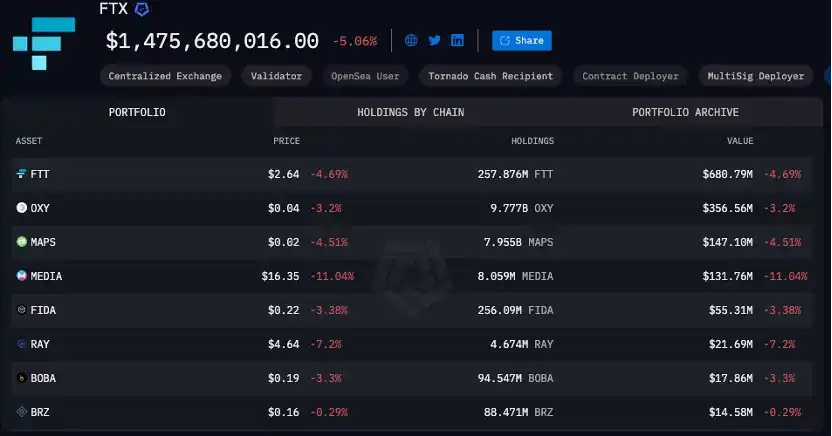
FTX Holdings. Source: Arkham
At the time of posting, FTX is still conducting continuous sell-offs, as seen on Arkham, FTX's liquidation address is transferring the held tokens to Binance and Gate at a frequency of several transactions per day, with each transfer not being significant, ranging from $50,000 to $5 million based on whether the token has a large holding. It is currently unclear if this sell-off behavior has any market maker involvement behind it, but this time, FTX did not conduct a one-time massive sell-off of all held tokens like the German government, leading to a sharp price drop.
FTX's Feature Products
Back in the day, FTX was the go-to exchange for traders and institutions, known for its support of high-frequency trading. This also led to a significant level of technological spillover effects, and FTX developed many unique trading products for retail traders. After FTX's demise, some of these products were absorbed by other exchanges, while some have not seen any follow-up to this day.
For example, the leverage tokens that were once popular on FTX were very retail-friendly:
Leverage tokens can provide investors with double-leverage exposure to assets without the need for complicated operations or direct exposure to the liquidation risk of leveraged trading. Most investors are familiar with futures trading/leverage trading, which requires investors to collateralize assets and monitor market fluctuations to avoid liquidation. However, the leverage tokens introduced by FTX, such as 3x Long Bitcoin and 3x Short Ethereum, greatly simplified this process. Users could buy and sell leverage tokens just like trading regular spot tokens, without the need to open a separate margin account or post collateral. Furthermore, leverage tokens, through a daily rebalancing mechanism, locked the risk of market fluctuations within a daily range, helping users avoid the liquidation risk that may arise from significant market volatility.
For retail investors, the emergence of leverage tokens reduced the barrier to entry for leveraged trading. They could achieve multiple market gains with a small capital cost and this product was quite popular in the former FTX market. Now, this product has been absorbed by exchanges like KuCoin and has been applied to popular tokens like Bitcoin.
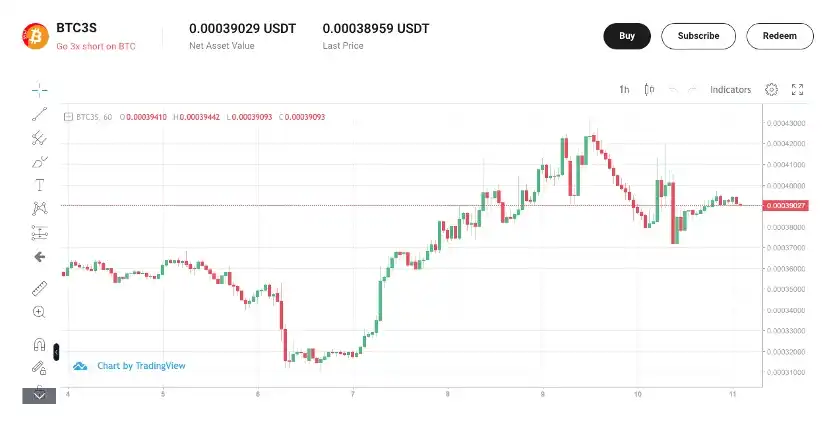
A three times short Bitcoin product on KuCoin. Source: KuCoin
Another product of FTX, tokenized US stock products, has yet to see a large-scale product offering similar services. FTX once offered tokenized products of several US companies, including Alibaba and Coinbase; the launch of these tokenized US stock products allowed global investors to participate in the US stock market without needing to open a US securities account. FTX, through partnerships with regulated entities and custodians, tokenized these stock assets to circulate on the blockchain. These tokens are pegged 1:1 to the underlying stocks, and investors can directly trade tokenized US stocks on the FTX platform.
This product addresses several pain points of the traditional stock market. For example, investors are no longer limited by region or regulation, eliminating the need to open a cumbersome securities account; meanwhile, tokenized products support 24/7 trading, unlike the traditional stock market, which has fixed opening and closing hours.
So far, protocols similar to Backed can now offer non-U.S. users tokenized U.S. stock products, including stocks like the recently popular Nvidia. However, U.S. users still lack a platform where they can purchase tokenized U.S. stocks.
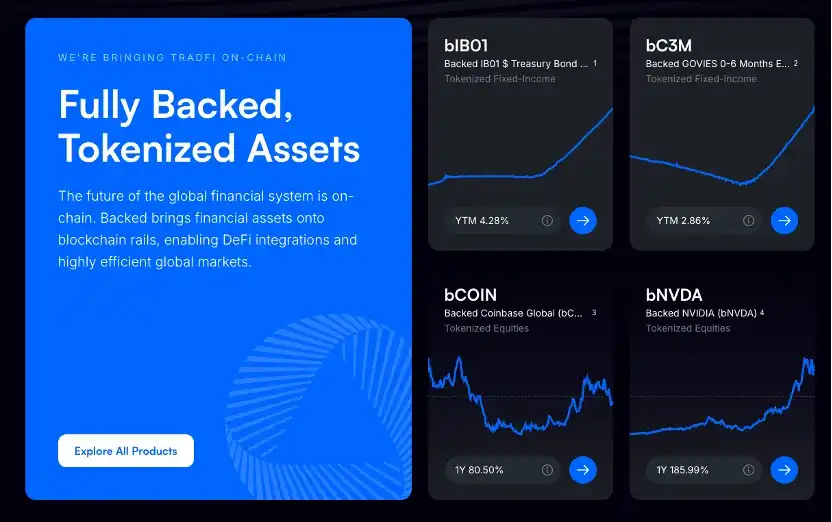
Tokenized U.S. stocks offered by Backed. Source: Backed Official Website
Odaily previously reported that Base developer Jesse Pollak stated in a post on the X platform that Coinbase is considering offering tokenized shares of its stock to its U.S. users on its Ethereum Layer 2 network Base. Pollak mentioned that non-U.S. users have already been able to obtain tokenized COIN stock through protocols like Backed (a tokenized RWA platform), and implementing COIN on Base is "something we are researching in the new year," with Pollak adding that ultimately, "every asset in the world will be implemented on Base." Jesse Pollak further commented that Coinbase has "no specific plans at the moment."
You may also like

LALIGA Match Report: Vinícius scores as 10-man Real Madrid secure a 3-2 comeback victory in Madrid derby
In the early hours of March 23, 2026, Round 29 of LALIGA delivered a headline clash at the Santiago Bernabéu. Real Madrid hosted their local rivals, Atlético de Madrid, in a high-stakes encounter. Under referee José Munuera, the match unfolded at a fierce pace, packed with physical duels and momentum swings. After a five-goal thriller, Real Madrid held firm for a 3–2 home win, taking all three points. They remain second on 69 points, now four behind leaders Barcelona.
From a numbers standpoint, Real Madrid stayed composed under pressure, completing 526 passes with a 52.4% share of possession. Atlético struck first in the 33rd minute through Lookman. After the break, Real Madrid flipped the game: Vinícius converted a penalty to level, then Valverde fired them ahead. Molina pulled Atlético back on level terms, but Vinícius stepped up again in the 72nd minute to seal the win. Late drama followed as Valverde saw red, forcing Real Madrid to defend deep with ten men through the final stretch. Atlético's aggressive approach—12 fouls and 4 yellow cards—kept the pressure on, but they couldn’t stop the comeback.
WEEX Insights: As the official LALIGA partner in the Hong Kong and Taiwan regions, WEEX sees this win as a masterclass in control under pressure. Even after a red card and constant attacks, Real Madrid stayed sharp and executed with precision. That same discipline—staying calm in volatile moments and acting with clarity—reflects the core trading mindset WEEX stands for. LALIGA fan campaigns are coming soon—celebrate the game with WEEX.
About WEEX
Founded in 2018, WEEX has developed into a global crypto exchange with over 6.2 million users across more than 150 countries. The platform emphasizes security, liquidity, and usability, providing over 1,200 spot trading pairs and offering up to 400x leverage in crypto futures trading. In addition to the traditional spot and derivatives markets, WEEX is expanding rapidly in the AI era — delivering real-time AI news, empowering users with AI trading tools, and exploring innovative trade-to-earn models that make intelligent trading more accessible to everyone. Its 1,000 BTC Protection Fund further strengthens asset safety and transparency, while features such as copy trading and advanced trading tools allow users to follow professional traders and experience a more efficient, intelligent trading journey.
Follow WEEX on social media
X: @WEEX_Official
Instagram: @WEEX Exchange
Tiktok: @weex_global
Youtube: @WEEX_Official
Discord: WEEX Community
Telegram: WeexGlobalGroup

LALIGA Match Report: Araujo seals 1–0 win as Barça tighten grip on top spot
In the early hours of March 22 (Beijing Time), Barça edged Rayo Vallecano 1–0 at Camp Nou in a key Round 29 clash. The hard-earned win lifts Barça to 73 points, strengthening their hold on first place.
Barça controlled the game with 61% possession and a sharp 89% passing accuracy (460 passes). Rayo pushed back with intensity, earning 9 corners, but Barça's defense stayed solid. Yellow cards for Raphinha, Yamal, and Cubarsí highlighted the physical edge of the match. Second-half subs like Rashford and Olmo added fresh energy to help see out the result. Rayo remain 14th on 32 points.
WEEX Insights: As the Official LALIGA Partner in HK & TW, WEEX sees Barça’s 89% passing accuracy as a clear example of high execution with minimal error. Staying precise under pressure and finding the breakthrough reflects the same disciplined approach used in rational trading.
LALIGA interactive campaigns are coming soon—stay tuned with WEEX ⚽️
About WEEX
Founded in 2018, WEEX has developed into a global crypto exchange with over 6.2 million users across more than 150 countries. The platform emphasizes security, liquidity, and usability, providing over 1,200 spot trading pairs and offering up to 400x leverage in crypto futures trading. In addition to the traditional spot and derivatives markets, WEEX is expanding rapidly in the AI era — delivering real-time AI news, empowering users with AI trading tools, and exploring innovative trade-to-earn models that make intelligent trading more accessible to everyone. Its 1,000 BTC Protection Fund further strengthens asset safety and transparency, while features such as copy trading and advanced trading tools allow users to follow professional traders and experience a more efficient, intelligent trading journey.
Follow WEEX on social media
X: @WEEX_Official
Instagram: @WEEX Exchange
Tiktok: @weex_global
Youtube: @WEEX_Official
Discord: WEEX Community
Telegram: WeexGlobalGroup

These days, even hackers are losing money
Arm Chips In-House: Rewire News Brief

IOSG: Stablecoin Reshaping Asia Cross-Border Payments? Strategic Landscape and Investment Opportunities Analysis

\$73 Billion OpenAI Aims for IPO: Drops Sora, Snubs Disney, Puts Microsoft in Risk Factors

The Chip Industry's Most Secure Middleman Just Took a Very Risky Turn

CZ's Latest Interview: My Experience is Replicable, Writing a Book to Inspire Young Entrepreneurs

Morning News | Invesco acquires a $900 million on-chain fund from Superstate; ParaFi has raised $125 million for its new fund; Solana Foundation launches developer platform SDP

What is the background of this new fund that the two major prediction market platforms have rarely joined forces to create?

SIREN, another leveraged scam

Token has become extremely popular, and the blockchain is very sad

Tether's major shareholder invests £12 million to support the "British version of Trump" in the cryptocurrency sector

Huang Renxun's Latest Podcast: Will NVIDIA Reach $1 Trillion? Will the Number of Programmers Increase Instead of Decrease? How to Deal with AI Anxiety?
Besides Resolv Hack, This DeFi Vulnerability Type Has Occurred Four Times

Trump Cries Peace, $1.5 Billion Dash | Rewire News Evening Brief
From x402 to MPP: Cloudflare's crucial vote, will it go to Coinbase or Stripe?

BlackRock CEO issues annual open letter: The wave of tokenization has arrived, and we will lead this trend
LALIGA Match Report: Vinícius scores as 10-man Real Madrid secure a 3-2 comeback victory in Madrid derby
In the early hours of March 23, 2026, Round 29 of LALIGA delivered a headline clash at the Santiago Bernabéu. Real Madrid hosted their local rivals, Atlético de Madrid, in a high-stakes encounter. Under referee José Munuera, the match unfolded at a fierce pace, packed with physical duels and momentum swings. After a five-goal thriller, Real Madrid held firm for a 3–2 home win, taking all three points. They remain second on 69 points, now four behind leaders Barcelona.
From a numbers standpoint, Real Madrid stayed composed under pressure, completing 526 passes with a 52.4% share of possession. Atlético struck first in the 33rd minute through Lookman. After the break, Real Madrid flipped the game: Vinícius converted a penalty to level, then Valverde fired them ahead. Molina pulled Atlético back on level terms, but Vinícius stepped up again in the 72nd minute to seal the win. Late drama followed as Valverde saw red, forcing Real Madrid to defend deep with ten men through the final stretch. Atlético's aggressive approach—12 fouls and 4 yellow cards—kept the pressure on, but they couldn’t stop the comeback.
WEEX Insights: As the official LALIGA partner in the Hong Kong and Taiwan regions, WEEX sees this win as a masterclass in control under pressure. Even after a red card and constant attacks, Real Madrid stayed sharp and executed with precision. That same discipline—staying calm in volatile moments and acting with clarity—reflects the core trading mindset WEEX stands for. LALIGA fan campaigns are coming soon—celebrate the game with WEEX.
About WEEX
Founded in 2018, WEEX has developed into a global crypto exchange with over 6.2 million users across more than 150 countries. The platform emphasizes security, liquidity, and usability, providing over 1,200 spot trading pairs and offering up to 400x leverage in crypto futures trading. In addition to the traditional spot and derivatives markets, WEEX is expanding rapidly in the AI era — delivering real-time AI news, empowering users with AI trading tools, and exploring innovative trade-to-earn models that make intelligent trading more accessible to everyone. Its 1,000 BTC Protection Fund further strengthens asset safety and transparency, while features such as copy trading and advanced trading tools allow users to follow professional traders and experience a more efficient, intelligent trading journey.
Follow WEEX on social media
X: @WEEX_Official
Instagram: @WEEX Exchange
Tiktok: @weex_global
Youtube: @WEEX_Official
Discord: WEEX Community
Telegram: WeexGlobalGroup
LALIGA Match Report: Araujo seals 1–0 win as Barça tighten grip on top spot
In the early hours of March 22 (Beijing Time), Barça edged Rayo Vallecano 1–0 at Camp Nou in a key Round 29 clash. The hard-earned win lifts Barça to 73 points, strengthening their hold on first place.
Barça controlled the game with 61% possession and a sharp 89% passing accuracy (460 passes). Rayo pushed back with intensity, earning 9 corners, but Barça's defense stayed solid. Yellow cards for Raphinha, Yamal, and Cubarsí highlighted the physical edge of the match. Second-half subs like Rashford and Olmo added fresh energy to help see out the result. Rayo remain 14th on 32 points.
WEEX Insights: As the Official LALIGA Partner in HK & TW, WEEX sees Barça’s 89% passing accuracy as a clear example of high execution with minimal error. Staying precise under pressure and finding the breakthrough reflects the same disciplined approach used in rational trading.
LALIGA interactive campaigns are coming soon—stay tuned with WEEX ⚽️
About WEEX
Founded in 2018, WEEX has developed into a global crypto exchange with over 6.2 million users across more than 150 countries. The platform emphasizes security, liquidity, and usability, providing over 1,200 spot trading pairs and offering up to 400x leverage in crypto futures trading. In addition to the traditional spot and derivatives markets, WEEX is expanding rapidly in the AI era — delivering real-time AI news, empowering users with AI trading tools, and exploring innovative trade-to-earn models that make intelligent trading more accessible to everyone. Its 1,000 BTC Protection Fund further strengthens asset safety and transparency, while features such as copy trading and advanced trading tools allow users to follow professional traders and experience a more efficient, intelligent trading journey.
Follow WEEX on social media
X: @WEEX_Official
Instagram: @WEEX Exchange
Tiktok: @weex_global
Youtube: @WEEX_Official
Discord: WEEX Community
Telegram: WeexGlobalGroup


 App
App