
 Buy Crypto
- Markets
 Futures
- Spot
- Copy Trade
- Earn
- More
CZ Joins as Advisor, YZI Labs Invests Millions, Genius Point Farming Guide

Original Title: "YZi Labs Invests Tens of Millions of Dollars, CZ Personally Serves as Advisor, How to Earn Genius Points?"
Original Author: Asherdai, Odaily Planetary Daily
Last night, a major news exploded in the community — YZi Labs has invested "tens of millions of dollars" in DEX Genius, and CZ will also personally join as an advisor.
Odaily Planetary Daily took everyone to understand Genius for the first time, interact with Genius step by step, and gave the current interaction strategy after personal testing.
Project Introduction
Genius is a privacy-focused decentralized trading platform that offers spot, perpetual contracts, and copy trading, supporting over 10 blockchains including BNB Chain and Solana, aiming to be Binance's on-chain alternative — bringing the speed, liquidity, and privacy experience of CEX to the chain while maintaining full self-custody, non-custodial (users hold the private keys). The platform has processed over $60 million in trading volume during the testing phase and plans to launch a public privacy protocol test in Q2 2026. As early as October 2024, Genius announced the completion of a $6 million seed round of financing, led by CMCC Global, with participation from Cadenza Ventures, AVA Labs, Arca, Flow Traders, and other institutions.
Regarding the community's belief that "YZi Labs investing in Genius is negative news for Aster," CZ responded in a post on Platform X, stating, "Genius is a trading terminal connected to the trading platform, not a competitor to Aster."
In addition, Genius's CMO, Ryan, also answered similar questions in the community — "How do you see the difference between Aster and Genius? Why would YZi Labs reinvest in another project doing Perp Dex?" Ryan said, "I think both are very important. Aster is a very important perpetual contract exchange. I think the motivation for YZi Labs to invest in Genius is to allow everyone to access any token on any chain (soon in a private way)."
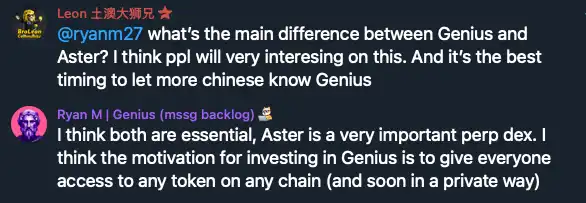
Genius CMO Ryan Discusses the Relationship Between Aster and Genius
It is easy to see that both CZ and the Genius team believe that Genius and Aster have different positioning and are not in direct competition.
Step-by-Step Guide
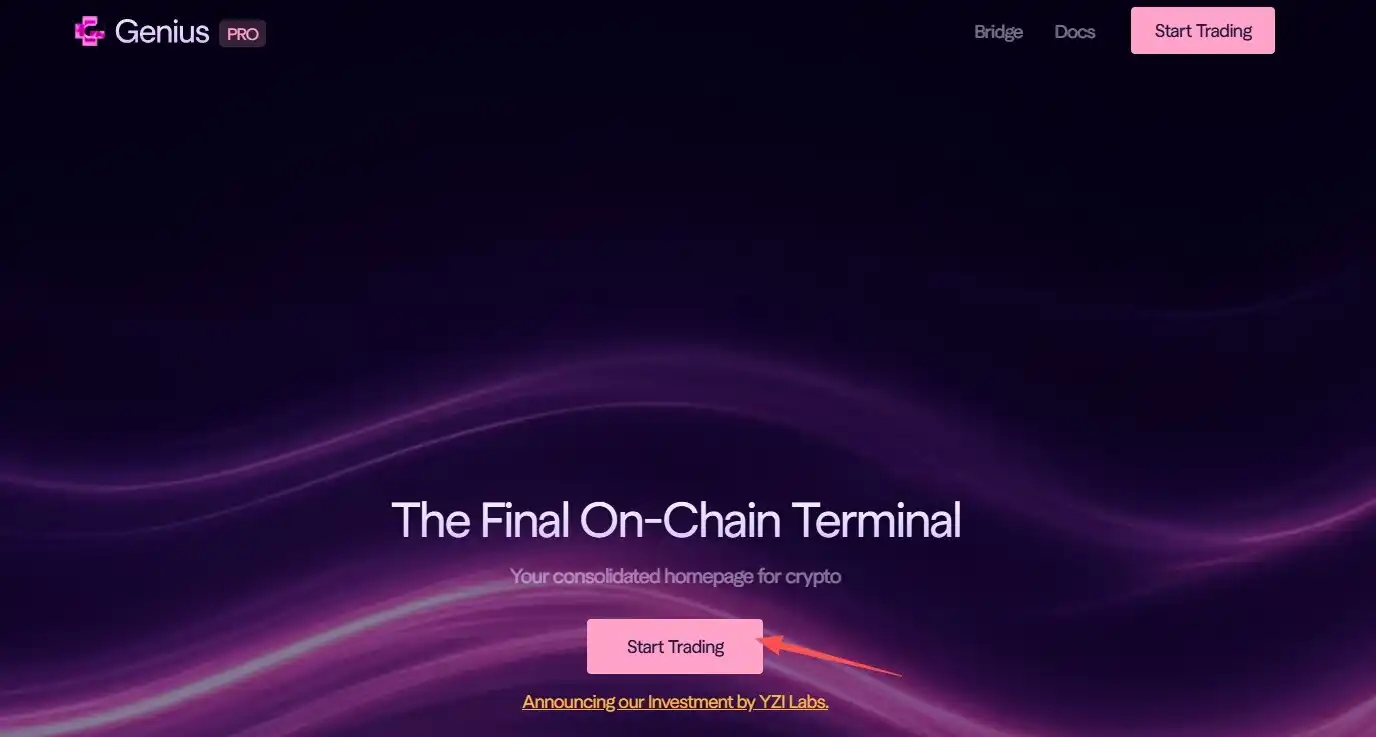
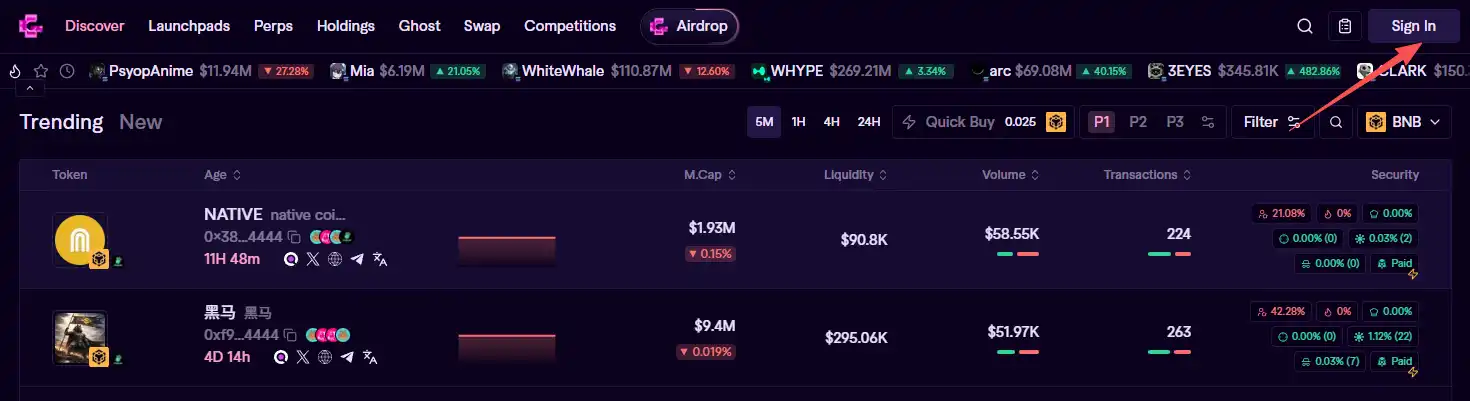
STEP 1. Visit the official website (link: https://www.tradegenius.com), click on "Start Trading," then click on "Sign In" at the top to log in to your account via your wallet.
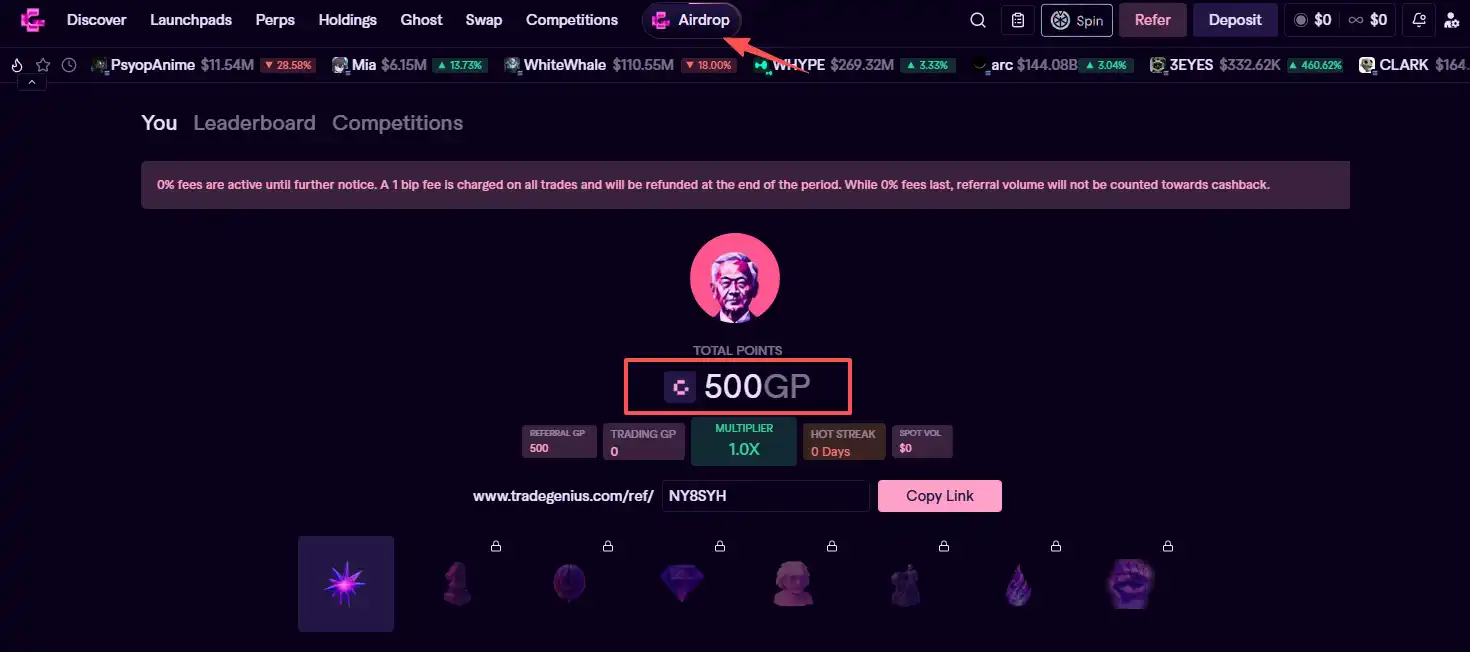
STEP 2. Click on "Airdrop" at the top to view your current account GP points balance and personal referral link.
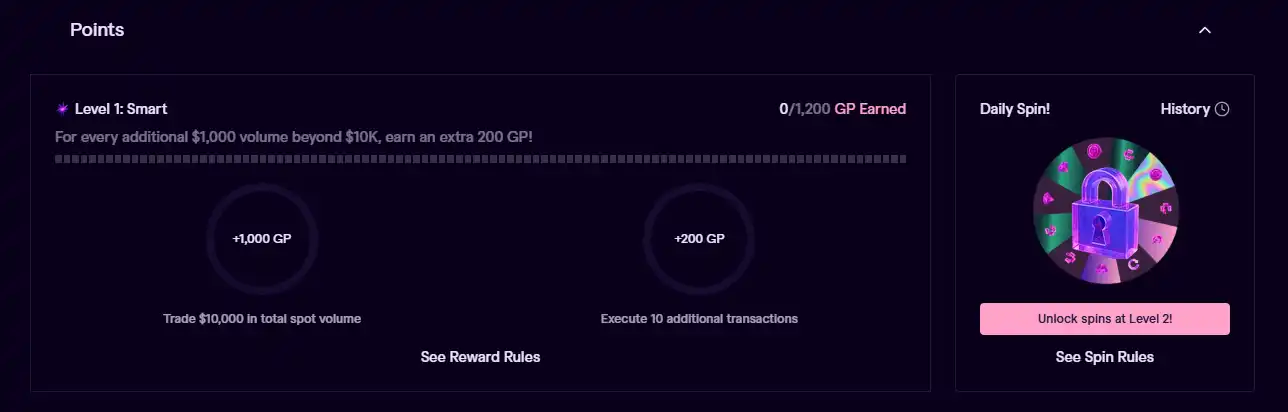
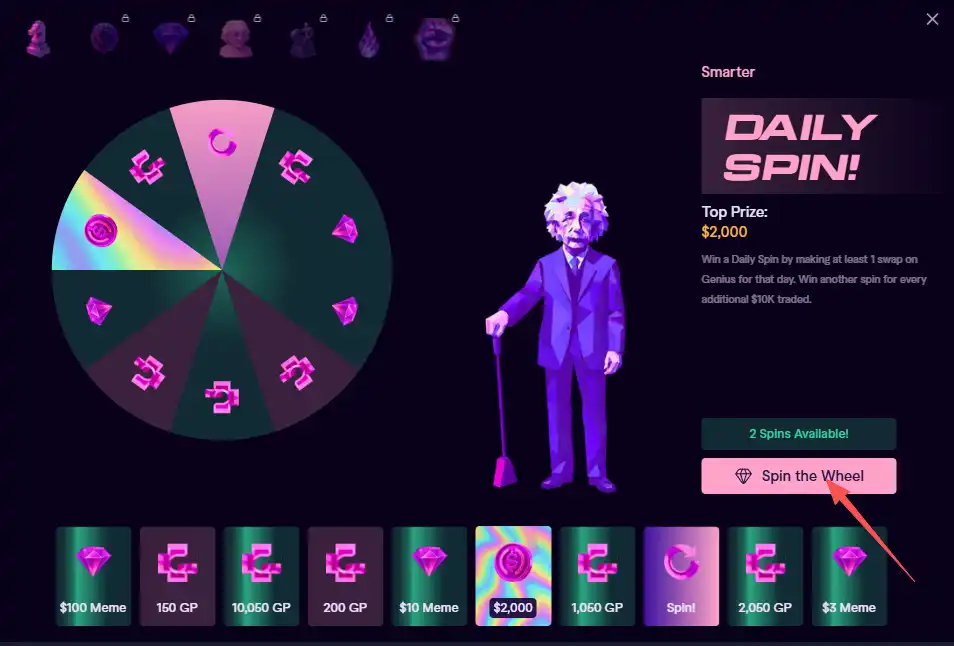
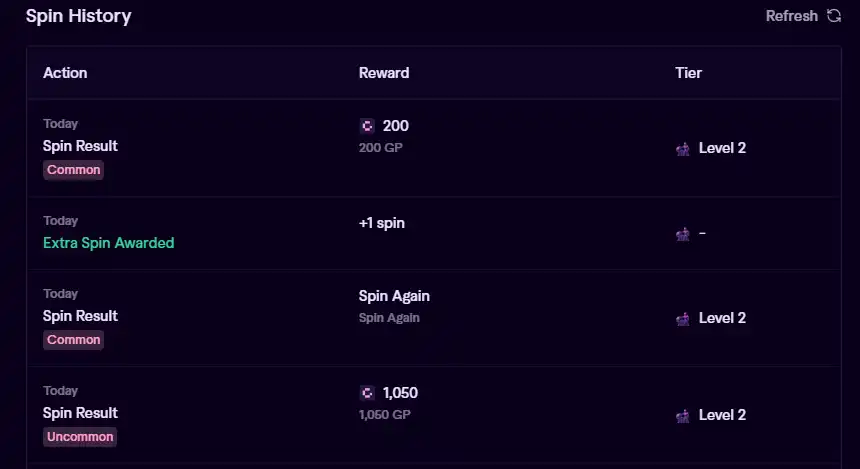
STEP 3. In the "Airdrop" section below, the first item is "Points." By accumulating a $10,000 trading volume, you can receive 1200 GP points. For every additional $1,000 in trading volume after surpassing $10,000, you can earn 200 GP points. Additionally, every daily trade on the platform grants you a free spin on the prize wheel. For every additional $10,000 in trading volume, you earn an extra spin on the wheel, with no limit.
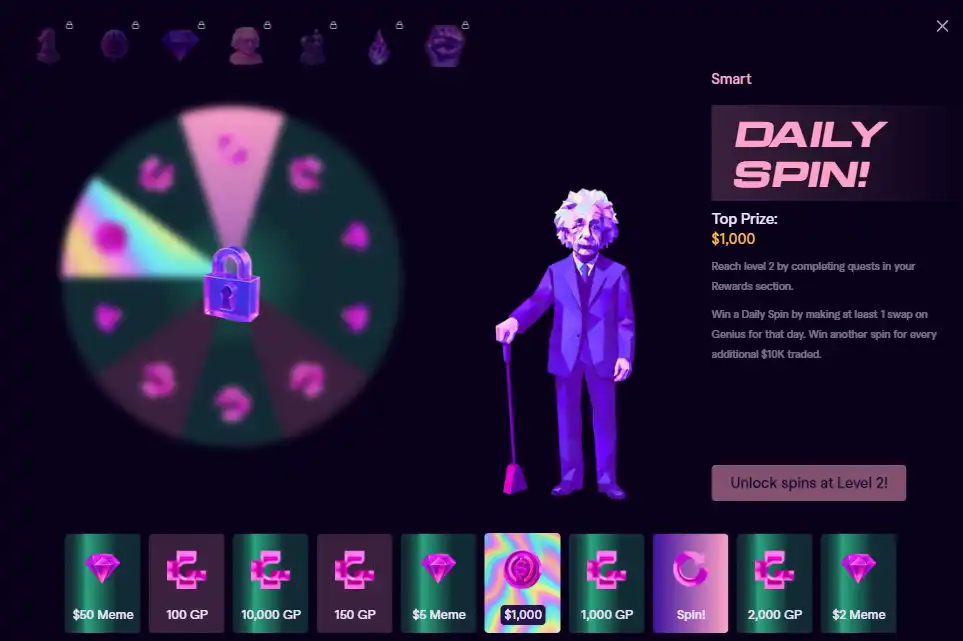
Other rules for earning points through trading:
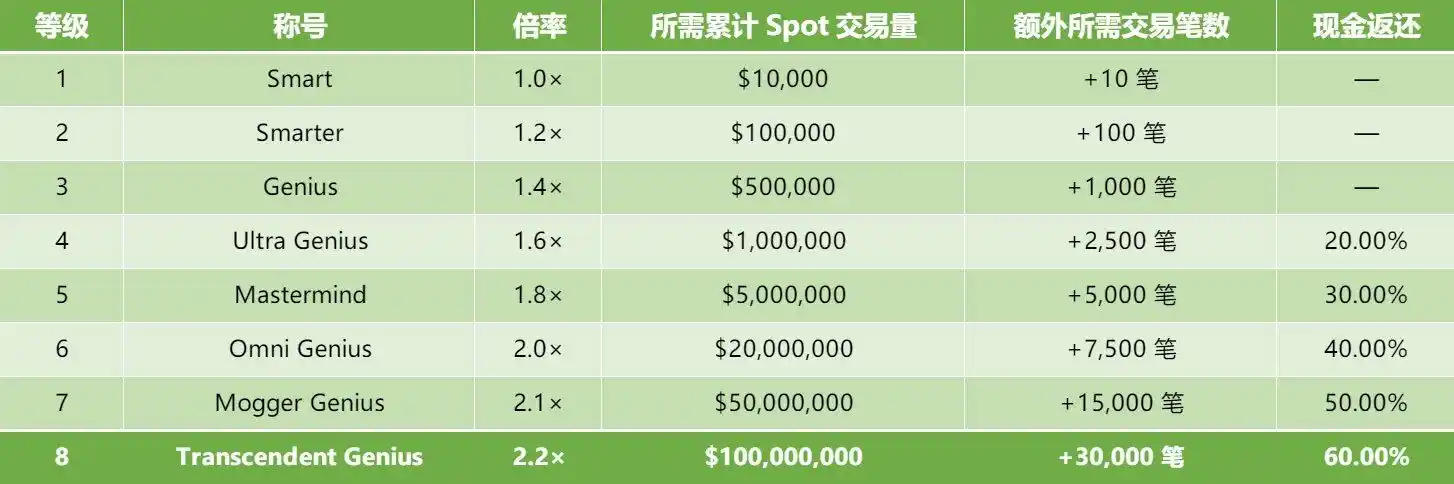
· Users earn 1 GP point for every $100 of spot trading volume or $1,000 of perpetual futures contract trading volume;
· After trading continuously for 7 days, you will receive a trading streak multiplier (interrupting the streak for one day will reset the multiplier);
· The base multiplier and streak multiplier apply to users' spot and perpetual futures contract trading (recommended points are not included).
STEP 4. In the "Airdrop" section below, the next item is "Referrals." Invite friends to earn more GP points.
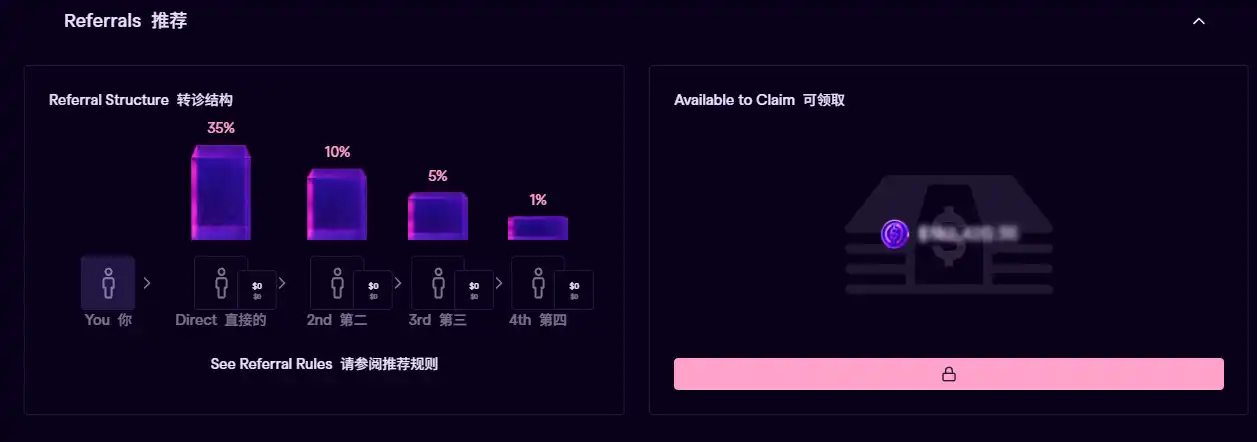
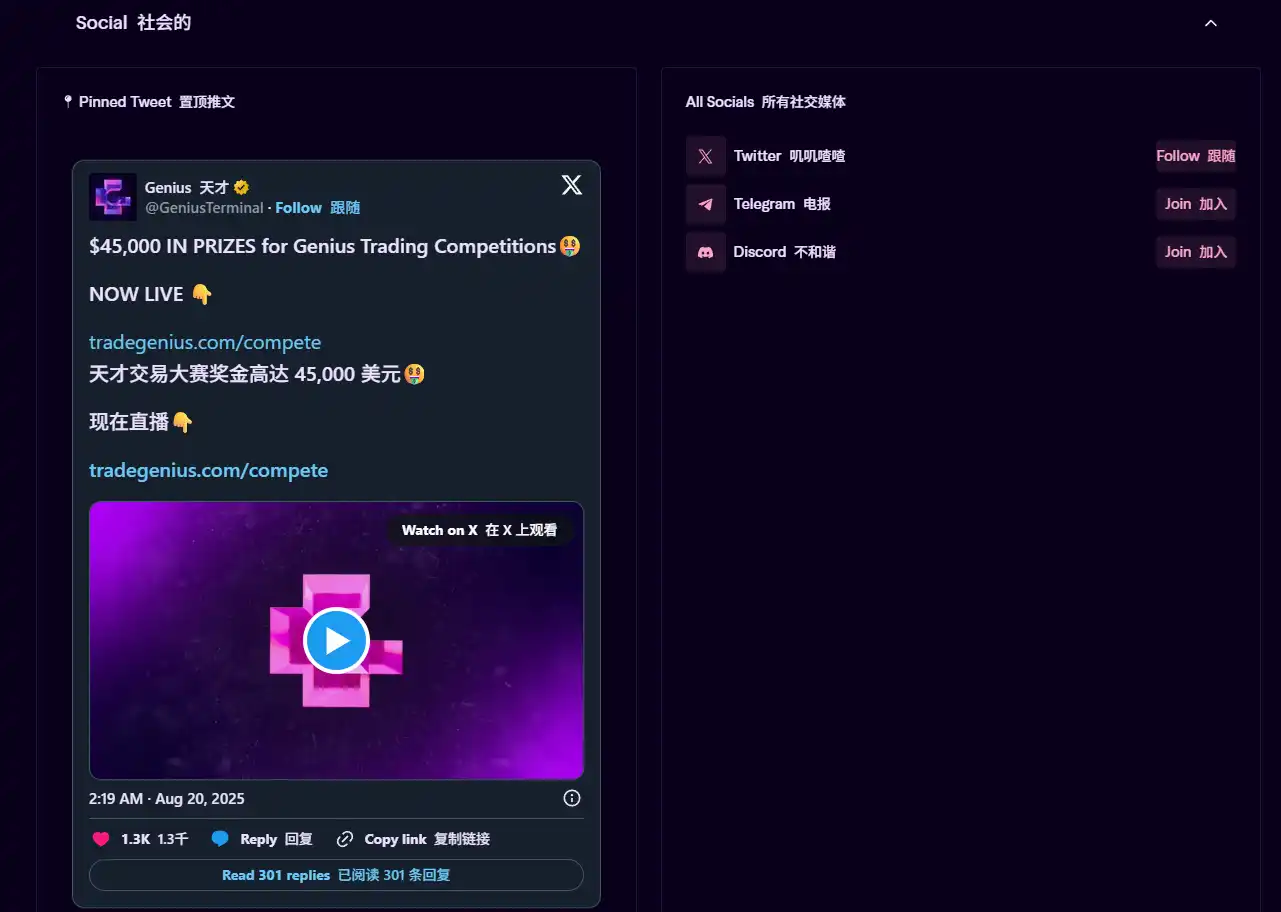
STEP 5. The bottom section of the "Airdrop" is the "Social" (the "Token Rewards" section is temporarily unavailable, so skip it for now), which contains official social media information.
STEP 6. Click on "Deposit" at the top to deposit assets supporting EVM, Solana, and SUI. It is recommended to send ETH or USDC.

Current "Minimum Guaranteed Earnings Points" Strategy Sharing
After actual interaction, I have summarized the strategy for "Minimum Guaranteed Earnings Points." The specific operational train of thought is as follows:
1. To minimize the erosion caused by token price fluctuations, USDC-USDT spot trading was chosen.
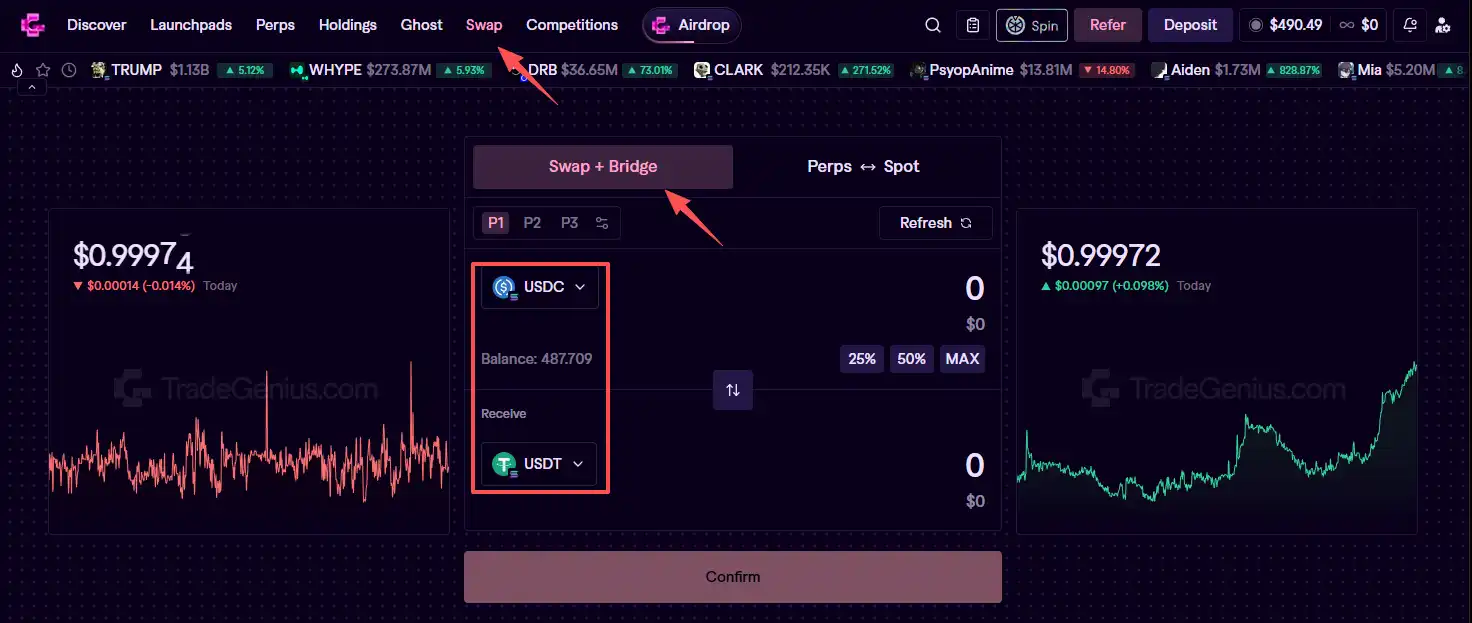
2. Try to make each transaction volume as large as possible. In a real test, the gas fees for trading $400 and $100 were almost the same.
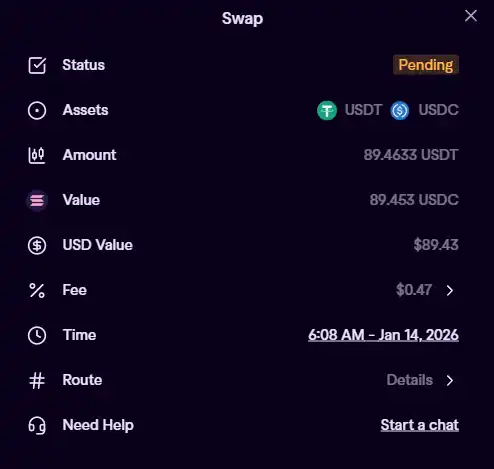
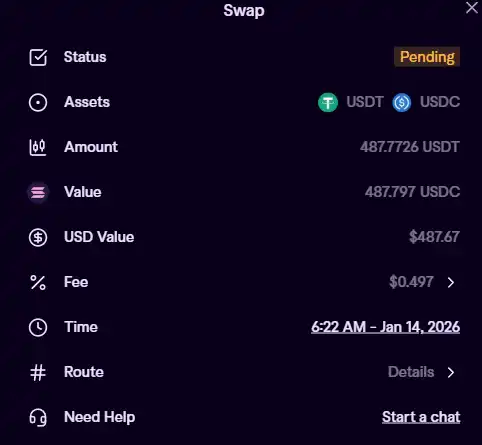
3. Once the trading volume reaches $10,000 to unlock the lucky draw, daily trading to qualify for the lucky draw can be done with a single transaction. There is no need to "aggressively increase trading volume."
You may also like

60 Essential Skills, Workflows, and Open Source Projects, the Ultimate Claude Advancement Checklist

SpaceX to Raise $75 Billion | Rewire News Nightly

PUMP Valuation Breakdown: On-chain Data Disproves the "Fake Volume" Theory, Where Does the Real Discount Come From?

Tiger Research: What AI services do cryptocurrency companies offer?

The war not only drives up oil prices but also causes Circle's stock price to soar

When agents become consumers, who will rewrite the underlying logic of internet commerce?

AI Agents in Action Summit: March 31, Hong Kong Cyberport, focusing on the deep waters of AI implementation

29 Days In, What Are America’s Options on Iran?

Flash Crash Down 97%+ with Ongoing Unlocking, WLD Completes $65 Million Off-chain Funding: Who Is Still Buying?

Bitcoin for Real Estate? Fannie Mae Teams Up with Coinbase to Launch Crypto Mortgage
Tether Hires Big Four Auditor, USDT Enters First Attestation Phase

Google AI Paper Destroys $900B Storage Stock, Accused of Faking Experiment
Evaporate $2 Trillion, U.S. Stocks See Worst Start in 4 Years, Why is the Market Bearish?

The speed at which AI discovers vulnerabilities has surpassed the speed at which it patches vulnerabilities.
AI Crypto Trading Bot Explained: Aurora's Multi-Factor Strategy in WEEX Hackathon
Aurora demonstrates how structured, multi-agent AI Trading systems can deliver more adaptive and resilient performance in the WEEX AI Trading Hackathon.

Cyber Taoist Fortune Teller: Fake Taoist, AI Fortune Telling, and Northeastern Metaphysics History

Bloomberg: Stablecoin Payments Emerge as Crypto VC's Newest Favorite Thing
BeatSwap is evolving towards a full-stack Web3 infrastructure, covering the entire lifecycle of IP rights.
BeatSwap, a global Web3 Intellectual Property (IP) infrastructure project, is attempting to overcome the current fragmentation limitations of the Web3 ecosystem, building a full-stack system that covers the entire lifecycle of IP rights.
Currently, most Web3 projects are still in the stage of functional fragmentation, often focusing only on a single aspect, such as IP asset tokenization, transaction functionality, or a simple incentive model. This structural dispersion has become a key bottleneck hindering the industry's scale application.
BeatSwap's approach is more integrated, integrating multiple core modules into the same system, including:
· IP authentication and on-chain registration
· Authorization-based revenue sharing mechanism
· User-engagement-driven incentive system
· Transaction and liquidity infrastructure
Through the above integration, the platform builds an end-to-end closed-loop path, allowing IP rights to complete a full cycle of "creation, use, and monetization" within the same ecosystem.
BeatSwap is not limited to existing crypto users but is attempting to take the global music industry as a starting point, actively creating new market demand. Its core strategies include:
Exploring and incubating music creators (Artist discovery)
Building a fan community
Igniting IP-centric content consumption demand
The current global music industry is valued at around $260 billion, with over 2 billion digital music users. This means that the potential market corresponding to the tokenization and financialization of IP far exceeds the traditional crypto user base.
In this context, BeatSwap positions itself at the intersection of "real-world content demand" and "on-chain infrastructure," attempting to bridge the structural gap between content production and financial flow.
BeatSwap's upcoming core product "Space" is scheduled to launch in the second quarter of 2026. This product is defined as the SocialFi layer in the ecosystem, aiming to directly connect creators with users and achieve deep integration with other platform modules.
Key designs include:
A fan-centric interactive mechanism
Exposure and distribution logic based on $BTX staking
User paths connected to DeFi and liquidity structures
Thus, a complete user behavior loop is formed within the platform: Discovery → Participation → Consumption → Rewards → Trading
$BTX is designed to be a core utility asset within the ecosystem, rather than just a simple incentive token, with its value directly tied to platform activity and IP use cases.
Main features include:
· Yield distribution based on on-chain authorized actions
· Value reflection based on IP usage and user engagement dynamics
· Support for staking and DeFi participation mechanisms
· Value growth driven by ecosystem expansion
With the increased frequency of IP use, the utility and value support of $BTX will enhance simultaneously, helping alleviate the "disconnect between value and utility" issue present in traditional Web3 token models to some extent.
Currently, $BTX has been listed on several mainstream exchanges, including:
Binance Alpha
Gate
MEXC
OKX Boost
As the launch of "Space" approaches, BeatSwap is actively pursuing more exchange listings to further enhance liquidity and global accessibility, laying a foundation for future market expansion.
BeatSwap's goal is no longer limited to the traditional Web3 narrative but aims to target over 2 billion digital music users and a trillion KRW-scale content market.
By integrating content creators, users, capital, and liquidity into a blockchain framework centered around IP rights, BeatSwap is striving to build a next-generation infrastructure focused on "IP tokenization."
BeatSwap integrates IP authentication, authorization distribution, incentive mechanism, transaction system, and market construction to establish a unified structure that bridges the full lifecycle path of IP rights.
With the launch of the Q2 2026 "Space," the project is expected to become a key infrastructure connecting content and finance in the IP-RWA (Real World Assets) track.


 App
App