

Crypto Trading Earnings of 40,000 Are Taxed 130,000, That's the U.S. Tax Law Musk Was Mocking
On January 3rd, Musk posted on his social media: "A customer bought $7000 worth of cumrocket and staked it for 3 months to earn 6900% APY. They then sold it, took profits, and invested in NFTitties, but the developer rugged the project, and they only managed to liquidate 10% of the funds. Can the customer deduct the coin's gas fee to balance short-term capital gains tax?"

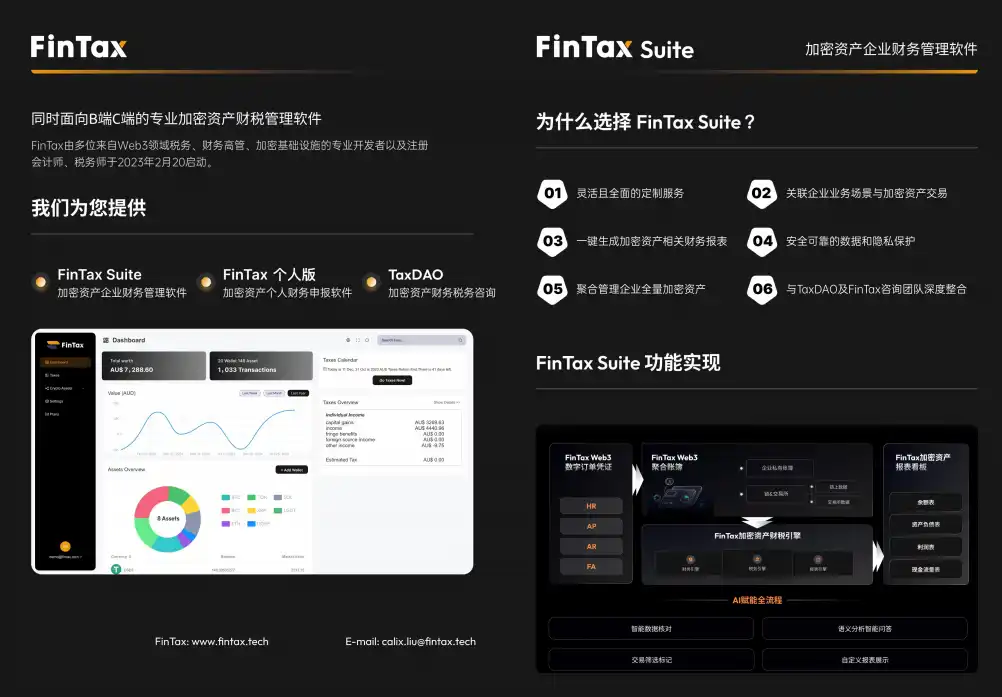
To truly understand what Musk was sarcastically referring to and why he repeatedly dissed the IRS, BlockBeats reached out to professional tax experts from TaxDAO. They have been providing professional cryptocurrency financial management software and crypto tax advisory services in the Web3 space since 23 years ago. Recently, they developed a professional cryptocurrency financial tax management software, FinTax, that caters to both B2B and B2C clients, using an AI Agent to help users address all cryptocurrency financial and tax-related needs in one place.
Through their explanation of US tax law and calculations based on the provided numbers in the image, we were able to further elucidate the current and future state of cryptocurrency taxation in the US.
Image Interpretation: An Unreasonable Tax Story
First, let's interpret what the image is really telling us about a tragic story:
This is an example of calculating taxes on cryptocurrency investments. The tax calculation in the example can be broken down into three stages. The first stage is staking income, taxed as ordinary income in individual income tax, which is a progressive tax rate ranging from 10% to 37%. The second stage is where the investor mints NFTs with the staking rewards earned, which falls under investment activity and should be subject to capital gains tax. The third stage is the investment failure, rug pull in the project, with a 90% loss. In 2023, the IRS issued a memo on tax treatment of worthless or abandoned cryptocurrency assets, stating that if a taxpayer has lost control of cryptocurrency assets (as the investor in the image sold the devalued cryptocurrency), the resulting loss can be used to offset pre-tax income. However, since this is an investment activity, it can only offset capital gains tax, with provisions allowing a maximum offset of $3000 of ordinary income based on marital status.
Based on the scenario in the image, let's assume the customer is a single individual, the staking income was paid out in a lump sum after three months, and upon receiving the staking rewards, the customer immediately sold them all and invested in the NFT project with no other income. We can then calculate the tax implications of this series of transactions as follows:
(1)The customer purchased $7,000 worth of Cumrocket and staked it for 3 months, earning a 6,900% interest rate. Therefore, the earnings were $7,000 * 6,900% = $483,000. According to IRS regulations, this income is considered ordinary income rather than capital gains.
(2)The subsequent investment in NFT amounted to $7,000 * 7,000% = $490,000.
(3)After investing the crypto asset profits into an NFT project, due to a Rug Pull, only 10% of the funds could be salvaged, resulting in a loss of 90% of the funds, which amounts to a loss of $490,000 * 90% = $441,000. As this amount has been realized through liquidation, it qualifies as a deductible capital loss.
Capital losses are first used to offset similar capital gains. In this case, there are no capital gains resulting from a coin price increase, so the $441,000 capital loss cannot offset any capital gains. Assuming the customer is single, according to IRS regulations, this capital loss can offset up to $3,000 of ordinary income for the year. Additionally, the standard deduction for a single individual is $13,850. Therefore, the customer's taxable ordinary income = $483,000 - $3,000 - $13,850 = $466,150. Based on the progressive tax rate table for ordinary income, they would need to pay $11,000 * 10% + $33,725 * 12% + $50,650 * 22% + $86,725 * 24% + $49,150 * 32% + ($466,150 - $231,250) * 35% = $1,100 + $4,047 + $11,143 + $20,814 + $15,728 + $82,215 = $135,047.
Therefore, as seen from the above calculation, after a series of financial activities, the investor ends up with only a $50,000 surplus (including the initial $7,000 principal). Yet, they are required to pay as much as $130,000 in taxes for the year, highlighting the absurdity of the U.S. cryptocurrency tax laws, which is why Musk has repeatedly criticized the IRS regulations.
Cryptocurrency Tax Disputes: Unraveling Complexity
Why has Musk been consistently dissatisfied with U.S. crypto tax laws? FinTax tax experts analyze the following two reasons:
1. The U.S. tax system itself is complex, with each jurisdiction having its own regulations and high compliance costs, almost 10 times that of China.
2. Since 2023, the U.S. has specifically enacted tax laws for the cryptocurrency sector, but they have not been tailored to the characteristics of the industry, still approaching it from a traditional sector perspective. There may be some inherent legal flaws; even if the legal basis is sound, as the government solely uses traditional tax administration methods to regulate crypto companies, it is challenging for companies to achieve real compliance.
The case in the illustration is a very typical problem. Some taxpayers have businesses that make money, while others have businesses that lose money. However, these two profitable and unprofitable businesses cannot offset each other in a specific tax scenario. Therefore, it is possible to end up not making any money but still having to pay a significant amount of tax, leading to an awkward situation. A similar case is the dispute between the Jarretts and the IRS regarding whether taxed should be paid on pledged assets.
Related Readings:
《U.S. Cryptocurrency Broker Rules: Bitter Medicine or Lethal Poison?》
《IRS Maintains Position on Taxing Cryptocurrency Staking: Analyzing the Jarrett v. U.S. Case》.
On the other hand, due to its decentralized and anonymous nature, cryptocurrency has also become a tool for some individuals to evade taxes. This type of case has become one of the most common disputes in the cryptocurrency field.
Taking the famous "Bitcoin Jesus" case as an example, the main character of the case, Roger Ver, was born in Silicon Valley, USA, in 1979. He started investing in Bitcoin in 2011 and actively promoted the application and value of Bitcoin, driving its early adoption and accumulating significant influence in the cryptocurrency field. Therefore, he was dubbed the "Bitcoin Jesus" by the media and the cryptocurrency community.
In 2014, Roger Ver obtained citizenship in the Federation of Saint Kitts and Nevis and shortly afterwards renounced his U.S. citizenship. According to U.S. tax law, individuals who renounce their citizenship must fully declare the capital gains on their global assets, including the amount of Bitcoin held and its fair market value. The IRS believed that Roger Ver concealed or underreported the value of his personal assets before renouncing his citizenship. After renouncing his citizenship, he obtained and sold about 70,000 Bitcoins from a U.S.-based company under his control, earning nearly $240 million in income, thereby evading at least $48 million in taxes.
In response, the IRS mainly made two accusations: first, that Roger Ver did not comply with the expatriation tax rules, and second, that he violated his tax obligations as a non-U.S. taxpayer.
Roger Ver's case's success rate may be influenced by various factors. On the favorable side, his legal team argued that the tax law's provisions regarding cryptocurrency assets are unclear, providing arguments for the defense based on the existence of loopholes in the tax system. They also accused the prosecution of selective enforcement, which, if proven with sufficient evidence, could weaken the legitimacy of the IRS's prosecution. It is also worth noting that the Trump administration intended to end harsh regulations on cryptocurrency assets, which may bring a turning point to the case. However, on the unfavorable side, the prosecution has substantial specific evidence, including the $48 million in unpaid taxes and a series of tax evasion records, all of which likely meet the statutory requirements for tax evasion charges.
The Bitcoin Jesus Case has sounded the alarm for tax compliance in the cryptocurrency industry, especially serving as a significant cautionary tale for individual cryptocurrency investors. The strengthening of international cooperation and advancements in technology are continuously narrowing the space for investors to evade taxes. For investors in the cryptocurrency industry, tax compliance has become a crucial issue that cannot be avoided.
Related Reading: "IRS vs. Bitcoin Jesus: The Compliance Risk Behind a $48 Million Tax Bill"
Wealth Tax: The Sword of Damocles for the Cryptocurrency Industry
In addition, a series of "corporate tax" and "wealth tax" measures introduced during the early days of the Biden administration have certainly made Elon Musk bleed.
After Biden took office in 2020, to fulfill his political ambitions, he initiated multiple large-scale infrastructure plans. However, high expenditures must be supported by high tax revenues. The burden fell on American corporations and the wealthy to foot the bill for this plan, with Musk undoubtedly becoming a target of Biden's strategies. When Biden unveiled the 2023 budget, he proposed a new tax plan targeting the wealthy, imposing a minimum income tax of 25% on individuals with a net worth exceeding $1 billion, including both standard taxable income and the annual returns of "tradable assets" (such as stocks, bonds, mutual funds, and other securities). According to a 2021 report by ProPublica, Biden's billionaire tax plan would have tech giants like Musk paying between $35 billion and $50 billion in taxes. In that year, the news of "Musk facing an $11 billion tax bill" became a hot topic, marking the highest individual tax payment in U.S. history.
Under the new regulations, the U.S. capital gains tax will reach a historic high, image source from the U.S. Department of the Treasury
After raising the fiscal year 2025 budget to $7.3 trillion, Biden once again proposed a tax on unrealized gains and plans to tax the unrealized gains of trusts, enterprises, and other non-corporate entities that have not experienced a recognition event in the past 90 years. Taxing unrealized gains means that even if individuals or businesses (with a net worth over $1 billion) hold tradable assets such as stocks and bonds that have not been sold, they still need to pay a 25% minimum income tax on the increased value.
This legislation is akin to a declaration of war against the venture capital sector, which considers valuation growth as its underlying logic. When discussing this tax plan, Bill Ackman stated that the Democratic Party should not pursue tax policies that would "destroy the U.S. economy," mentioning scenarios where if someone invests $1 billion in your startup at a $10 billion valuation and you own a 50% stake, you would immediately incur a $1 billion tax bill... "All U.S. startups would go bankrupt as a result, and no one would want to start a business in the U.S." In a recent podcast episode, two founding partners of A16Z also expressed similar sentiments. This legislation is like holding a precarious Sword of Damocles over the heads of startups, where a massive tax burden could deliver a fatal blow at any time, constraining the development of entrepreneurship and investment.
David Sacks warned at a tech conference earlier this year that such taxation could stifle the practice of startup companies offering stock options to founders and employees, stating that "this is a key reason why Silicon Valley takes seriously who it votes for." The investment community believes that this tax policy will greatly distort the investment behavior of American investors, especially when it comes to small-cap stocks and startups. These companies are often the engines of economic growth and innovation, but they rely on investors willing to take risks for future returns. However, when unrealized gains are also included in the tax base, investors will no longer favor growth-oriented companies because these companies' valuations often fluctuate more than larger, more mature companies.
Read more: "Silicon Valley Turns Right: Peter Thiel, A16Z, and the Political Ambitions of Cryptocurrency"
The Future of Crypto Taxation
Since the birth of the cryptocurrency market, the issue of taxation on its transactions has been a focal point of debate. The core contradiction lies in the differing positions of the government and investors: the government aims to increase fiscal revenue through taxation, while investors are concerned that high taxes will reduce investment returns.
Even in countries where cryptocurrency trading fervor is high, such as South Korea, authorities have continuously attempted to regulate the crypto field through heavy taxation. This has involved not only a game of regulation between government agencies and the market but also a struggle for discourse power between the Democratic Party and the People Power Party.
The South Korean Democratic Party had long planned to impose a 20% tax (22% local tax) on cryptocurrency gains, originally scheduled to take effect on January 1, 2022. However, due to strong opposition from investors and the industry, this plan has been postponed twice to January 1, 2025. Following a press conference on December 1, 2024, the tax enforcement was postponed again to 2027. The ruling People Power Party has further proposed a delay in implementation until 2028.
However, overall, South Korea has taken a cautious approach to cryptocurrency taxation, refraining from mandatory regulation of the market. On one hand, this has provided the market with time and space for natural development, and on the other hand, it has offered a valuable window for observing the effects of policy implementation in other countries and global regulatory trends. Based on the lessons learned from others' experiences, South Korea aims to establish a more comprehensive tax system.
The attitude of the United States towards the crypto market has been positive since the Trump administration. From the SEC chairman to the Treasury Secretary, and to the "Crypto Tsar" overseeing coordination, the "Crypto Team" of the Trump administration not only represents significant policy adjustments but also signals a potential major turning point for the U.S. cryptocurrency industry. However, regarding the government's stance on taxation, tax experts at FinTax hold a conservative view, believing that while Trump made many favorable policy commitments to the crypto industry before taking office and will continue to roll out policies thereafter, taxation will only become stricter. The reason is that Trump's support for the crypto industry stems from recognizing its crucial role in the U.S. financial system and technological development, believing that it can bring new increments to the fintech field, and this increment must be reflected at the tax level. Therefore, the future of crypto taxation will become clearer, and tax administration will move towards more stringent measures.
An ironic picture posted by Musk triggered a coin frenzy, sparking new imaginations in the crypto space. In the U.S. Treasury's release of the 2025 cryptocurrency tax system, rules related to DeFi and non-custodial wallet providers have been temporarily suspended, indicating the U.S. government's cautious approach to cryptocurrency tax policy development. In the future, whether in terms of the adaptability of tax policies or regulation of tax evasion, the U.S. tax law still has a long way to go. We look forward to the cryptocurrency industry galloping forward like a wild horse breaking free, while also being guided in the right direction by a strong rein.
References:
Overview of U.S. Cryptocurrency Tax System;
IRS Regulation: Staking Rewards Taxed as Ordinary Income;
Ordinary Income Tax Rates and Capital Gains Tax Rates;
Individuals' Capital Losses in Excess of Capital Gains can Offset up to $3,000 of Ordinary Income;
Cryptocurrency Asset Income categorized as Ordinary Income;
Cryptocurrency Asset Transactions subject to Capital Gains Taxation;
《How Cryptocurrency Enterprises Should Respond to SEC Inquiries: Compliance Insights from Bitdeer》
You may also like

Token Cannot Compound, Where Is the Real Investment Opportunity?

February 6th Market Key Intelligence, How Much Did You Miss?

China's Central Bank and Eight Other Departments' Latest Regulatory Focus: Key Attention to RWA Tokenized Asset Risk
Foreword: Today, the People's Bank of China's website published the "Notice of the People's Bank of China, National Development and Reform Commission, Ministry of Industry and Information Technology, Ministry of Public Security, State Administration for Market Regulation, China Banking and Insurance Regulatory Commission, China Securities Regulatory Commission, State Administration of Foreign Exchange on Further Preventing and Dealing with Risks Related to Virtual Currency and Others (Yinfa [2026] No. 42)", the latest regulatory requirements from the eight departments including the central bank, which are basically consistent with the regulatory requirements of recent years. The main focus of the regulation is on speculative activities such as virtual currency trading, exchanges, ICOs, overseas platform services, and this time, regulatory oversight of RWA has been added, explicitly prohibiting RWA tokenization, stablecoins (especially those pegged to the RMB). The following is the full text:
To the people's governments of all provinces, autonomous regions, and municipalities directly under the Central Government, the Xinjiang Production and Construction Corps:
Recently, there have been speculative activities related to virtual currency and Real-World Assets (RWA) tokenization, disrupting the economic and financial order and jeopardizing the property security of the people. In order to further prevent and address the risks related to virtual currency and Real-World Assets tokenization, effectively safeguard national security and social stability, in accordance with the "Law of the People's Republic of China on the People's Bank of China," "Law of the People's Republic of China on Commercial Banks," "Securities Law of the People's Republic of China," "Law of the People's Republic of China on Securities Investment Funds," "Law of the People's Republic of China on Futures and Derivatives," "Cybersecurity Law of the People's Republic of China," "Regulations of the People's Republic of China on the Administration of Renminbi," "Regulations on Prevention and Disposal of Illegal Fundraising," "Regulations of the People's Republic of China on Foreign Exchange Administration," "Telecommunications Regulations of the People's Republic of China," and other provisions, after reaching consensus with the Cyberspace Administration of China, the Supreme People's Court, and the Supreme People's Procuratorate, and with the approval of the State Council, the relevant matters are notified as follows:
(I) Virtual currency does not possess the legal status equivalent to fiat currency. Virtual currencies such as Bitcoin, Ether, Tether, etc., have the main characteristics of being issued by non-monetary authorities, using encryption technology and distributed ledger or similar technology, existing in digital form, etc. They do not have legal tender status, should not and cannot be circulated and used as currency in the market.
The business activities related to virtual currency are classified as illegal financial activities. The exchange of fiat currency and virtual currency within the territory, exchange of virtual currencies, acting as a central counterparty in buying and selling virtual currencies, providing information intermediary and pricing services for virtual currency transactions, token issuance financing, and trading of virtual currency-related financial products, etc., fall under illegal financial activities, such as suspected illegal issuance of token vouchers, unauthorized public issuance of securities, illegal operation of securities and futures business, illegal fundraising, etc., are strictly prohibited across the board and resolutely banned in accordance with the law. Overseas entities and individuals are not allowed to provide virtual currency-related services to domestic entities in any form.
A stablecoin pegged to a fiat currency indirectly fulfills some functions of the fiat currency in circulation. Without the consent of relevant authorities in accordance with the law and regulations, any domestic or foreign entity or individual is not allowed to issue a RMB-pegged stablecoin overseas.
(II)Tokenization of Real-World Assets refers to the use of encryption technology and distributed ledger or similar technologies to transform ownership rights, income rights, etc., of assets into tokens (tokens) or other interests or bond certificates with token (token) characteristics, and carry out issuance and trading activities.
Engaging in the tokenization of real-world assets domestically, as well as providing related intermediary, information technology services, etc., which are suspected of illegal issuance of token vouchers, unauthorized public offering of securities, illegal operation of securities and futures business, illegal fundraising, and other illegal financial activities, shall be prohibited; except for relevant business activities carried out with the approval of the competent authorities in accordance with the law and regulations and relying on specific financial infrastructures. Overseas entities and individuals are not allowed to illegally provide services related to the tokenization of real-world assets to domestic entities in any form.
(III) Inter-agency Coordination. The People's Bank of China, together with the National Development and Reform Commission, the Ministry of Industry and Information Technology, the Ministry of Public Security, the State Administration for Market Regulation, the China Banking and Insurance Regulatory Commission, the China Securities Regulatory Commission, the State Administration of Foreign Exchange, and other departments, will improve the work mechanism, strengthen coordination with the Cyberspace Administration of China, the Supreme People's Court, and the Supreme People's Procuratorate, coordinate efforts, and overall guide regions to carry out risk prevention and disposal of virtual currency-related illegal financial activities.
The China Securities Regulatory Commission, together with the National Development and Reform Commission, the Ministry of Industry and Information Technology, the Ministry of Public Security, the People's Bank of China, the State Administration for Market Regulation, the China Banking and Insurance Regulatory Commission, the State Administration of Foreign Exchange, and other departments, will improve the work mechanism, strengthen coordination with the Cyberspace Administration of China, the Supreme People's Court, and the Supreme People's Procuratorate, coordinate efforts, and overall guide regions to carry out risk prevention and disposal of illegal financial activities related to the tokenization of real-world assets.
(IV) Strengthening Local Implementation. The people's governments at the provincial level are overall responsible for the prevention and disposal of risks related to virtual currencies and the tokenization of real-world assets in their respective administrative regions. The specific leading department is the local financial regulatory department, with participation from branches and dispatched institutions of the State Council's financial regulatory department, telecommunications regulators, public security, market supervision, and other departments, in coordination with cyberspace departments, courts, and procuratorates, to improve the normalization of the work mechanism, effectively connect with the relevant work mechanisms of central departments, form a cooperative and coordinated working pattern between central and local governments, effectively prevent and properly handle risks related to virtual currencies and the tokenization of real-world assets, and maintain economic and financial order and social stability.
(5) Enhanced Risk Monitoring. The People's Bank of China, China Securities Regulatory Commission, National Development and Reform Commission, Ministry of Industry and Information Technology, Ministry of Public Security, State Administration of Foreign Exchange, Cyberspace Administration of China, and other departments continue to improve monitoring techniques and system support, enhance cross-departmental data analysis and sharing, establish sound information sharing and cross-validation mechanisms, promptly grasp the risk situation of activities related to virtual currency and real-world asset tokenization. Local governments at all levels give full play to the role of local monitoring and early warning mechanisms. Local financial regulatory authorities, together with branches and agencies of the State Council's financial regulatory authorities, as well as departments of cyberspace and public security, ensure effective connection between online monitoring, offline investigation, and fund tracking, efficiently and accurately identify activities related to virtual currency and real-world asset tokenization, promptly share risk information, improve early warning information dissemination, verification, and rapid response mechanisms.
(6) Strengthened Oversight of Financial Institutions, Intermediaries, and Technology Service Providers. Financial institutions (including non-bank payment institutions) are prohibited from providing account opening, fund transfer, and clearing services for virtual currency-related business activities, issuing and selling financial products related to virtual currency, including virtual currency and related financial products in the scope of collateral, conducting insurance business related to virtual currency, or including virtual currency in the scope of insurance liability. Financial institutions (including non-bank payment institutions) are prohibited from providing custody, clearing, and settlement services for unauthorized real-world asset tokenization-related business and related financial products. Relevant intermediary institutions and information technology service providers are prohibited from providing intermediary, technical, or other services for unauthorized real-world asset tokenization-related businesses and related financial products.
(7) Enhanced Management of Internet Information Content and Access. Internet enterprises are prohibited from providing online business venues, commercial displays, marketing, advertising, or paid traffic diversion services for virtual currency and real-world asset tokenization-related business activities. Upon discovering clues of illegal activities, they should promptly report to relevant departments and provide technical support and assistance for related investigations and inquiries. Based on the clues transferred by the financial regulatory authorities, the cyberspace administration, telecommunications authorities, and public security departments should promptly close and deal with websites, mobile applications (including mini-programs), and public accounts engaged in virtual currency and real-world asset tokenization-related business activities in accordance with the law.
(8) Strengthened Entity Registration and Advertisement Management. Market supervision departments strengthen entity registration and management, and enterprise and individual business registrations must not contain terms such as "virtual currency," "virtual asset," "cryptocurrency," "crypto asset," "stablecoin," "real-world asset tokenization," or "RWA" in their names or business scopes. Market supervision departments, together with financial regulatory authorities, legally enhance the supervision of advertisements related to virtual currency and real-world asset tokenization, promptly investigating and handling relevant illegal advertisements.
(IX) Continued Rectification of Virtual Currency Mining Activities. The National Development and Reform Commission, together with relevant departments, strictly controls virtual currency mining activities, continuously promotes the rectification of virtual currency mining activities. The people's governments of various provinces take overall responsibility for the rectification of "mining" within their respective administrative regions. In accordance with the requirements of the National Development and Reform Commission and other departments in the "Notice on the Rectification of Virtual Currency Mining Activities" (NDRC Energy-saving Building [2021] No. 1283) and the provisions of the "Guidance Catalog for Industrial Structure Adjustment (2024 Edition)," a comprehensive review, investigation, and closure of existing virtual currency mining projects are conducted, new mining projects are strictly prohibited, and mining machine production enterprises are strictly prohibited from providing mining machine sales and other services within the country.
(X) Severe Crackdown on Related Illegal Financial Activities. Upon discovering clues to illegal financial activities related to virtual currency and the tokenization of real-world assets, local financial regulatory authorities, branches of the State Council's financial regulatory authorities, and other relevant departments promptly investigate, determine, and properly handle the issues in accordance with the law, and seriously hold the relevant entities and individuals legally responsible. Those suspected of crimes are transferred to the judicial authorities for processing according to the law.
(XI) Severe Crackdown on Related Illegal and Criminal Activities. The Ministry of Public Security, the People's Bank of China, the State Administration for Market Regulation, the China Banking and Insurance Regulatory Commission, the China Securities Regulatory Commission, as well as judicial and procuratorial organs, in accordance with their respective responsibilities, rigorously crack down on illegal and criminal activities related to virtual currency, the tokenization of real-world assets, such as fraud, money laundering, illegal business operations, pyramid schemes, illegal fundraising, and other illegal and criminal activities carried out under the guise of virtual currency, the tokenization of real-world assets, etc.
(XII) Strengthen Industry Self-discipline. Relevant industry associations should enhance membership management and policy advocacy, based on their own responsibilities, advocate and urge member units to resist illegal financial activities related to virtual currency and the tokenization of real-world assets. Member units that violate regulatory policies and industry self-discipline rules are to be disciplined in accordance with relevant self-regulatory management regulations. By leveraging various industry infrastructure, conduct risk monitoring related to virtual currency, the tokenization of real-world assets, and promptly transfer issue clues to relevant departments.
(XIII) Without the approval of relevant departments in accordance with the law and regulations, domestic entities and foreign entities controlled by them may not issue virtual currency overseas.
(XIV) Domestic entities engaging directly or indirectly in overseas external debt-based tokenization of real-world assets, or conducting asset securitization activities abroad based on domestic ownership rights, income rights, etc. (hereinafter referred to as domestic equity), should be strictly regulated in accordance with the principles of "same business, same risk, same rules." The National Development and Reform Commission, the China Securities Regulatory Commission, the State Administration of Foreign Exchange, and other relevant departments regulate it according to their respective responsibilities. For other forms of overseas real-world asset tokenization activities based on domestic equity by domestic entities, the China Securities Regulatory Commission, together with relevant departments, supervise according to their division of responsibilities. Without the consent and filing of relevant departments, no unit or individual may engage in the above-mentioned business.
(15) Overseas subsidiaries and branches of domestic financial institutions providing Real World Asset Tokenization-related services overseas shall do so legally and prudently. They shall have professional personnel and systems in place to effectively mitigate business risks, strictly implement customer onboarding, suitability management, anti-money laundering requirements, and incorporate them into the domestic financial institutions' compliance and risk management system. Intermediaries and information technology service providers offering Real World Asset Tokenization services abroad based on domestic equity or conducting Real World Asset Tokenization business in the form of overseas debt for domestic entities directly or indirectly venturing abroad must strictly comply with relevant laws and regulations. They should establish and improve relevant compliance and internal control systems in accordance with relevant normative requirements, strengthen business and risk control, and report the business developments to the relevant regulatory authorities for approval or filing.
(16) Strengthen organizational leadership and overall coordination. All departments and regions should attach great importance to the prevention of risks related to virtual currencies and Real World Asset Tokenization, strengthen organizational leadership, clarify work responsibilities, form a long-term effective working mechanism with centralized coordination, local implementation, and shared responsibilities, maintain high pressure, dynamically monitor risks, effectively prevent and mitigate risks in an orderly and efficient manner, legally protect the property security of the people, and make every effort to maintain economic and financial order and social stability.
(17) Widely carry out publicity and education. All departments, regions, and industry associations should make full use of various media and other communication channels to disseminate information through legal and policy interpretation, analysis of typical cases, and education on investment risks, etc. They should promote the illegality and harm of virtual currencies and Real World Asset Tokenization-related businesses and their manifestations, fully alert to potential risks and hidden dangers, and enhance public awareness and identification capabilities for risk prevention.
(18) Engaging in illegal financial activities related to virtual currencies and Real World Asset Tokenization in violation of this notice, as well as providing services for virtual currencies and Real World Asset Tokenization-related businesses, shall be punished in accordance with relevant regulations. If it constitutes a crime, criminal liability shall be pursued according to the law. For domestic entities and individuals who knowingly or should have known that overseas entities illegally provided virtual currency or Real World Asset Tokenization-related services to domestic entities and still assisted them, relevant responsibilities shall be pursued according to the law. If it constitutes a crime, criminal liability shall be pursued according to the law.
(19) If any unit or individual invests in virtual currencies, Real World Asset Tokens, and related financial products against public order and good customs, the relevant civil legal actions shall be invalid, and any resulting losses shall be borne by them. If there are suspicions of disrupting financial order and jeopardizing financial security, the relevant departments shall deal with them according to the law.
This notice shall enter into force upon the date of its issuance. The People's Bank of China and ten other departments' "Notice on Further Preventing and Dealing with the Risks of Virtual Currency Trading Speculation" (Yinfa [2021] No. 237) is hereby repealed.

Former Partner's Perspective on Multicoin: Kyle's Exit, But the Game He Left Behind Just Getting Started
Why Bitcoin Is Falling Now: The Real Reasons Behind BTC's Crash & WEEX's Smart Profit Playbook
Bitcoin's ongoing crash explained: Discover the 5 hidden triggers behind BTC's plunge & how WEEX's Auto Earn and Trade to Earn strategies help traders profit from crypto market volatility.

Wall Street's Hottest Trades See Exodus

Vitalik Discusses Ethereum Scaling Path, Circle Announces Partnership with Polymarket, What's the Overseas Crypto Community Talking About Today?

Believing in the Capital Markets - The Essence and Core Value of Cryptocurrency

Polymarket's 'Weatherman': Predict Temperature, Win Million-Dollar Payout
$15K+ Profits: The 4 AI Trading Secrets WEEX Hackathon Prelim Winners Used to Dominate Volatile Crypto Markets
How WEEX Hackathon's top AI trading strategies made $15K+ in crypto markets: 4 proven rules for ETH/BTC trading, market structure analysis, and risk management in volatile conditions.

A nearly 20% one-day plunge, how long has it been since you last saw a $60,000 Bitcoin?

Raoul Pal: I've seen every single panic, and they are never the end.

Key Market Information Discrepancy on February 6th - A Must-Read! | Alpha Morning Report

2026 Crypto Industry's First Snowfall

The Harsh Reality Behind the $26 Billion Crypto Liquidation: Liquidity Is Killing the Market

Why Is Gold, US Stocks, Bitcoin All Falling?

Key Market Intelligence for February 5th, how much did you miss out on?

Wintermute: By 2026, crypto had gradually become the settlement layer of the Internet economy
Token Cannot Compound, Where Is the Real Investment Opportunity?
February 6th Market Key Intelligence, How Much Did You Miss?
China's Central Bank and Eight Other Departments' Latest Regulatory Focus: Key Attention to RWA Tokenized Asset Risk
Foreword: Today, the People's Bank of China's website published the "Notice of the People's Bank of China, National Development and Reform Commission, Ministry of Industry and Information Technology, Ministry of Public Security, State Administration for Market Regulation, China Banking and Insurance Regulatory Commission, China Securities Regulatory Commission, State Administration of Foreign Exchange on Further Preventing and Dealing with Risks Related to Virtual Currency and Others (Yinfa [2026] No. 42)", the latest regulatory requirements from the eight departments including the central bank, which are basically consistent with the regulatory requirements of recent years. The main focus of the regulation is on speculative activities such as virtual currency trading, exchanges, ICOs, overseas platform services, and this time, regulatory oversight of RWA has been added, explicitly prohibiting RWA tokenization, stablecoins (especially those pegged to the RMB). The following is the full text:
To the people's governments of all provinces, autonomous regions, and municipalities directly under the Central Government, the Xinjiang Production and Construction Corps:
Recently, there have been speculative activities related to virtual currency and Real-World Assets (RWA) tokenization, disrupting the economic and financial order and jeopardizing the property security of the people. In order to further prevent and address the risks related to virtual currency and Real-World Assets tokenization, effectively safeguard national security and social stability, in accordance with the "Law of the People's Republic of China on the People's Bank of China," "Law of the People's Republic of China on Commercial Banks," "Securities Law of the People's Republic of China," "Law of the People's Republic of China on Securities Investment Funds," "Law of the People's Republic of China on Futures and Derivatives," "Cybersecurity Law of the People's Republic of China," "Regulations of the People's Republic of China on the Administration of Renminbi," "Regulations on Prevention and Disposal of Illegal Fundraising," "Regulations of the People's Republic of China on Foreign Exchange Administration," "Telecommunications Regulations of the People's Republic of China," and other provisions, after reaching consensus with the Cyberspace Administration of China, the Supreme People's Court, and the Supreme People's Procuratorate, and with the approval of the State Council, the relevant matters are notified as follows:
(I) Virtual currency does not possess the legal status equivalent to fiat currency. Virtual currencies such as Bitcoin, Ether, Tether, etc., have the main characteristics of being issued by non-monetary authorities, using encryption technology and distributed ledger or similar technology, existing in digital form, etc. They do not have legal tender status, should not and cannot be circulated and used as currency in the market.
The business activities related to virtual currency are classified as illegal financial activities. The exchange of fiat currency and virtual currency within the territory, exchange of virtual currencies, acting as a central counterparty in buying and selling virtual currencies, providing information intermediary and pricing services for virtual currency transactions, token issuance financing, and trading of virtual currency-related financial products, etc., fall under illegal financial activities, such as suspected illegal issuance of token vouchers, unauthorized public issuance of securities, illegal operation of securities and futures business, illegal fundraising, etc., are strictly prohibited across the board and resolutely banned in accordance with the law. Overseas entities and individuals are not allowed to provide virtual currency-related services to domestic entities in any form.
A stablecoin pegged to a fiat currency indirectly fulfills some functions of the fiat currency in circulation. Without the consent of relevant authorities in accordance with the law and regulations, any domestic or foreign entity or individual is not allowed to issue a RMB-pegged stablecoin overseas.
(II)Tokenization of Real-World Assets refers to the use of encryption technology and distributed ledger or similar technologies to transform ownership rights, income rights, etc., of assets into tokens (tokens) or other interests or bond certificates with token (token) characteristics, and carry out issuance and trading activities.
Engaging in the tokenization of real-world assets domestically, as well as providing related intermediary, information technology services, etc., which are suspected of illegal issuance of token vouchers, unauthorized public offering of securities, illegal operation of securities and futures business, illegal fundraising, and other illegal financial activities, shall be prohibited; except for relevant business activities carried out with the approval of the competent authorities in accordance with the law and regulations and relying on specific financial infrastructures. Overseas entities and individuals are not allowed to illegally provide services related to the tokenization of real-world assets to domestic entities in any form.
(III) Inter-agency Coordination. The People's Bank of China, together with the National Development and Reform Commission, the Ministry of Industry and Information Technology, the Ministry of Public Security, the State Administration for Market Regulation, the China Banking and Insurance Regulatory Commission, the China Securities Regulatory Commission, the State Administration of Foreign Exchange, and other departments, will improve the work mechanism, strengthen coordination with the Cyberspace Administration of China, the Supreme People's Court, and the Supreme People's Procuratorate, coordinate efforts, and overall guide regions to carry out risk prevention and disposal of virtual currency-related illegal financial activities.
The China Securities Regulatory Commission, together with the National Development and Reform Commission, the Ministry of Industry and Information Technology, the Ministry of Public Security, the People's Bank of China, the State Administration for Market Regulation, the China Banking and Insurance Regulatory Commission, the State Administration of Foreign Exchange, and other departments, will improve the work mechanism, strengthen coordination with the Cyberspace Administration of China, the Supreme People's Court, and the Supreme People's Procuratorate, coordinate efforts, and overall guide regions to carry out risk prevention and disposal of illegal financial activities related to the tokenization of real-world assets.
(IV) Strengthening Local Implementation. The people's governments at the provincial level are overall responsible for the prevention and disposal of risks related to virtual currencies and the tokenization of real-world assets in their respective administrative regions. The specific leading department is the local financial regulatory department, with participation from branches and dispatched institutions of the State Council's financial regulatory department, telecommunications regulators, public security, market supervision, and other departments, in coordination with cyberspace departments, courts, and procuratorates, to improve the normalization of the work mechanism, effectively connect with the relevant work mechanisms of central departments, form a cooperative and coordinated working pattern between central and local governments, effectively prevent and properly handle risks related to virtual currencies and the tokenization of real-world assets, and maintain economic and financial order and social stability.
(5) Enhanced Risk Monitoring. The People's Bank of China, China Securities Regulatory Commission, National Development and Reform Commission, Ministry of Industry and Information Technology, Ministry of Public Security, State Administration of Foreign Exchange, Cyberspace Administration of China, and other departments continue to improve monitoring techniques and system support, enhance cross-departmental data analysis and sharing, establish sound information sharing and cross-validation mechanisms, promptly grasp the risk situation of activities related to virtual currency and real-world asset tokenization. Local governments at all levels give full play to the role of local monitoring and early warning mechanisms. Local financial regulatory authorities, together with branches and agencies of the State Council's financial regulatory authorities, as well as departments of cyberspace and public security, ensure effective connection between online monitoring, offline investigation, and fund tracking, efficiently and accurately identify activities related to virtual currency and real-world asset tokenization, promptly share risk information, improve early warning information dissemination, verification, and rapid response mechanisms.
(6) Strengthened Oversight of Financial Institutions, Intermediaries, and Technology Service Providers. Financial institutions (including non-bank payment institutions) are prohibited from providing account opening, fund transfer, and clearing services for virtual currency-related business activities, issuing and selling financial products related to virtual currency, including virtual currency and related financial products in the scope of collateral, conducting insurance business related to virtual currency, or including virtual currency in the scope of insurance liability. Financial institutions (including non-bank payment institutions) are prohibited from providing custody, clearing, and settlement services for unauthorized real-world asset tokenization-related business and related financial products. Relevant intermediary institutions and information technology service providers are prohibited from providing intermediary, technical, or other services for unauthorized real-world asset tokenization-related businesses and related financial products.
(7) Enhanced Management of Internet Information Content and Access. Internet enterprises are prohibited from providing online business venues, commercial displays, marketing, advertising, or paid traffic diversion services for virtual currency and real-world asset tokenization-related business activities. Upon discovering clues of illegal activities, they should promptly report to relevant departments and provide technical support and assistance for related investigations and inquiries. Based on the clues transferred by the financial regulatory authorities, the cyberspace administration, telecommunications authorities, and public security departments should promptly close and deal with websites, mobile applications (including mini-programs), and public accounts engaged in virtual currency and real-world asset tokenization-related business activities in accordance with the law.
(8) Strengthened Entity Registration and Advertisement Management. Market supervision departments strengthen entity registration and management, and enterprise and individual business registrations must not contain terms such as "virtual currency," "virtual asset," "cryptocurrency," "crypto asset," "stablecoin," "real-world asset tokenization," or "RWA" in their names or business scopes. Market supervision departments, together with financial regulatory authorities, legally enhance the supervision of advertisements related to virtual currency and real-world asset tokenization, promptly investigating and handling relevant illegal advertisements.
(IX) Continued Rectification of Virtual Currency Mining Activities. The National Development and Reform Commission, together with relevant departments, strictly controls virtual currency mining activities, continuously promotes the rectification of virtual currency mining activities. The people's governments of various provinces take overall responsibility for the rectification of "mining" within their respective administrative regions. In accordance with the requirements of the National Development and Reform Commission and other departments in the "Notice on the Rectification of Virtual Currency Mining Activities" (NDRC Energy-saving Building [2021] No. 1283) and the provisions of the "Guidance Catalog for Industrial Structure Adjustment (2024 Edition)," a comprehensive review, investigation, and closure of existing virtual currency mining projects are conducted, new mining projects are strictly prohibited, and mining machine production enterprises are strictly prohibited from providing mining machine sales and other services within the country.
(X) Severe Crackdown on Related Illegal Financial Activities. Upon discovering clues to illegal financial activities related to virtual currency and the tokenization of real-world assets, local financial regulatory authorities, branches of the State Council's financial regulatory authorities, and other relevant departments promptly investigate, determine, and properly handle the issues in accordance with the law, and seriously hold the relevant entities and individuals legally responsible. Those suspected of crimes are transferred to the judicial authorities for processing according to the law.
(XI) Severe Crackdown on Related Illegal and Criminal Activities. The Ministry of Public Security, the People's Bank of China, the State Administration for Market Regulation, the China Banking and Insurance Regulatory Commission, the China Securities Regulatory Commission, as well as judicial and procuratorial organs, in accordance with their respective responsibilities, rigorously crack down on illegal and criminal activities related to virtual currency, the tokenization of real-world assets, such as fraud, money laundering, illegal business operations, pyramid schemes, illegal fundraising, and other illegal and criminal activities carried out under the guise of virtual currency, the tokenization of real-world assets, etc.
(XII) Strengthen Industry Self-discipline. Relevant industry associations should enhance membership management and policy advocacy, based on their own responsibilities, advocate and urge member units to resist illegal financial activities related to virtual currency and the tokenization of real-world assets. Member units that violate regulatory policies and industry self-discipline rules are to be disciplined in accordance with relevant self-regulatory management regulations. By leveraging various industry infrastructure, conduct risk monitoring related to virtual currency, the tokenization of real-world assets, and promptly transfer issue clues to relevant departments.
(XIII) Without the approval of relevant departments in accordance with the law and regulations, domestic entities and foreign entities controlled by them may not issue virtual currency overseas.
(XIV) Domestic entities engaging directly or indirectly in overseas external debt-based tokenization of real-world assets, or conducting asset securitization activities abroad based on domestic ownership rights, income rights, etc. (hereinafter referred to as domestic equity), should be strictly regulated in accordance with the principles of "same business, same risk, same rules." The National Development and Reform Commission, the China Securities Regulatory Commission, the State Administration of Foreign Exchange, and other relevant departments regulate it according to their respective responsibilities. For other forms of overseas real-world asset tokenization activities based on domestic equity by domestic entities, the China Securities Regulatory Commission, together with relevant departments, supervise according to their division of responsibilities. Without the consent and filing of relevant departments, no unit or individual may engage in the above-mentioned business.
(15) Overseas subsidiaries and branches of domestic financial institutions providing Real World Asset Tokenization-related services overseas shall do so legally and prudently. They shall have professional personnel and systems in place to effectively mitigate business risks, strictly implement customer onboarding, suitability management, anti-money laundering requirements, and incorporate them into the domestic financial institutions' compliance and risk management system. Intermediaries and information technology service providers offering Real World Asset Tokenization services abroad based on domestic equity or conducting Real World Asset Tokenization business in the form of overseas debt for domestic entities directly or indirectly venturing abroad must strictly comply with relevant laws and regulations. They should establish and improve relevant compliance and internal control systems in accordance with relevant normative requirements, strengthen business and risk control, and report the business developments to the relevant regulatory authorities for approval or filing.
(16) Strengthen organizational leadership and overall coordination. All departments and regions should attach great importance to the prevention of risks related to virtual currencies and Real World Asset Tokenization, strengthen organizational leadership, clarify work responsibilities, form a long-term effective working mechanism with centralized coordination, local implementation, and shared responsibilities, maintain high pressure, dynamically monitor risks, effectively prevent and mitigate risks in an orderly and efficient manner, legally protect the property security of the people, and make every effort to maintain economic and financial order and social stability.
(17) Widely carry out publicity and education. All departments, regions, and industry associations should make full use of various media and other communication channels to disseminate information through legal and policy interpretation, analysis of typical cases, and education on investment risks, etc. They should promote the illegality and harm of virtual currencies and Real World Asset Tokenization-related businesses and their manifestations, fully alert to potential risks and hidden dangers, and enhance public awareness and identification capabilities for risk prevention.
(18) Engaging in illegal financial activities related to virtual currencies and Real World Asset Tokenization in violation of this notice, as well as providing services for virtual currencies and Real World Asset Tokenization-related businesses, shall be punished in accordance with relevant regulations. If it constitutes a crime, criminal liability shall be pursued according to the law. For domestic entities and individuals who knowingly or should have known that overseas entities illegally provided virtual currency or Real World Asset Tokenization-related services to domestic entities and still assisted them, relevant responsibilities shall be pursued according to the law. If it constitutes a crime, criminal liability shall be pursued according to the law.
(19) If any unit or individual invests in virtual currencies, Real World Asset Tokens, and related financial products against public order and good customs, the relevant civil legal actions shall be invalid, and any resulting losses shall be borne by them. If there are suspicions of disrupting financial order and jeopardizing financial security, the relevant departments shall deal with them according to the law.
This notice shall enter into force upon the date of its issuance. The People's Bank of China and ten other departments' "Notice on Further Preventing and Dealing with the Risks of Virtual Currency Trading Speculation" (Yinfa [2021] No. 237) is hereby repealed.
Former Partner's Perspective on Multicoin: Kyle's Exit, But the Game He Left Behind Just Getting Started
Why Bitcoin Is Falling Now: The Real Reasons Behind BTC's Crash & WEEX's Smart Profit Playbook
Bitcoin's ongoing crash explained: Discover the 5 hidden triggers behind BTC's plunge & how WEEX's Auto Earn and Trade to Earn strategies help traders profit from crypto market volatility.














