
Bitcoin Miner Survival Threshold: Plummeting Transaction Fees and Soaring Costs, What Lies Ahead?

Original Article Title: "Bitcoin Miners' Survival Line: Plunging Transaction Fees and Soaring Costs, What Lies Ahead?"
Original Article Author: Alvis, Mars Finance
Bitcoin is now at a real risk of being "done for" without a new ecological hotspot. Miners' survival pressure has reached its limit, with transaction fees plummeting and costs skyrocketing, causing many small miners to consider shutting down. Once miners start to exit, hash rates decrease, block generation slows down, and the network's security is threatened. Moreover, in a situation of price instability, without new ecological developments to drive demand growth, Bitcoin will fall into a downward spiral.
Income Squeeze: Miners' Profits Face Multiple Pressures
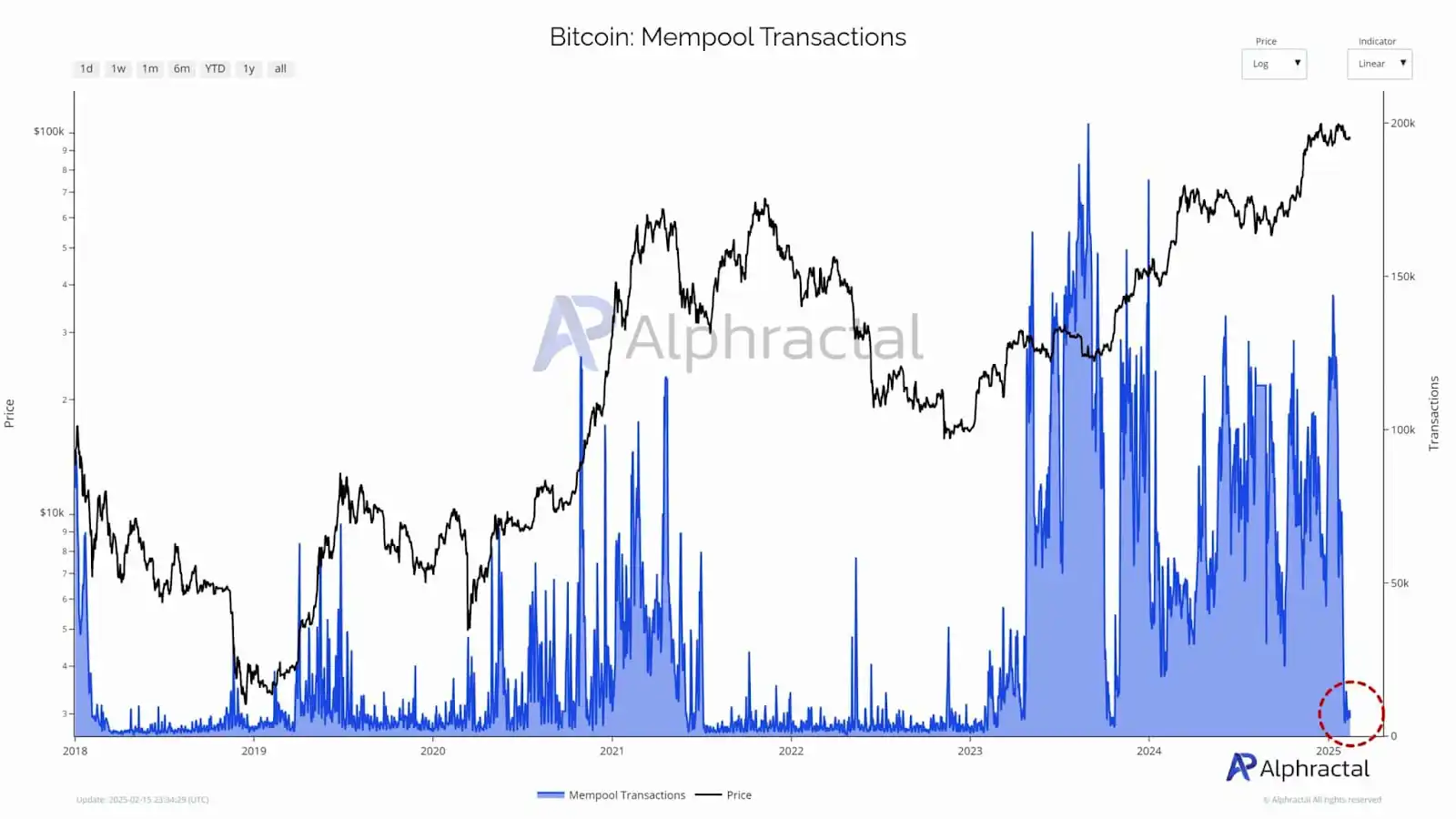
The profitability of Bitcoin mining has significantly deteriorated, with several key indicators showing a weakening profit potential. Firstly, the unconfirmed transactions in the Bitcoin memory pool have dropped to a multi-year low, indicating reduced network demand, directly impacting miners' transaction fee income. Historically, a decrease in transaction activity has often led to a bear market, which, although not necessarily implying a price drop, may suggest structural changes in the network.
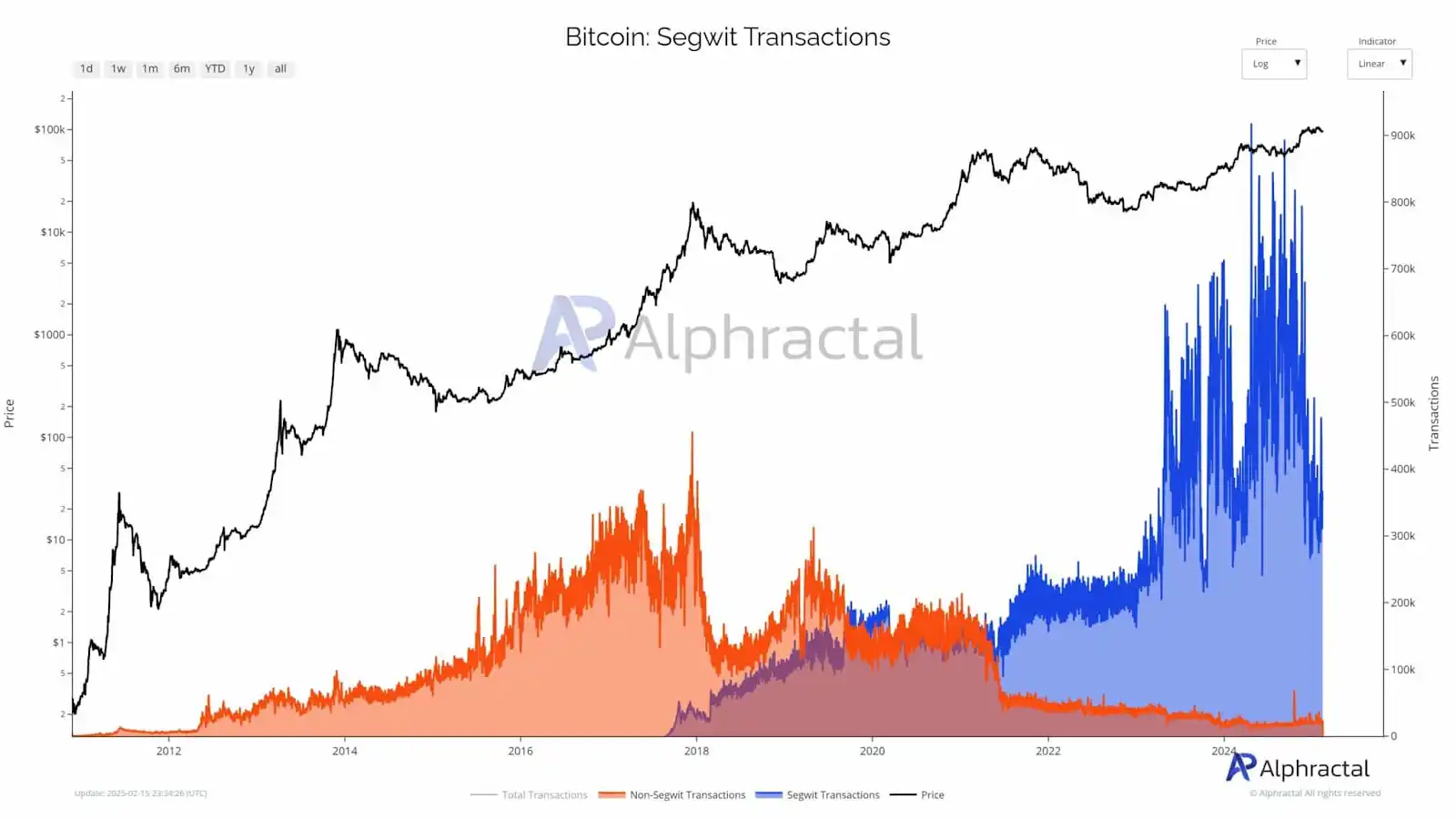
Furthermore, the gradual decline of SegWit transaction types has reduced network efficiency, further increasing block space requirements, squeezing miners' income potential. Despite the rise in Bitcoin prices, the downward trend in revenue highlights the impact of rising network difficulty and intensified competition.
Industry Consolidation Accelerates: Small Miners Face Exit Risk
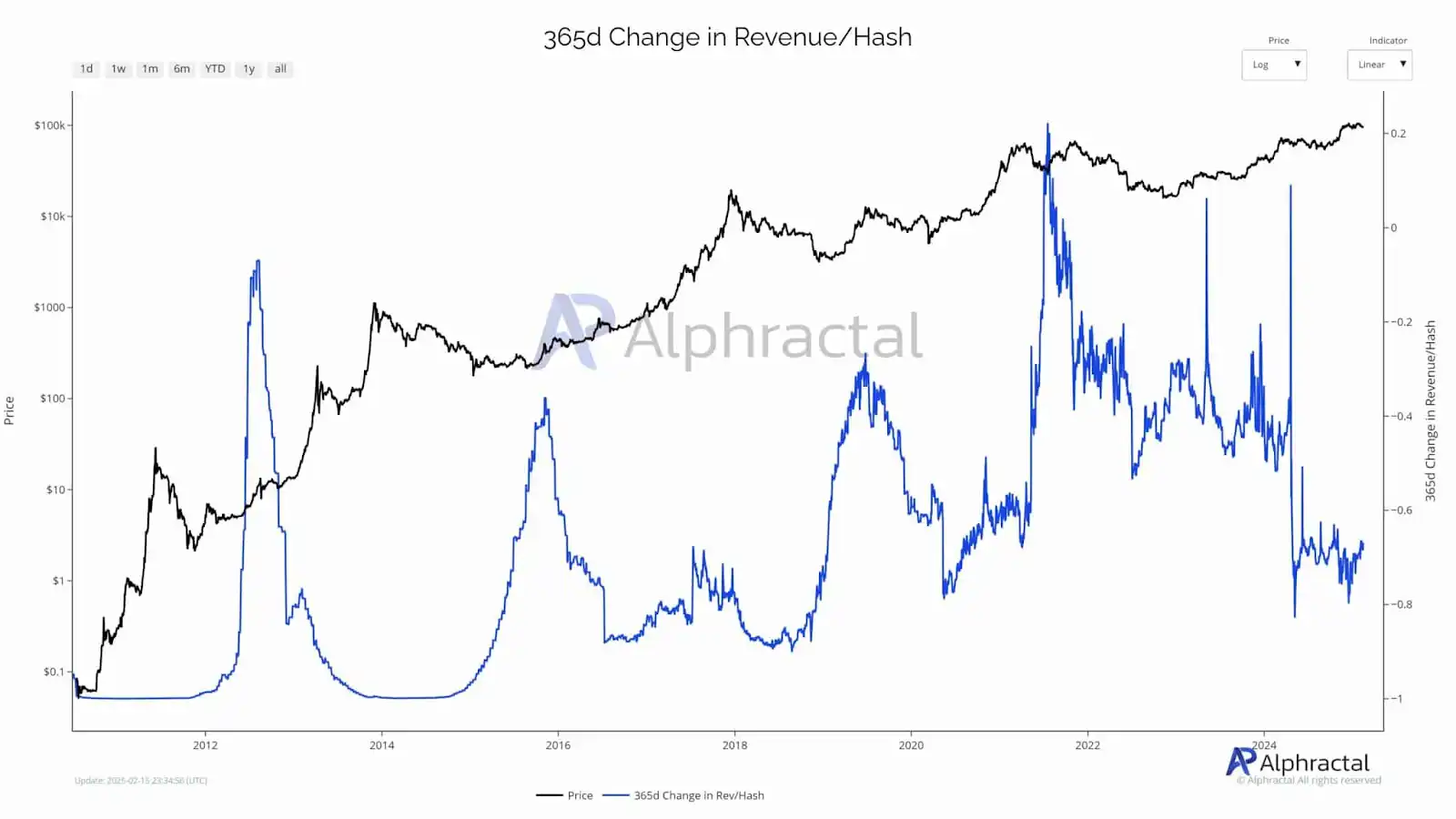
A key miner indicator, revenue/hash rate, is at a historical low, with diminishing returns indicating that rising network difficulty and intensified competition are eroding profitability.
With the block reward halving, particularly small miners are facing survival pressure. Decreased profitability and reduced transaction fee income put small enterprises at risk of exiting the market, accelerating industry consolidation. In the future, only well-capitalized, technologically advanced large miners will be able to maintain competitiveness, leading to increased market concentration.
Network Difficulty Increases: Rising Costs Force Miners to Seek Survival Strategies
Bitcoin network difficulty has hit a new high, putting miners under greater cost pressure. With rising energy and hardware costs, especially for small miners with outdated equipment, survival pressure intensifies. Some miners are turning to low-cost, sustainable energy sources, such as hydroelectric or geothermal power, while some mining companies are seeking breakthroughs through diversified income sources or mergers and acquisitions.
This trend may accelerate the centralization of the industry, where the most well-capitalized and efficient miners will take the lead, impacting Bitcoin's decentralized nature. In the future, changes in miners' geographic distribution and mining security practices may raise concerns about network security.
Market Rebalancing: Increased Industry Threshold
As operating costs continue to rise, inefficient miners will be eliminated, leading to a natural industry "rebalancing." This change may further promote industry centralization, where only large-scale miners can survive in fierce competition, solidifying Bitcoin mining as a high-threshold industry.
However, market centralization also raises questions about Bitcoin's decentralized ethos. The reduction of dominant miners could concentrate network security in the hands of a few miners, potentially affecting the network's long-term stability and resistance to censorship.
Impact on Bitcoin
In the short term, Bitcoin miners face dual pressure from declining transaction fees and rising costs, which may cause small miners to exit the market, leading to a decrease in network hashrate and tightening Bitcoin supply. The compression of miner revenue may affect market confidence in Bitcoin, causing short-term price volatility and possibly threatening the network's decentralization, introducing security risks.
In the long run, with technological innovation and optimized energy costs, miners may regain some profitability, lower operating costs, helping alleviate profit pressures and stabilize the market. While there may be short-term downward price risks, with sustained demand growth and tightened supply, Bitcoin prices may trend upward in the long term, especially as market demand for Bitcoin steadily increases.
Bitcoin currently urgently needs a new ecosystem, clearly more than just speculative trading of "buying the dip." It needs more use cases, smart contracts, decentralized applications, and even a brand-new financial system to support it.
If Bitcoin lacks a strong enough ecosystem, once miners cannot maintain profitability, the entire network's operation will become challenging, and market trust in Bitcoin will be shaken. Miner exodus could be a "crisis" in Bitcoin's future outlook, while ecosystem development flourishing is the key to Bitcoin's survival.
Disclaimer: This article does not constitute investment advice. Users should consider whether any opinions, views, or conclusions in this article are suitable for their specific circumstances and comply with relevant laws and regulations in their country or region.
You may also like

Pantera Capital Partner: How Tokenization is Restructuring the Private Equity and Early Investment Ecosystem?

New York Proposes Stricter Stablecoin Issuer Rules Aligned With Federal GENIUS Act
NYDFS proposed stricter stablecoin issuer rules aligned with the GENIUS Act, covering reserves, custody, redemption timelines, audits, and capital buffers.
Every exchange is a "Universal Exchange."

The counterattack of traditional finance: Alliance chains are quietly reviving

CryptoQuant Says Bitcoin Profitable Supply Is Near 45% Pressure Zone as On-Chain Data Points to Market Repricing
CryptoQuant said Bitcoin’s profitable supply is nearing the 45% pressure zone, signaling rising market stress, unrealized losses, and a possible on-chain repricing phase.

Bitcoin Falls Below 200-Week Moving Average as On-Chain Data Shows Over Half of Supply in Loss
Bitcoin dropped below its 200-week moving average as on-chain data showed over 50% of circulating supply is now in loss, signaling rising market stress.

CFTC Reportedly Plans New Prediction Market Rules Focused on Manipulation Risk and Public Interest Review
The CFTC is reportedly preparing new prediction market rules focused on manipulation risk, public interest review, and retail trader protections.

Meet the new WEEX trial fund—your gateway to greater profits

WEEX Labs Lands at Dutch Blockchain Week: A Disruptive Crypto × AI Conversation Sets Sail in Amsterdam

SK Hynix Reportedly Plans U.S. ADR Listing as Early as August, With SEC Approval Possible in Late June
SK Hynix may pursue a U.S. ADR listing as early as August, with SEC approval reportedly possible in late June amid strong AI chip supply chain demand.

SpaceX vs Tesla vs xAI: Which Elon Musk Trade Has the Biggest Upside in 2026?
OpenAI Reveals It Has Confidentially Submitted an S-1 to the SEC, Keeping the Door Open for a Future IPO
On June 9, according to an OpenAI announcement, the company recently confidentially submitted a draft S-1 registration statement to the U.S. Securities and Exchange Commission (SEC), beginning the preliminary compliance process for a potential initial public offering. OpenAI said it chose to disclose this proactively because it expected the news might leak; however, the company has not yet set a specific listing timeline, and related arrangements may still take some time.

Latest research from 13 top universities including Cornell University: The current state, challenges, and misconceptions of the fusion of Crypto and AI
Deconstructing Anthropic: The Best AI Company, Possibly Also a Type of Organizational Invention
Apollo and Blackstone Reportedly Back $35 Billion Anthropic Chip Financing as Deal Details Remain Unclear
On June 9, according to currently available news alerts, Apollo and Blackstone Group participated in a $35 billion financing for an Anthropic “chip project.” Based on the original wording of the report, the funding has already been raised, but public information remains limited. The financing structure, use of proceeds, project entity, and whether Apollo and Blackstone participated through equity, debt, or project financing have not yet been disclosed.

Humanity Protocol Security Incident Escalates: More Than $31 Million Stolen From Related Addresses as Attacker Continues Selling H for ETH
On June 9, according to monitoring by Onchain Lens, more than $31 million has been stolen from addresses linked to Humanity Protocol, and the attack is still ongoing, with the hacker continuously swapping H tokens for ETH. Project founder Terence Kwok later confirmed the security incident on X, saying the issue involved a private key leak.

Bloomberg: As Bitcoin Weakens, Stablecoins and RWA Continue to Drive Expansion in Crypto Businesses
In June, Bloomberg reported that despite Bitcoin falling below $60,000 last week, wiping out about $235 billion in market value within seven days, and dropping close to 50% from last year’s peak, some core businesses in the crypto industry are still expanding, mainly in stablecoins, real-world asset tokenization (RWA), payments, and infrastructure. The report also noted that overall altcoin activity has contracted significantly: altcoin market capitalization has fallen from a peak of about $431 billion in November 2021 to around $170 billion, and among the tens of millions of tokens issued in recent years, fewer than 1,700 still maintain meaningful trading activity.

Galaxy Deep Research Report: How Hyperliquid's HIP-4 Upgrade Changes the Landscape of Prediction Markets?
Pantera Capital Partner: How Tokenization is Restructuring the Private Equity and Early Investment Ecosystem?
New York Proposes Stricter Stablecoin Issuer Rules Aligned With Federal GENIUS Act
NYDFS proposed stricter stablecoin issuer rules aligned with the GENIUS Act, covering reserves, custody, redemption timelines, audits, and capital buffers.
Every exchange is a "Universal Exchange."
The counterattack of traditional finance: Alliance chains are quietly reviving
CryptoQuant Says Bitcoin Profitable Supply Is Near 45% Pressure Zone as On-Chain Data Points to Market Repricing
CryptoQuant said Bitcoin’s profitable supply is nearing the 45% pressure zone, signaling rising market stress, unrealized losses, and a possible on-chain repricing phase.
Bitcoin Falls Below 200-Week Moving Average as On-Chain Data Shows Over Half of Supply in Loss
Bitcoin dropped below its 200-week moving average as on-chain data showed over 50% of circulating supply is now in loss, signaling rising market stress.


