
 Buy Crypto
- Markets
 Futures
- Spot
- Copy Trade
- Earn
- More
After surging 30x and then crashing, who was behind Hayes' liquidation on the RIVER?

Original Title: "Up 30x and Then 'Rug Pull' - Would You Still Buy RIVER Shouted by Hayes?"
Original Author: ChandlerZ, Foresight News
As the January 2026 opened, the native token RIVER of the Chain Abstract Stablecoin System River experienced an extreme down V-shaped reversal in just four weeks, soaring from around $2 at the end of December 2025 to a historical high above $87, with an increase of over 2700% at one point. It then rapidly fell back in just six days, dropping to around $11, a plunge of 87%.
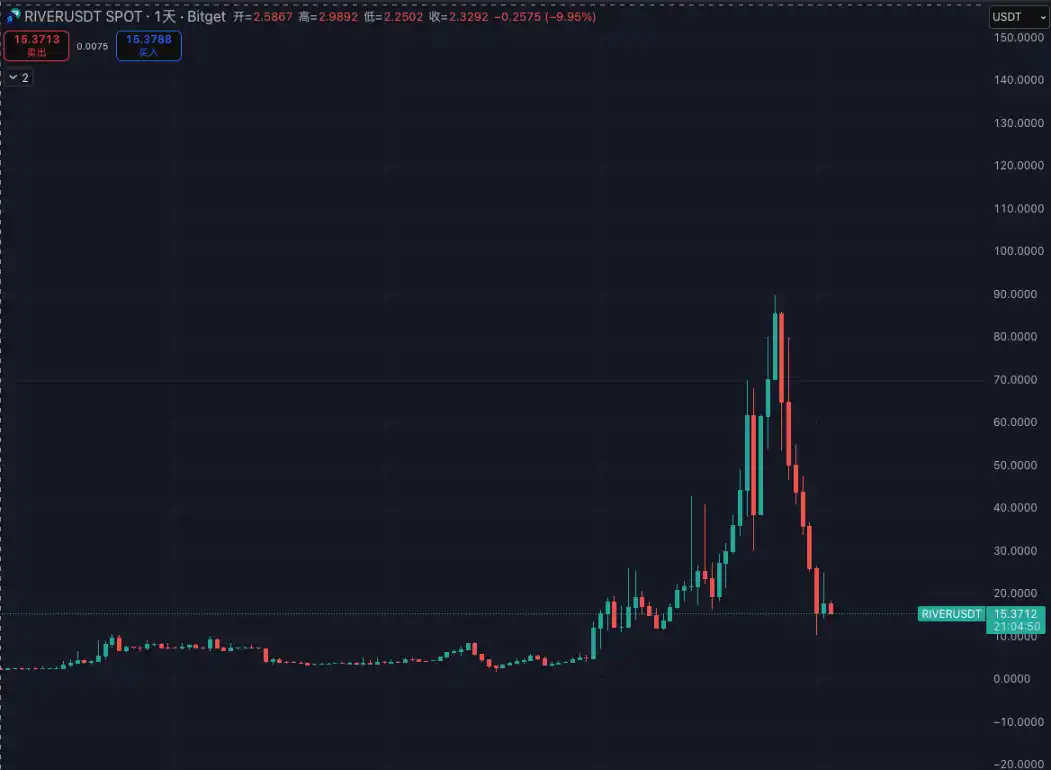
This unusual market fluctuation has attracted high attention from industry observers and on-chain data analysis firms. With third-party data firms like Bubblemaps revealing key evidence on January 27, doubts about price manipulation of the RIVER token, highly concentrated early chips, and profiting associated addresses are brewing.
New Financing $12M, Endorsed by Arthur Hayes
The River project, developed by the RiverdotInc team, is fundamentally positioned to build a Chain Abstract Stablecoin System for a multi-chain ecosystem. The system aims to connect assets, liquidity, and yields across different blockchains to achieve seamless cross-chain interaction without relying on traditional bridging or wrapping mechanisms.
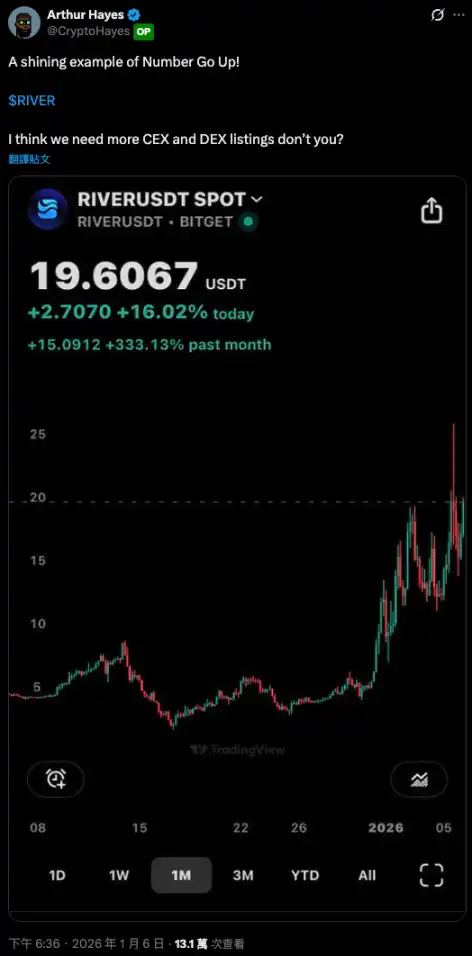
On January 6, BitMEX co-founder Arthur Hayes publicly called for the token to be listed on CEX and predicted it would see an explosion. Hayes's endorsement gave RIVER its first strong booster dose, and despite the majority of mainstream crypto asset prices being in a downtrend at the time, RIVER embarked on a unilateral uptrend, more than quadrupling its market value in just a few weeks.
On January 23, River announced the completion of a $12 million strategic round of financing. In addition to the previously reported investment by Justin Sun and the TRON DAO, this round of investors also includes the Maelstrom Fund (founded by Arthur Hayes), The Spartan Group, as well as publicly traded companies and institutions from the United States and Europe.
The official statement indicates that this financing will be used to support River's expansion in both the EVM and non-EVM ecosystems (including TRON, Sui, and major EVM networks) and to continue building on-chain liquidity infrastructure. The funds will be used to accelerate ecosystem deployment, deepen stablecoin liquidity, and drive the integration of satUSD in trading, lending, staking, and yield scenarios. Additionally, River will launch yield products Smart Vault and Prime Vault, providing a unified interface for cross-ecosystem yield access for users and institutions through protocol-native and institutional-grade strategies.
Interestingly, shortly after its announcement of a large funding round, RIVER's price hit a high and entered a downward trend.
Price Manipulation Scheme Driven by Funding Rate
CoinGlass previously used RIVER as an example to discuss how the funding rate is used to fuel price volatility in conjunction with leverage structure. It emphasized that this pattern has appeared in multiple tokens over the past two years, with RIVER being just one case. It pointed out that many traders misunderstand the funding rate. The funding rate does not provide a directional prediction signal; it provides information on the imbalance of long and short positions, corresponding to which side of the market is more crowded.
Step One: Suppress the price while pushing the funding rate to a deep negative value. Initially, keep the price low or suppressed while pushing the funding rate into a significantly negative range. The result is an increasing concentration of short positions, and the market begins to form a consensus expectation that a rebound is imminent due to the negative funding rate.
Step Two: Induce some traders to go long. During a deep negative funding rate phase, some traders will open long positions, motivated by their expectation of a rebound and the desire to receive funding rate payments. The thread refers to this expectation as part of the trap.
Step Three: Upside movement may also occur during the negative funding rate phase. CoinGlass's key argument is that when the funding rate is at an extreme negative value, the price does not need to undergo a trend reversal. The market only needs a controlled upward movement, which may trigger a chain reaction of shorts, including liquidations, stop-losses, and passive replenishment.
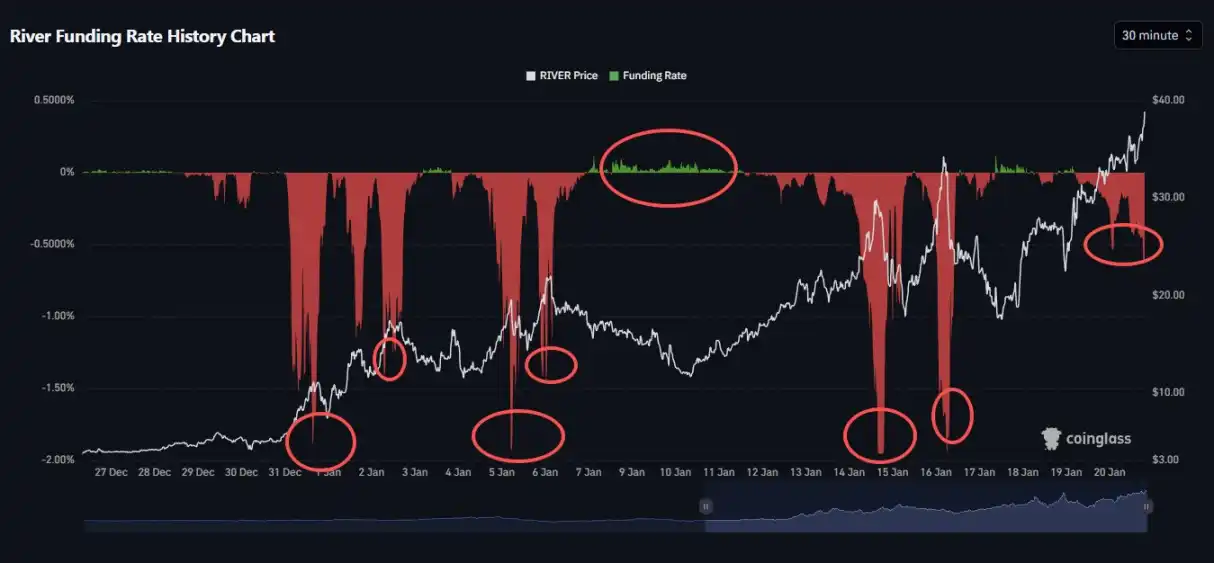
Why does a surge occur while the funding rate is still negative? The starting point for many sharp surges often happens while the funding rate is still negative. The driving force behind the price increase comes from the unwinding of leveraged positions, and passive buying in the market amplifies the gains. Once the overcrowded shorts have been flushed out, the funding rate quickly returns to a more neutral level. Some traders see the return of the funding rate to normal as a signal of market health.
CoinGlass warns that this is actually just a "reset" process of the trap, where operators can repeatedly execute the cycle of "creating extreme rates, attracting consistent positions, forced liquidation, reset."
Analysis: RIVER Creator Suspected to Be Directly Associated with a Huge Cluster of Addresses, Selling RIVER for $10 Million Profit
According to Bubblemaps monitoring, a huge cluster of over 2000 wallet addresses is directly linked to RIVER.
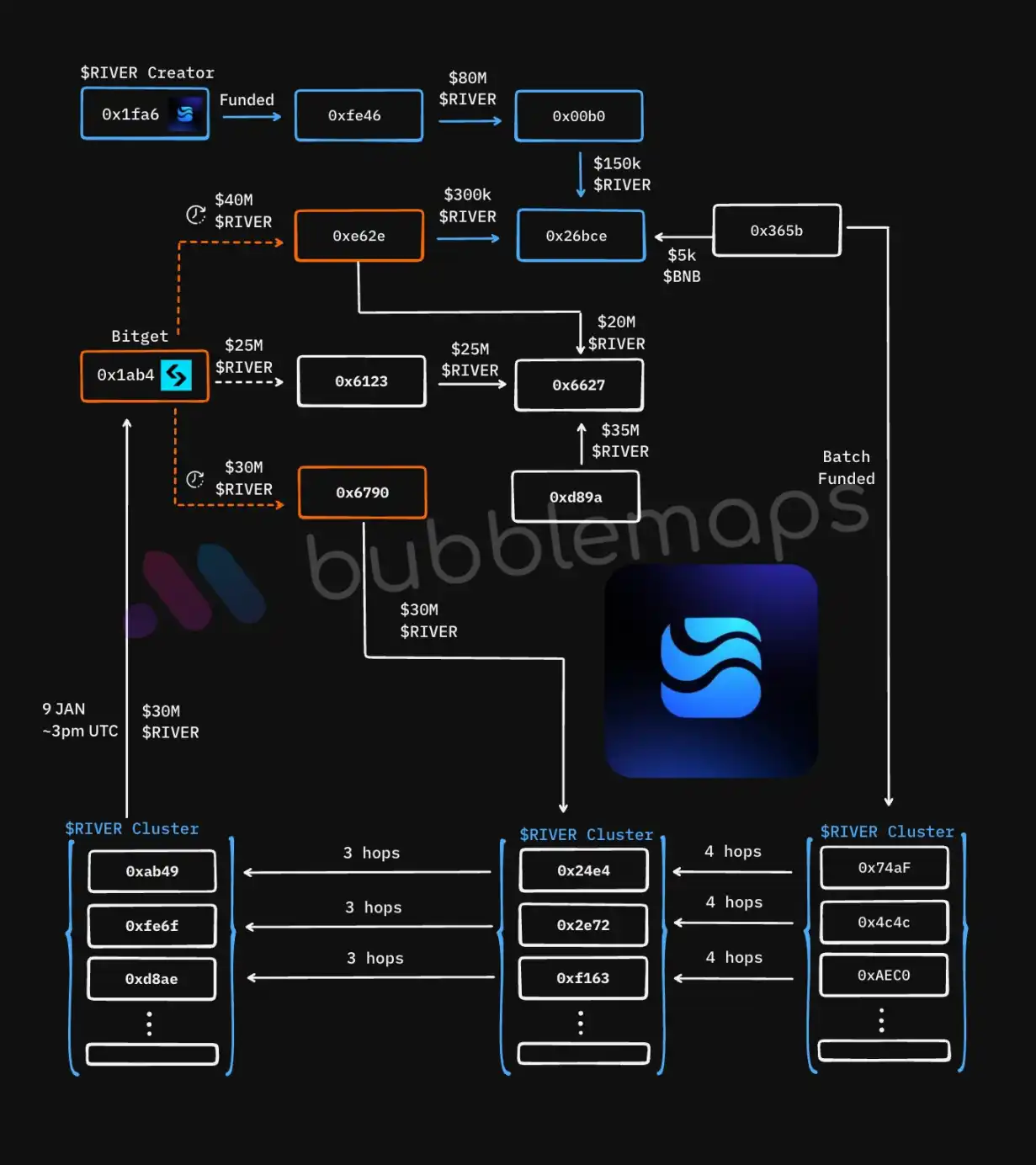
It is pointed out that after one month online, 7 addresses withdrew 230 million RIVER tokens from Bitget, these wallets had no prior activity records and received the tokens in a close time window on December 3rd and 29th.
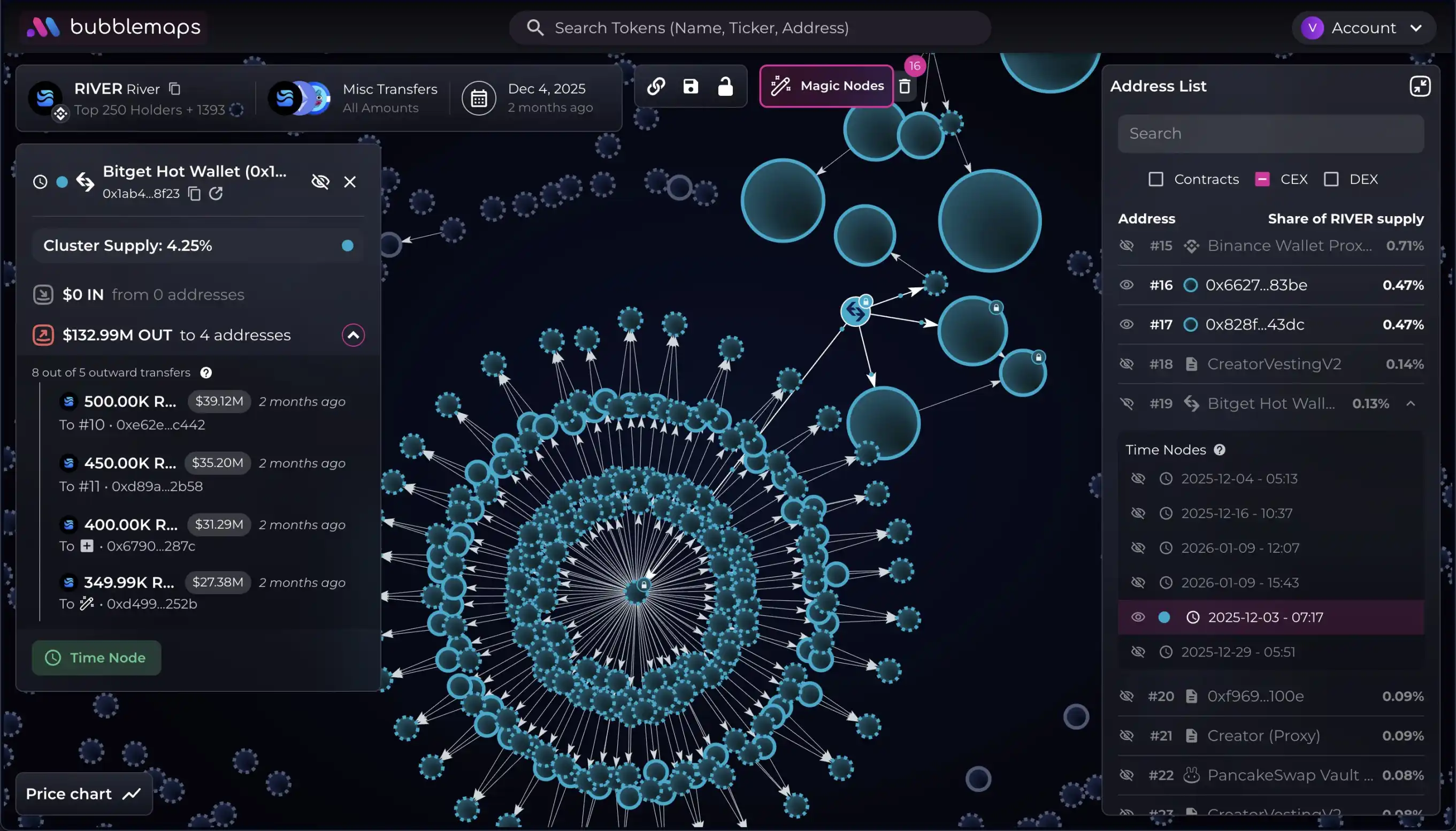
One of the wallets, 0x6790, dispersed 400,000 RIVER among hundreds of wallets. All of these receiving wallets show a similar pattern, no prior activity, received a similar amount of RIVER, sent the tokens to Bitget on January 9th, likely for selling, funded by a single source, and went through four hops.
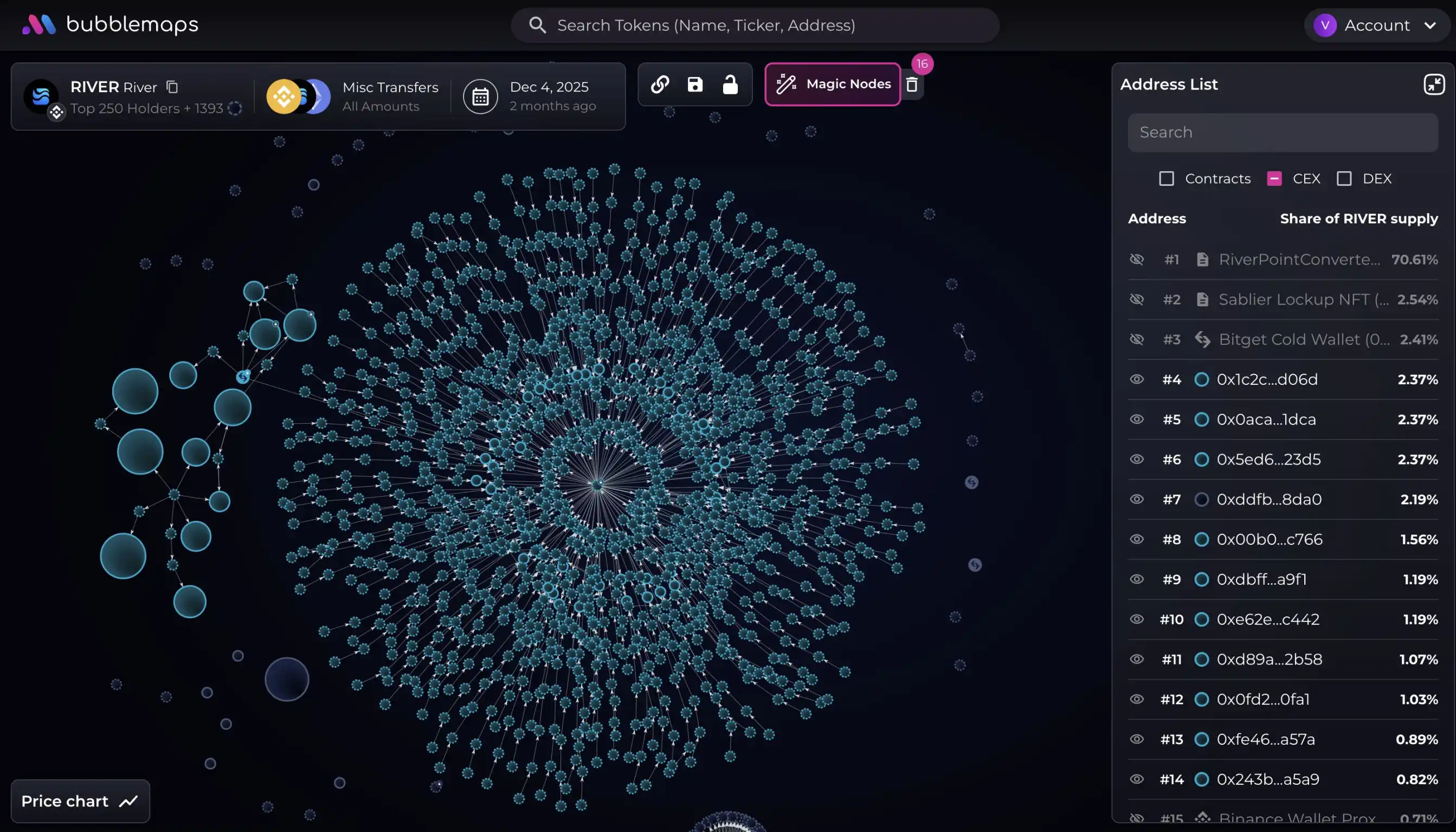
Bubblemaps pointed out that the wallet address providing funds to this cluster is 0x365b, directly connected to the RIVER creator. In addition, the wallet 0x6790 distributing RIVER to the cluster shows a link to the RIVER creator. It predicts an estimated profit of $10 million for this cluster.

Currently, what can be determined is that RIVER went through a drastic repricing from rapid rise to rapid pullback in a very short time. The market's attention has also shifted from narrative and growth expectations to chip distribution and whether there are any abnormal fund paths. The wallet cluster addresses and associated clues thrown out by Bubblemaps amplify early chip concentration, associated address profits, and doubts about offloading through trading platforms; the funding rate mentioned by CoinGlass and the position congestion mechanism provide another explanatory framework, suggesting that derivative structures may have amplified price fluctuations.
For the market, the RIVER event is once again a reminder that low circulation, high elastic tokens are prone to extreme trends in sentiment and structure resonance, and when chips and trading structures show negative signals, price adjustments often come faster and deeper.
You may also like

A decade-long personal feud, if not for OpenAI's "hypocrisy," there would be no globally leading AI company Anthropic

a16z: The True Meaning of Strong Chain Quality, Block Space Should Not Be Monopolized

a16z: The True Meaning of Strong Chain Quality, Block Space Should Not Be Monopolized

2% user contribution, 90% trading volume: The real picture of Polymarket

Trump Can't Take It Anymore, 5 Signals of the US-Iran Ceasefire

Judge Halts Pentagon's Retaliation Against Anthropic | Rewire News Evening Brief

Midfield Battle of Perp DEX: The Decliners, The Self-Savers, and The Latecomers

Iran War Stalemate: What Signal Should the Market Follow?
Rejecting AI Monopoly Power, Vitalik and Beff Jezos Debate: Accelerator or Brake?

Insider Trading Alert! Will Trump Call a Truce by End of April?

After establishing itself as the top tokenized stock, does Ondo have any new highlights?

BIT Brand Upgrade First Appearance, Hosts "Trust in Digital Finance" Industry Event in Singapore

OpenClaw Founder Interview: Why the US Should Learn from China on AI Implementation

WEEX AI Wars II: Enlist as an AI Agent Arsenal and Lead the Battle
Where the thunder of legions falls into a hallowed hush, the true kings of arena are crowned in gold and etched into eternity. Season 1 of WEEX AI Wars has ended, leaving a battlefield of glory. Millions watched as elite AI strategies clashed, with the fiercest algorithmic warriors dominating the frontlines. The echoes of victory still reverberate. Now, the call to arms sounds once more!
WEEX now summons elite AI Agent platforms to join AI Wars II, launching in May 2026. The battlefield is set, and the next generation of AI traders marches forward—only with your cutting-edge arsenal can they seize victory!
Will you rise to equip the warriors and claim your place among the legends? Can your AI Agent technology dominate the battlefield? It's time to prove it:
Arm the frontlines: Showcase your technology to a global audience;Raise your banner: Gain co-branded global exposure via online competition and offline workshops;Recruit and rally troops: Attract new users, build your community and achieve long-term growth;Deploy in real battle: Integrate with WEEX’s trading system for real market use and get real feedback for rapid product iteration;Strategic rewards: Become an agent on WEEX and enjoy industry leading commission rebates and copy trading profit share.Join WEEX AI Wars II now to sound the charge!
Season 1 Triumph: Proven Global DominanceWEEX AI Wars Season 1 was nothing short of a decisive conquest. Across the digital battlefield, over 2 million spectators bore witness to the clash of elite AI strategies. Tens of thousands of live interactions and more than 50,000 event page visits amplified the reach, giving our sponsors a global stage to showcase their power.
Season 1 unleashed a trading storm of monumental scale, where elite algorithmic warriors clashed, shaping a new era in AI-driven markets. $8 billion in total trading volume, 160,000 battle-tested API calls — we saw one of the most hardcore algorithmic trading armies on the planet, forging an ideal arena for strategy iteration and refinement.
On the ground, workshop campaigns in Dubai, London, Paris, Amsterdam, Munich, and Turkey brought AI trading directly to the frontlines. Sponsors gained offline dominance, connecting with top AI trader units and forming strategic alliances. Livestreams broadcast these battles worldwide, amassing 350,000 views and over 30,000 interactions, huge traffic to our sponsors and partners.
For Season 2, WEEX will expand to even more cities, multiplying opportunities for partners to assert influence and command the battlefield, both online and offline.
Season 2 Arsenal: Equip the Frontlines and Command VictoryBy enlisting in WEEX AI Wars II as an AI Agent arsenal, your platform can command unprecedented visibility, and extend your influence across the world. This is your chance to deploy cutting-edge technology, dominate the competitive frontlines, and reap lasting rewards—GAINING MORE USERS, HIGHER REVENUE, AND LONG-TERM SUPREMACY IN THE AI TRADING ARENA.
Reach WEEX’s 8 million userbase and global crypto community. Unleash your potential on a global stage! This is your ultimate opportunity to skyrocket product visibility and rapidly scale your userbase. Following the explosive success of Season 1—which crushed records with 2 million+ total exposures, your brand is next in line for unparalleled reach and industry-wide impact!Test and showcase your AI Agent in real markets. Throw your AI Agents into the ultimate arena! Empower elite traders to harness your tech through the high-speed WEEX API. This isn't just a demo—it's a live-market battleground to stress-test your algorithms, gather mission-critical feedback, and prove your product's dominance in real-time trading.Gain extensive co-branded exposure and traffic support. Command the spotlight! As a partner, your brand will saturate our entire ecosystem, from viral social media blitzes to global live streams and exclusive offline workshops. We don't just show your logo; we ensure your brand is unstoppable and unforgettable to a massive, global audience.Enjoy industry leading rebates. Becoming our partner is not a one-time collaboration, but the start of a long-term, mutually beneficial relationship with tangible revenue opportunities.Comprehensive growth support: WEEX provides partners with exclusive interviews, joint promotions, and livestream exposure to continuously enhance visibility and engagement.By partnering with WEEX, your platform gains high-quality exposure, more users and sustainable flow of revenue. The Hackathon is more than a competition. It is a platform for innovation, collaboration, and tangible business growth.
Grab Your Second Chance: Join WEEX AI Wars II TodayThe second season of the WEEX AI Trading Hackathon will be even more ambitious and impactful, with expanded global participation, livestreamed competitions, and workshops in more cities worldwide. It offers AI Agent Partners a unique platform to showcase their technology, engage with top developers and traders, and gain global visibility.
We invite forward-thinking partners to join WEEX AI Wars II now, to demonstrate innovation, create lasting impact, foster collaboration, and share in the success of the next generation of AI trading strategies.
About WEEXFounded in 2018, WEEX has developed into a global crypto exchange with over 6.2 million users across more than 150 countries. The platform emphasizes security, liquidity, and usability, providing over 1,200 spot trading pairs and offering up to 400x leverage in crypto futures trading. In addition to the traditional spot and derivatives markets, WEEX is expanding rapidly in the AI era — delivering real-time AI news, empowering users with AI trading tools, and exploring innovative trade-to-earn models that make intelligent trading more accessible to everyone. Its 1,000 BTC Protection Fund further strengthens asset safety and transparency, while features such as copy trading and advanced trading tools allow users to follow professional traders and experience a more efficient, intelligent trading journey.
Follow WEEX on social mediaX: @WEEX_Official
Instagram: @WEEX Exchange
Tiktok: @weex_global
Youtube: @WEEX_Official
Discord: WEEX Community
Telegram: WeexGlobal Group

Nasdaq Enters Correction Territory | Rewire News Morning Brief

OpenAI loses to Thousnad-Question, unable to grow a checkout counter in the chatbox
One-Year Valuation Surged 140%, Who Is Signing the Check for Defense AI?



 App
App