
ABCDE: Why we invested in Perena


Original source: ABCDE
TLDR
The stablecoin market is growing at an astonishing rate, but it also faces the problems of centralization and decentralized liquidity; Perena is systematically building key infrastructure for stablecoins to help stablecoins move from innovation in encryption technology to mainstream financial applications; the Perena team has been deeply involved in stablecoins for many years and has first-class product capabilities and rich corporate resources; Perena is committed to building a more usable, liquid and profitable stablecoin infrastructure to promote the large-scale popularization of stablecoin applications in the future.
Stablecoin Market
2024 can be said to be the year of the outbreak of stablecoins. According to DefiLlama data, the total market value of stablecoins has exceeded 200 billion US dollars, of which USDT has hit a record high of 139 billion US dollars, and the market value of USDC issued by Circle has reached 41 billion US dollars. The continued growth of the market is not accidental. We believe that there are two main driving forces behind this: 1. Institutional application scenarios of stablecoins, such as large-scale remittances and payments; 2. As a financial instrument that can generate income, stablecoins show unique value potential. This trend makes us more convinced that stablecoins will play an increasingly important role in the future and also put forward higher requirements for infrastructure. 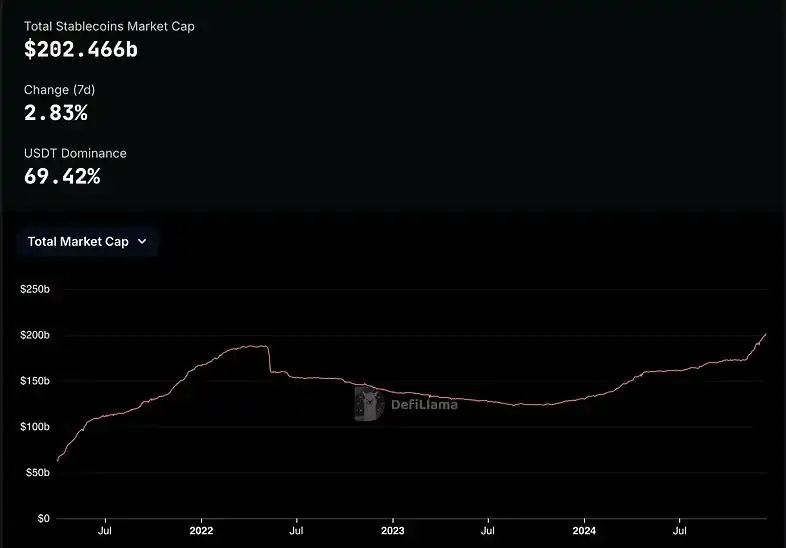 Source: DefiLlama The battle of stablecoins: new digital currencies are on the rise In fact, the prosperity of the stablecoin market has been brewing for many years. From BUSD (Binance Dollar), PYUSD (PayPal Dollar) to the recently launched RLUSD (Liquidity's yield-based stablecoin), more and more institutions are issuing their own stablecoins. As mentioned above, stablecoins are not just simple payment currencies, they are becoming "the new currency of the digital world", injecting unprecedented liquidity into the crypto market.
But as more and more institutions issue different types of stablecoins, we see a clear liquidity split. At present, we urgently need a strong infrastructure to support its exchange and provide liquidity.
"The biggest problem in the current stablecoin market is that we have many stablecoins, but there is no unified infrastructure to collaborate efficiently. Perena is filling the missing link." Perena co-founder Anna said.
Perena has built a powerful stablecoin platform to manage stablecoin liquidity, manage risk, and integrate new programmable money.
Numéraire: Perena’s first product
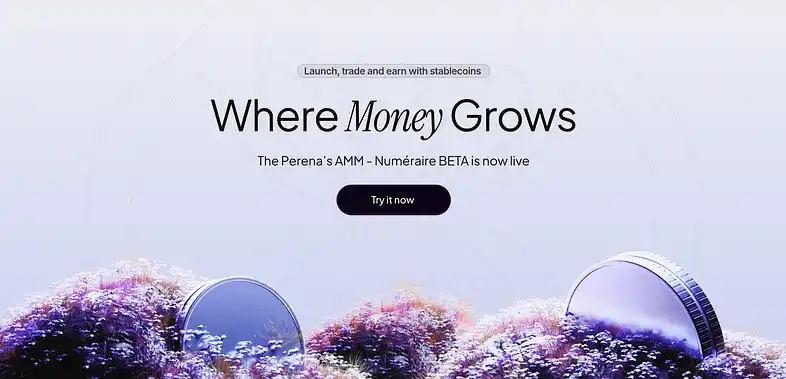
In addition to the huge potential of the market, a key reason for our investment in Perena is the team’s strong execution. In just a few months, Perena has launched its first product, Numéraire, a multi-asset stablecoin swap protocol. The core feature of the platform is the multi-stablecoin liquidity pool, which further improves the capital efficiency and liquidity of the stablecoin market by aggregating multiple stablecoins into a fungible, liquid token such as USD*. USD* is essentially a LP token (and a stablecoin itself) of a stable pool composed of a basket of stablecoins, including Tether, Circle, and PayPal USD in the AMM pool. Users can experience smooth stablecoin exchanges on Numéraire, or become liquidity providers (LPs) to earn returns; for stablecoin issuers, a basket of stablecoin pools further solves the problem of stablecoin liquidity fragmentation in the market while reducing issuance risks.
This comprehensive and innovative design solves the current systemic problems of stablecoins and lays the foundation for the future trillion-dollar decentralized financial system.
Source: Perena Website
Product link: https://perena.org/
Team Introduction
Behind the success of a product, there is an excellent team. We believe that an excellent entrepreneur needs to have ambition, clear goals, and fast execution. And Anna is undoubtedly the best candidate to develop stablecoin products. As the co-founder of Perena, Anna served as the head of stablecoins at Solana, helping to double the issuance of stablecoins on Solana to $3.6 billion, while promoting the native issuance of multiple non-USD stablecoins. Her industry experience and keen insights have earned her recognition from many heavyweight supporters, including Solana co-founders Anatoly Yakovenko and Raj Gokal. We believe that under her leadership, the Perena team will be able to promote continuous innovation in stablecoin infrastructure and lead the future development of the industry.
Written in the end…
The regulatory environment in the United States will become clearer after Trump takes office, and traditional financial giants (such as Goldman Sachs) will also enter the market. The stablecoin market may double to $400 billion in 2025.
This not only proves the huge potential of the market, but also makes us more confident in Perena's future.
We firmly believe that 2025 will be a year for stablecoins to shine, and it will also be a new year for Perena to set sail and lead the trend.
About Perena
Perena aims to systematically build key infrastructure for the development of stablecoins, helping stablecoins move from crypto innovation to mainstream financial tracks. The team's mission is to make stablecoins easier to use, more liquid, and create more benefits for large-scale popularization!
You may also like

Champion's Final Bow: FC Barcelona vs Real Betis – Celebrate the Title with a Home Finale

Best Oil Trading Platform for Crypto Users in 2026

5 Futures Trading Strategies Smart Traders Use to Cut Crypto Fees and Boost Futures Returns

What Is TradFi? How Crypto Traders Can Now Access Crude Oil, Gold, and Global Markets

How WEEX Bridges Crypto and Football: A Deep Look at the LALIGA Partnership Inside the WEEX App
WEEX is not just a LALIGA sponsor. It’s a true partner. From iPhone Dynamic Island to LALIGA-themed app icons and smart posters, see how WEEX brings football passion into every trade — and builds a real bridge between crypto and sports.

FC Barcelona vs Real Madrid Preview: El Clásico – Can Barça Clinch the Title at Spotify Camp Nou?
FC Barcelona vs Real Madrid El Clásico match preview for May 11, 2026. Barça need just 1 point to win LALIGA. Can Madrid delay the trophy? Full preview inside.

At the Stripe conference, I saw the future of the AI economy

Miners welcome a new life

Seven Important Judgments by Claude Code's Founder at the Sequoia Conference

The payment moment of AI agents: Who will become the Stripe of the machine economy?

Morning Report | MoonPay acquires Solana's execution layer DFlow; Strategy releases Q1 financial report; Manta Network announces the termination of Manta staking program

Rented Tracks: What is this wave of stablecoin FX hot money really paying for?

Dialogue Velocity Eric: What is the stablecoin track that the CFO really wants?

Strategy should have said that selling coins is not ruled out

How MegaETH Achieved a TVL of 700m Within a Week of TGE? Analyzing the Packaging Strategy

Futures Trading Hours: Trade Cryptocurrency 24/7 and Earn Back Up to 45% in Trading Fees
Learn futures trading hours and the best time to trade crypto futures. Discover 24/7 market insights, peak trading sessions, and how to earn back up to 45% in fees.
Why is a16z Crypto raising another $2.2 billion to heavily invest in Web3?
Polymarket Underlying Algorithm Explained
Champion's Final Bow: FC Barcelona vs Real Betis – Celebrate the Title with a Home Finale
Best Oil Trading Platform for Crypto Users in 2026
5 Futures Trading Strategies Smart Traders Use to Cut Crypto Fees and Boost Futures Returns
What Is TradFi? How Crypto Traders Can Now Access Crude Oil, Gold, and Global Markets
How WEEX Bridges Crypto and Football: A Deep Look at the LALIGA Partnership Inside the WEEX App
WEEX is not just a LALIGA sponsor. It’s a true partner. From iPhone Dynamic Island to LALIGA-themed app icons and smart posters, see how WEEX brings football passion into every trade — and builds a real bridge between crypto and sports.
FC Barcelona vs Real Madrid Preview: El Clásico – Can Barça Clinch the Title at Spotify Camp Nou?
FC Barcelona vs Real Madrid El Clásico match preview for May 11, 2026. Barça need just 1 point to win LALIGA. Can Madrid delay the trophy? Full preview inside.


